Local Service Information
Kenmore
A city at the north end of Lake Washington where the Sammamish River enters the lake.
County: King County
ZIP Codes Served: 98028
Neighborhoods: Downtown Kenmore, Inglewood, Uplake, Moorlands
Nearby Communities: Bothell, Lake Forest Park, Kirkland, Woodinville
Common Property Types: Predominantly single-family homes with townhomes and some condominiums and multifamily housing; commercial property includes retail, office, and small mixed-use buildings.
Local Tree & Landscape Notes: Common regional trees include Douglas fir, western red cedar, western hemlock, bigleaf maple, and red alder, alongside many ornamental species. Wet soils and dense canopy are common considerations for access and scheduling.
Permit Considerations: Permit requirements vary depending on tree size, species, protected areas, shoreline regulations, critical areas, and local municipal code. Always verify current requirements with the local jurisdiction before beginning work.
Climate: Marine west coast climate typical of the Puget Sound region: mild, wet winters and warm, relatively dry summers, with most rainfall from fall through spring. Occasional wind, snow, and ice events and seasonal soil saturation influence tree health and the timing of tree work.
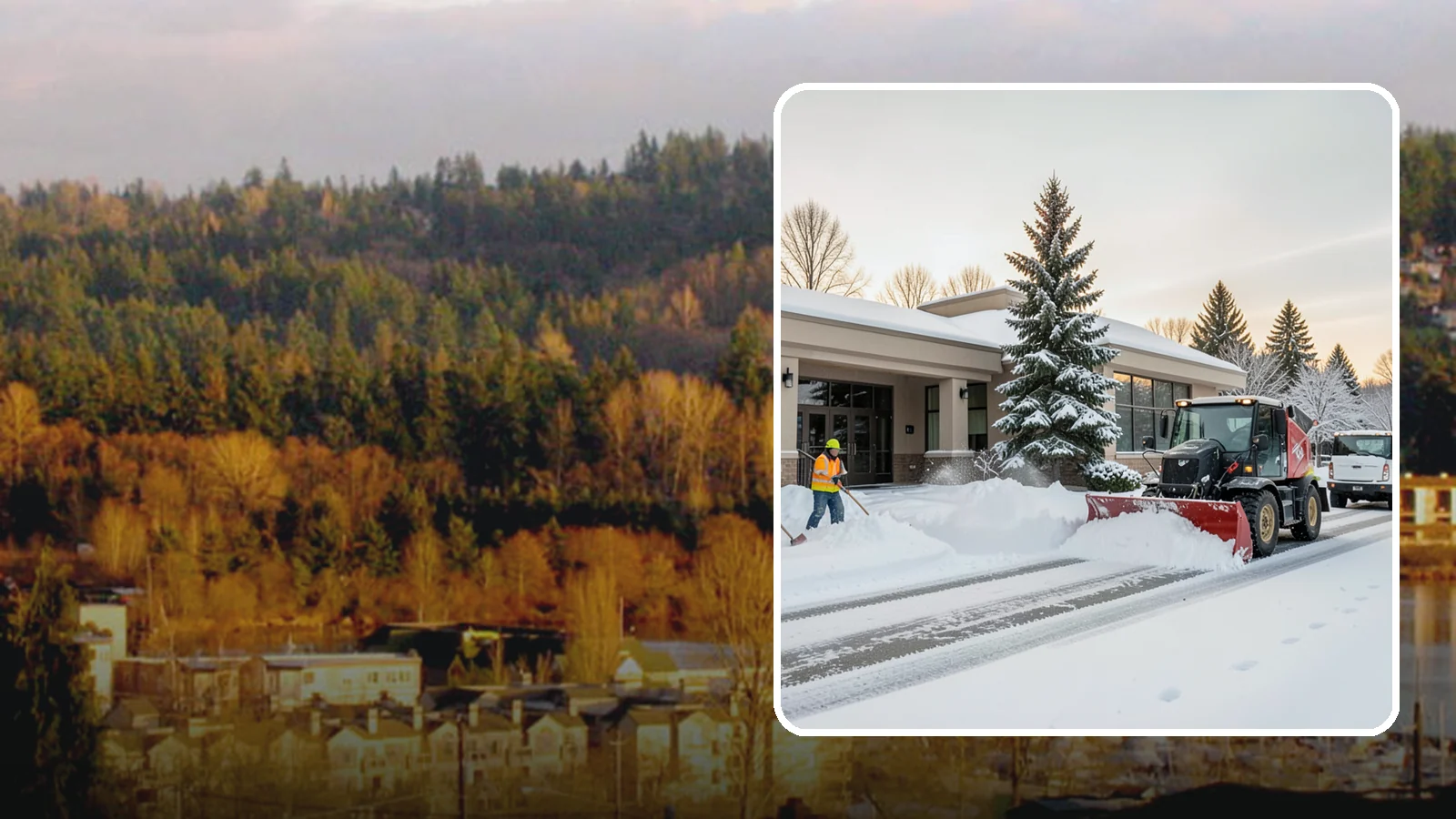
Kenmore sits at the north end of Lake Washington in King County, around Log Boom Park and neighborhoods like Inglewood and Uplake, where the lowland, lake-moderated climate keeps snow occasional and usually short-lived. When a cold front does dust its single-family streets and the mixed-use frontages of Downtown Kenmore, the bigger problem is often the ice that follows on shaded drives near the water. A quick, timely clearing keeps these lakeside neighborhoods moving through a rare snow day.
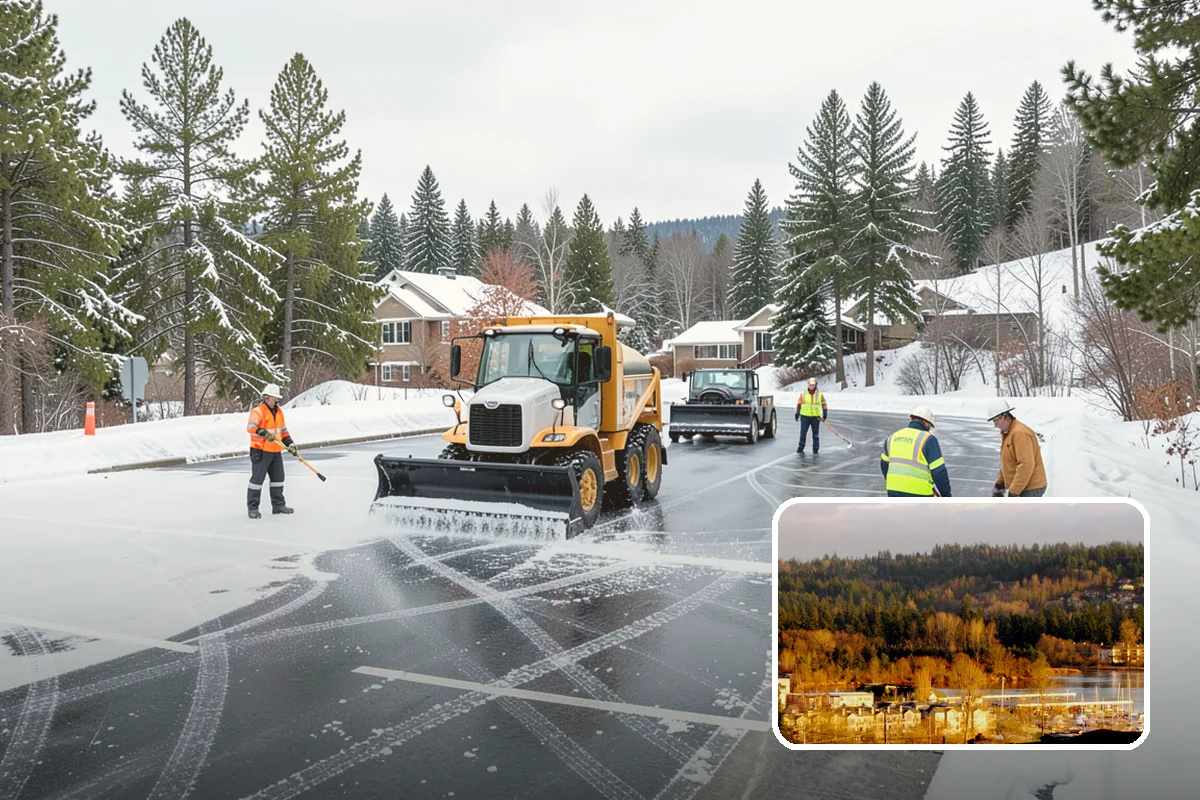
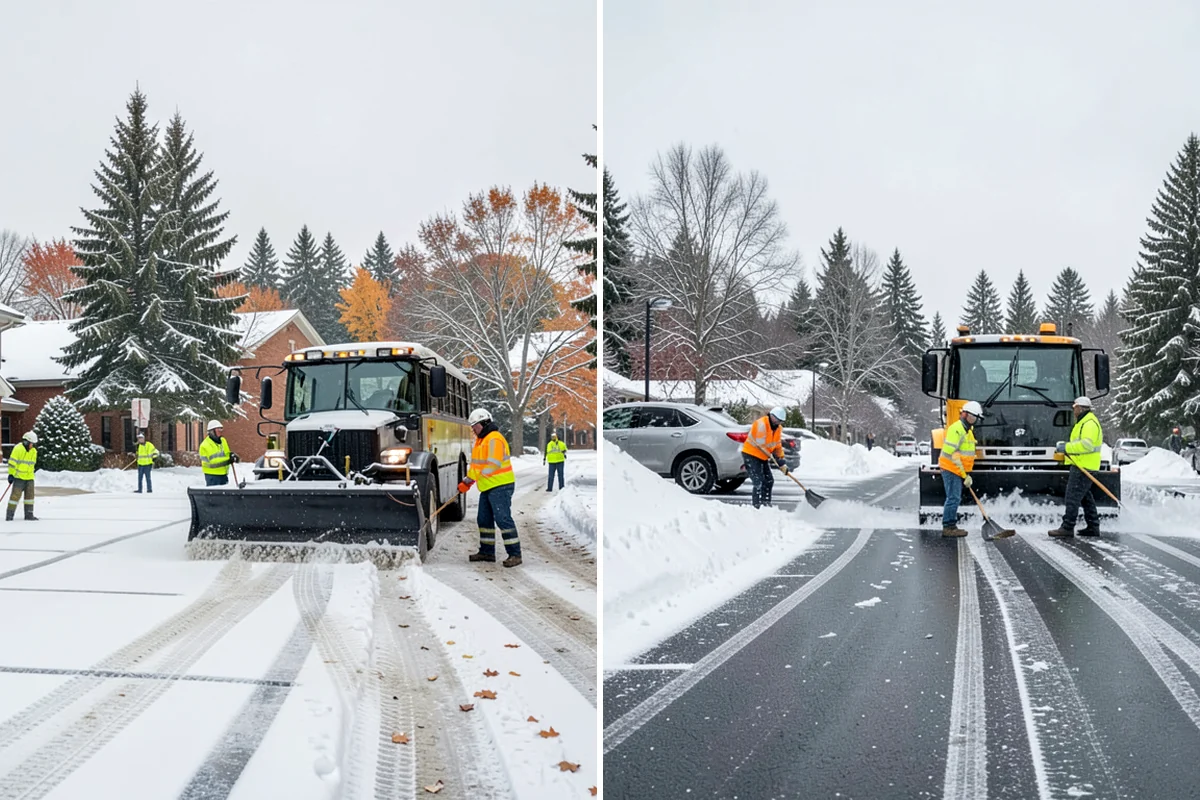
Snow and ice work in Kenmore generally means residential driveway and walkway clearing across Inglewood, Uplake, and Moorlands, plus keeping entries and a few stalls open for the retail and office frontages downtown. Because deep snow is uncommon, service leans toward de-icing the shaded, lake-damp pavement and clearing the occasional accumulating storm rather than seasonal plowing.
Site Conditions: Set low along the north shore of Lake Washington, Kenmore sees only a few measurable snows a season, with freeze-thaw and lakeside black ice the more frequent hazards. Driveways shaded by mature trees in the older neighborhoods and walks near the damp Log Boom shoreline hold frost longest, while open lots clear quickly once the melt goes down.
Seasonal Considerations: Kenmore’s snow window is short, mostly December into February when a cold snap can leave a quick inch before the lake air warms things back up. Owners here do well to pre-treat walks ahead of a forecast event, keep ice melt on hand for the refreeze after a daytime thaw, and plan for on-call clearing rather than a standing plow route.
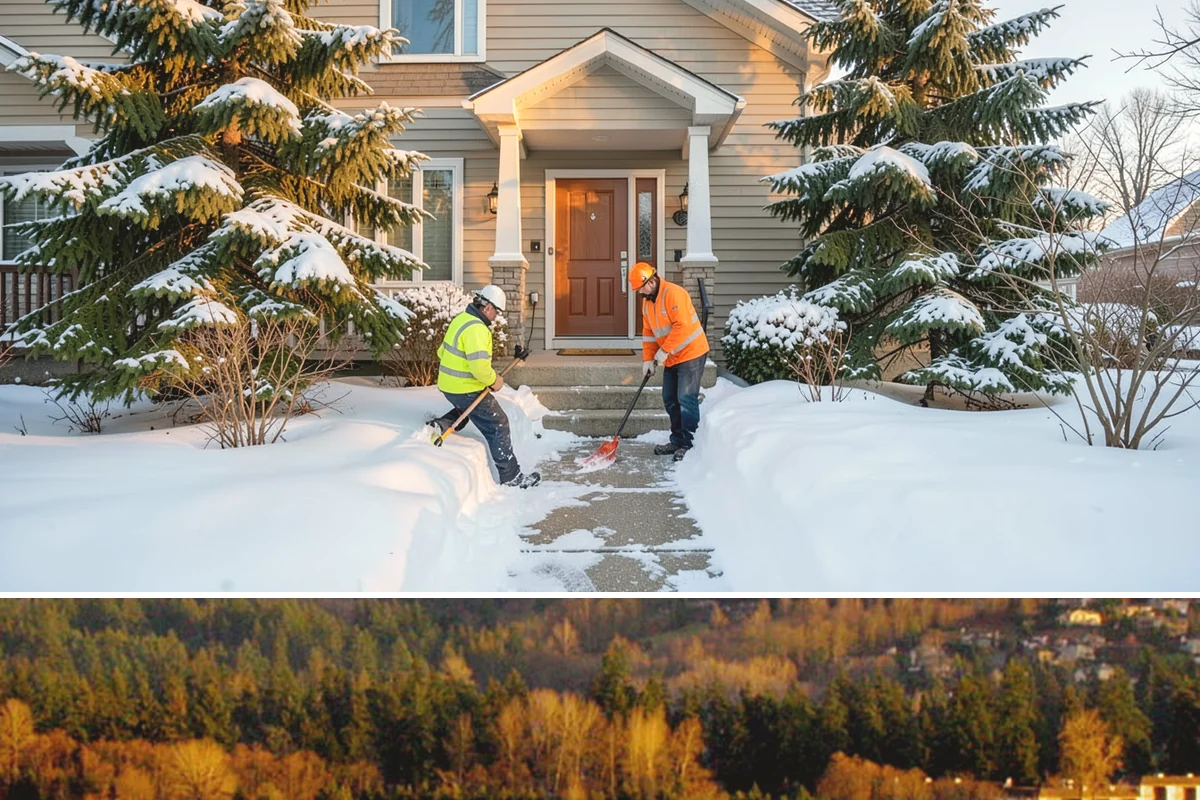
Common Project Types: Typical Kenmore jobs include single-driveway plowing or shoveling, de-icing front walks and steps, and clearing the compact approaches of townhomes and condominiums. Downtown retail and office clients usually want an entry walk and a handful of parking stalls cleared so a snow day does not close their doors.
Property Styles: Kenmore is mostly single-family homes with townhomes, condominiums, and multifamily housing, alongside a growing mixed-use downtown. Driveways are generally short and paved and walks are modest, so precise, low-spillage clearing on close lots matters more than heavy plowing.
Local Materials & Plants: On these lakeside lots a urea or calcium-magnesium acetate melt is often chosen over rock salt to protect the lawns and foundation shrubs pressed close to the walks, along with the water-friendly plantings near the shoreline. Marking bed edges keeps a plow off ornamental borders, and rinsing salt from turf after the thaw helps the grass recover near Lake Washington.
Planning Your Project: Since Kenmore storms are infrequent, most owners do best with an on-call plan triggered by the forecast and a clear spot to push snow on a compact lot. Coordinating timing between neighboring driveways and choosing a melt-friendly stacking area keeps the block moving after a rare event near the lake.
When a cold front slides down over Lake Washington into Kenmore, a snow and ice plan keeps your driveway and walks by the water ready to go. Get in touch to map your property and set a clearing approach built for an occasional-snow town.