Local Service Information
Milton
A small city on the King and Pierce county line between Federal Way and Fife.
County: King County / Pierce County
ZIP Codes Served: 98354
Neighborhoods: Downtown Milton; hillside residential areas along the King and Pierce county line
Nearby Communities: Federal Way, Fife, Edgewood, Pacific
Common Property Types: Predominantly single-family homes, with some townhomes and multifamily housing; commercial property includes small retail, civic, and light commercial buildings.
Local Tree & Landscape Notes: Common regional trees include Douglas fir, western red cedar, western hemlock, bigleaf maple, and red alder, alongside many ornamental species. Wet soils and dense canopy are common considerations for access and scheduling.
Permit Considerations: Permit requirements vary depending on tree size, species, protected areas, shoreline regulations, critical areas, and local municipal code. Always verify current requirements with the local jurisdiction before beginning work.
Climate: Marine west coast climate typical of the Puget Sound region: mild, wet winters and warm, relatively dry summers, with most rainfall from fall through spring. Occasional wind, snow, and ice events and seasonal soil saturation influence tree health and the timing of tree work.
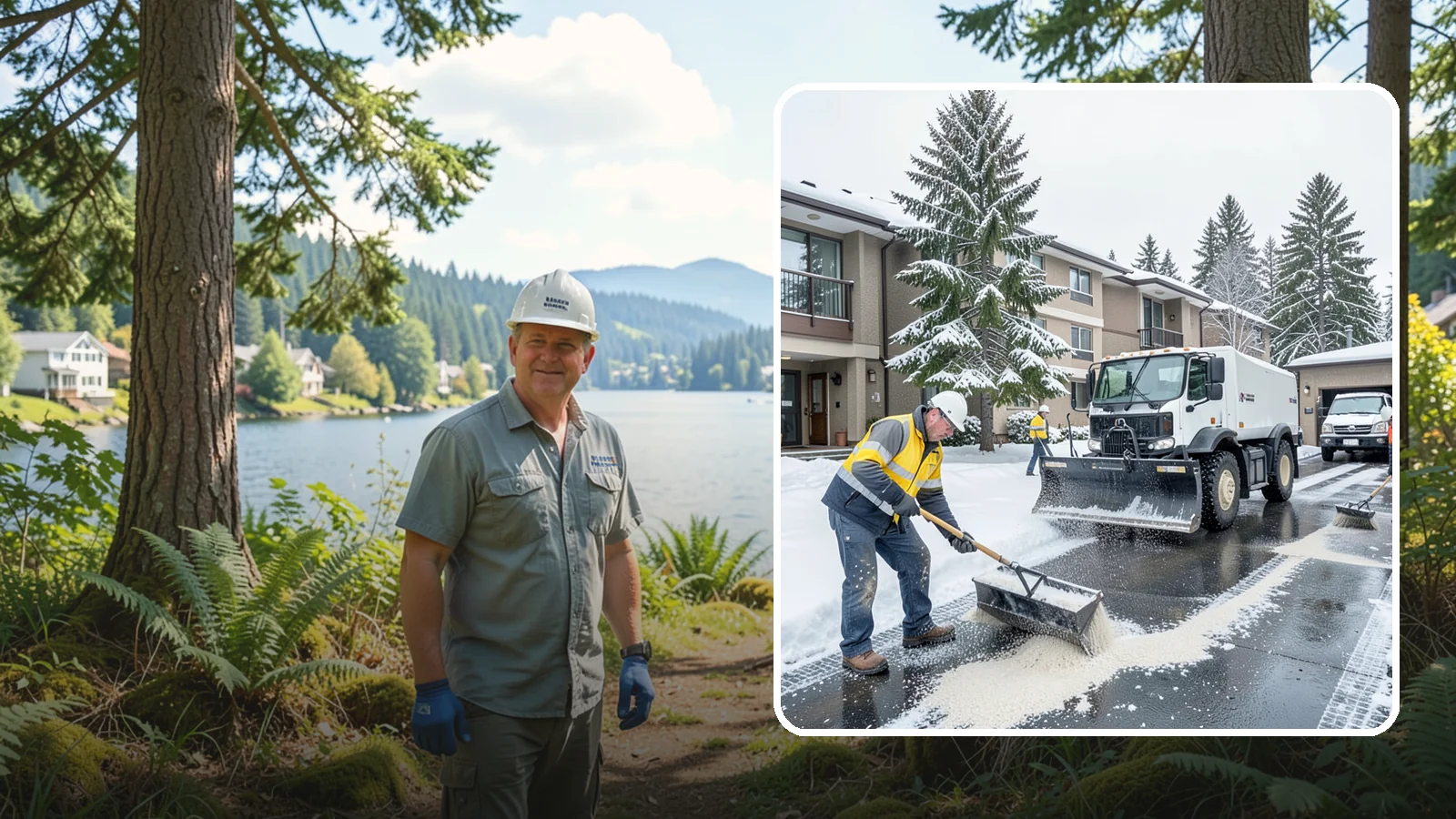
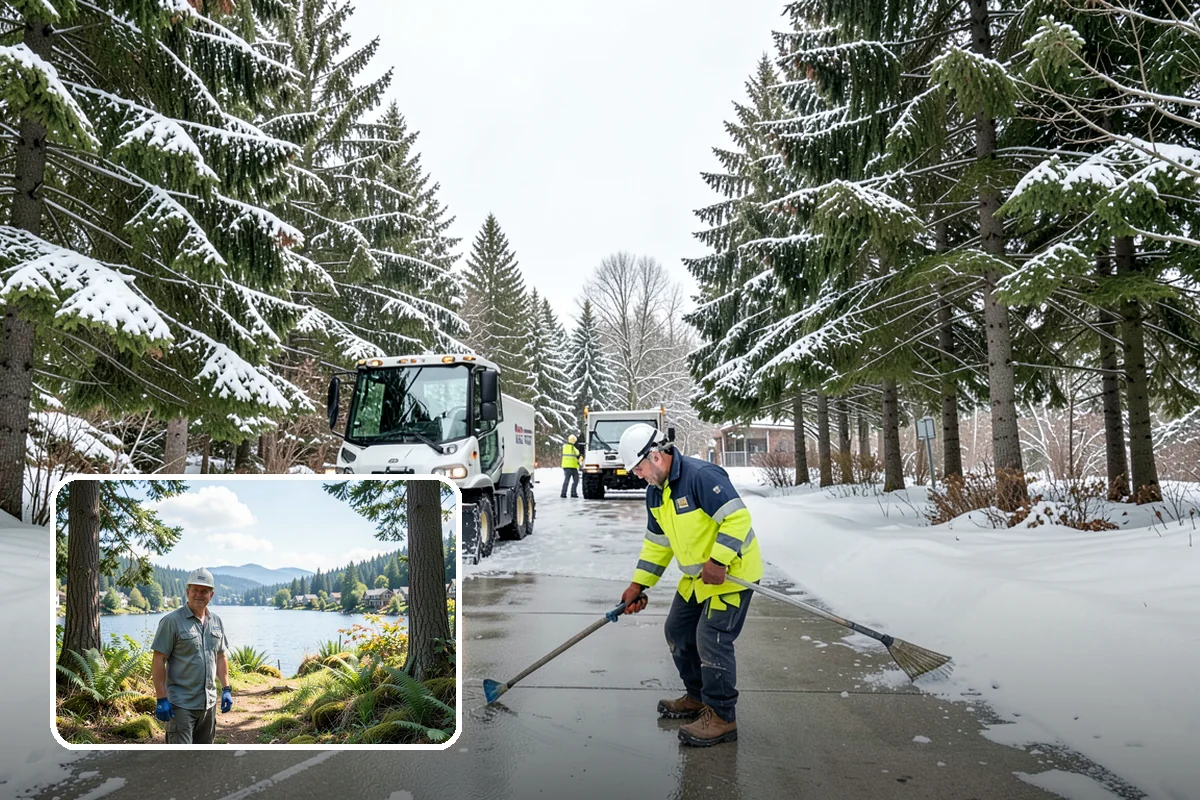
Milton straddles the King and Pierce county line on the hillside above Federal Way, Fife, and Edgewood, and while it sits in the Puget Sound lowlands, its sloped North Hill streets pick up ice more readily than the flats below. Snow is occasional here, usually a wet inch or two, but the grades running down toward Surprise Lake and the valley turn a light event into slick driveways and hard-to-climb approaches. A snow and ice plan that respects Milton’s hillside layout keeps homes reachable during the short cold snaps that follow winter storms.
Milton is largely single-family homes with some townhomes and a modest downtown of small retail and civic buildings, so service leans toward private driveways, hillside approaches, and walkways rather than large lots. We plan clearing around the grade of the North Hill neighborhoods, where getting up and down a sloped drive safely matters more than the amount of snow that falls.
Site Conditions: The hillside setting is the key factor: even a thin snowfall compacts on sloped drives and refreezes overnight, and shaded runs along the county-line ridges stay icy after flatter ground clears. Freeze-thaw is the recurring pattern, with daytime melt on asphalt turning to morning black ice on the descents toward Surprise Lake. Traction on grade matters as much as clearing the surface.
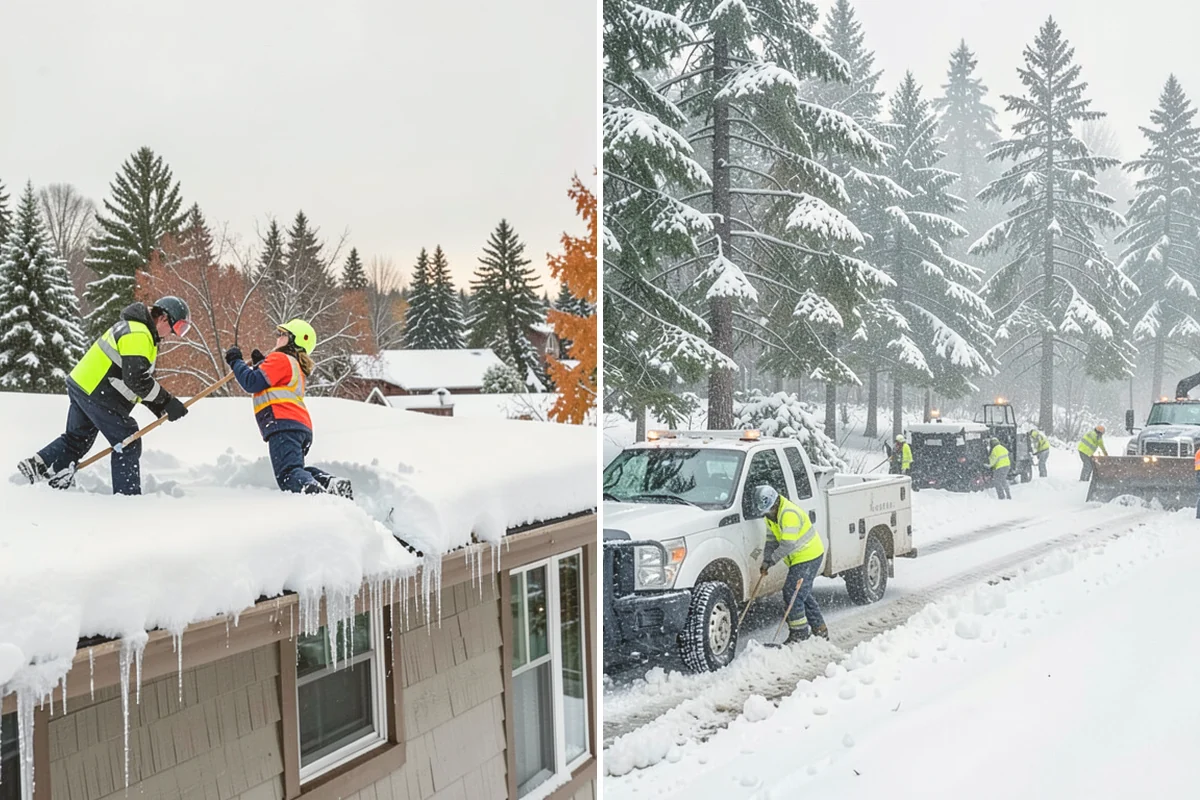
Seasonal Considerations: A normal winter delivers just a few accumulating events, most tied to a cold push behind a Sound system, so the danger is the icy morning after rather than deep snow. We treat sloped approaches before an evening freeze, keep the hillside drives passable through short cold snaps, and watch the overnight refreeze closely. Because snow is infrequent, staging traction material early prevents scrambling when the grades ice over.
Common Project Types: Common jobs include plowing and de-icing sloped residential driveways, adding traction on hillside approaches, and clearing steps and walkways on the North Hill lots. Downtown work covers small retail sidewalks and civic entries, and many owners add seasonal standby so a single freeze does not leave a steep drive unusable for the morning commute.
Property Styles: Housing is mostly single-family homes with some townhomes, many perched on the hillside grades between the two counties. Sloped drives, retaining walls, and terraced yards mean clearing has to protect hardscape edges while keeping the descent safe, so we favor traction-forward treatment and careful plowing over aggressive pushing near walls and beds.
Local Materials & Plants: On Milton’s grades we emphasize grit and pre-wetted salt for traction on the descents, while switching to calcium magnesium acetate near lawns and foundation shrubs so runoff does not burn roots downhill. Plowed snow is stacked uphill of planting beds where possible, edging plants absorb the salt spray, and we keep chloride off the terraced yards that step down the hillside toward the lake.
Planning Your Project: Planning here is about the slope: we decide which sloped drives get treated first, where snow can be stacked without sliding back onto pavement, and how to reach homes on narrow hillside lanes. Turnaround points, priority descents, and pre-treatment timing are set before winter so crews handle the grades efficiently the night ice is forecast.
If your Milton hillside driveway turns treacherous in a cold snap, let’s put a traction-first snow and ice plan in place so the grade stays climbable all season.