Local Service Information
Mount Vernon
The Skagit County seat, set in the Skagit River valley amid farmland.
County: Skagit County
ZIP Codes Served: 98273, 98274
Neighborhoods: Downtown, College Way, Little Mountain
Nearby Communities: Burlington, Sedro-Woolley, Anacortes, La Conner
Common Property Types: Predominantly single-family homes, with some townhomes and multifamily housing; commercial property includes small retail, civic, and light commercial buildings.
Local Tree & Landscape Notes: Common regional trees include Douglas fir, western red cedar, western hemlock, bigleaf maple, and red alder, alongside many ornamental species. Wet soils and dense canopy are common considerations for access and scheduling.
Permit Considerations: Permit requirements vary depending on tree size, species, protected areas, shoreline regulations, critical areas, and local municipal code. Always verify current requirements with the local jurisdiction before beginning work.
Climate: Marine west coast climate typical of the Puget Sound region: mild, wet winters and warm, relatively dry summers, with most rainfall from fall through spring. Occasional wind, snow, and ice events and seasonal soil saturation influence tree health and the timing of tree work.
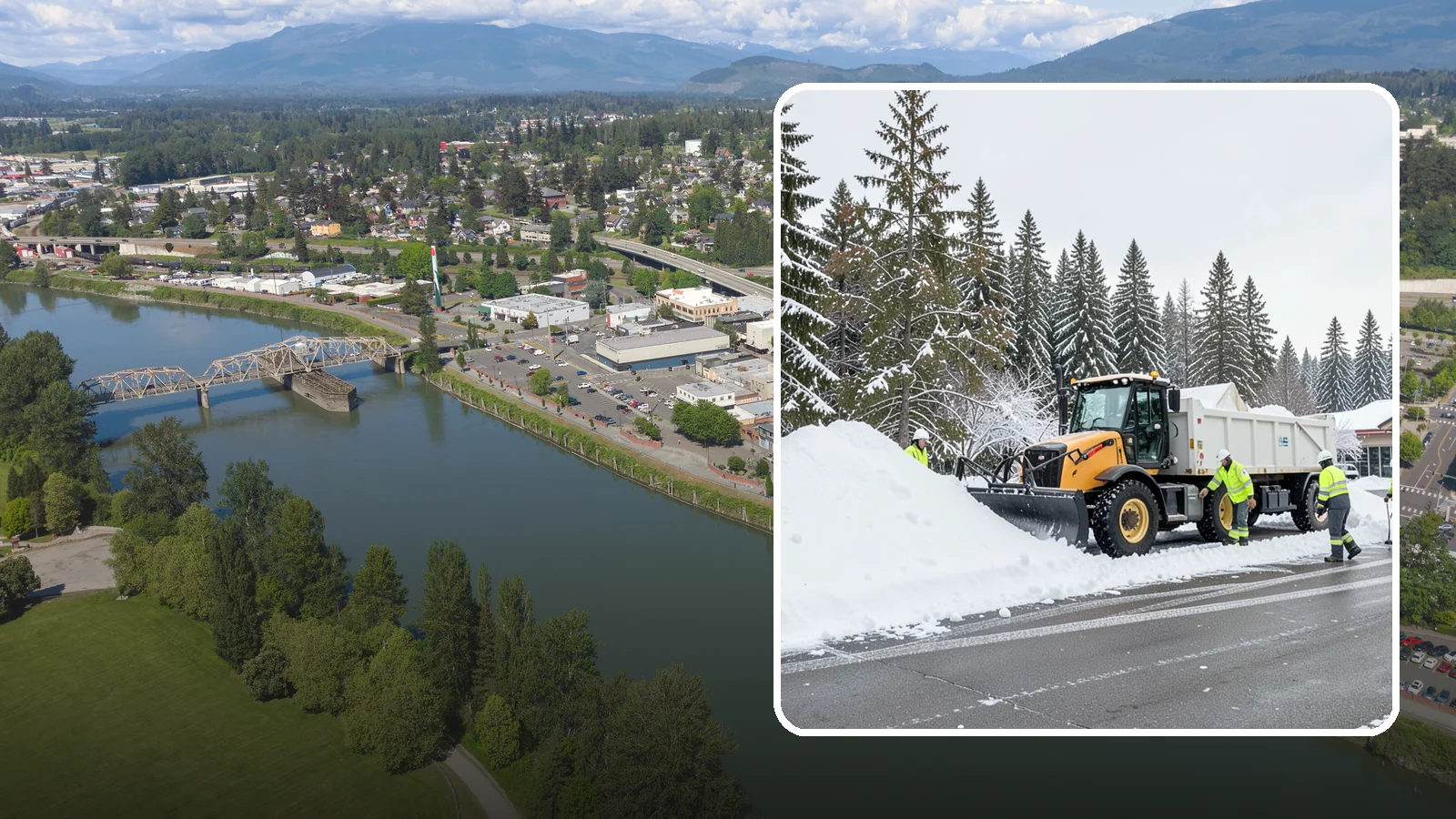
Mount Vernon anchors the Skagit Valley along the Skagit River, and its northern position exposes it to cold outflow winds funneling down from the Fraser corridor, giving it sharper freezes and more frequent snow than the cities nearer Puget Sound. When those northeasterlies meet a wet system, downtown, the College Way corridor, and the slopes around Little Mountain can ice over quickly. With the river waterfront and the surrounding tulip-field farmland spreading traffic across town, a well-planned snow and ice program keeps homes, drives, and small commercial frontage safe through the valley’s harder cold.
Mount Vernon combines a downtown commercial core, the College Way retail strip, and residential neighborhoods around Little Mountain with single-family homes and small civic and retail buildings. Snow and ice service here covers private drives, downtown sidewalks, and the sloped approaches near Little Mountain Park, planned around a valley that freezes harder and more often than the shoreline towns to the south.
Site Conditions: The valley setting drives conditions: Fraser outflow can hold temperatures below freezing for days, so snow and ice linger rather than melting off quickly. Freeze-thaw hits the river-flat streets while the Little Mountain slopes stay icy on shaded, north-facing runs. Long rural and hillside driveways, some gravel, need sustained traction, and downtown walkways demand repeat de-icing during a cold outbreak.
Seasonal Considerations: Because cold air pools and drains through the Skagit Valley, Mount Vernon sees more accumulating events and longer freezes than the marine-moderated cities, so plans must assume repeat clearing. We pre-treat ahead of outflow-driven cold, keep downtown and College Way walkways safe through multi-day freezes, and maintain traction on the Little Mountain grades. Material reserves are stocked for a genuinely snowier winter.
Common Project Types: Work includes repeat plowing of residential, rural, and hillside driveways, de-icing downtown and College Way sidewalks, and keeping the slopes near Little Mountain Park passable. We cover long gravel farm approaches, traction on north-facing runs, and seasonal contracts built for the several cold events the Skagit Valley reliably brings each winter.
Property Styles: Housing ranges from downtown-adjacent single-family homes to properties on the Little Mountain slopes and out toward the tulip-field farmland, plus small retail and civic buildings. That spread means short town drives and long rural approaches alike, so clearing equipment and traction strategy shift by property, with the coldest hillside and valley-edge lots getting priority.
Local Materials & Plants: For the valley’s hard freezes we keep rock salt and sand ready for repeat treatment, and switch to calcium magnesium acetate near lawns, farm windbreaks, and the ornamental plantings common on Skagit lots. On gravel and farm drives grit does the traction work to protect field edges and turf, snow is stacked away from garden and orchard beds, and salt-stressed borders get flushed in spring so valley landscapes rebound.
Planning Your Project: Planning for a colder valley means scheduling repeat visits, restocking material through an outbreak, and sequencing the Little Mountain slopes and rural drives before the downtown flats. We confirm access to long and gravel approaches, set snow-stacking zones clear of beds and fields, and structure seasonal contracts around the sustained freezes Fraser outflow brings to Mount Vernon.
When Skagit Valley cold settles in over Mount Vernon, let’s have a seasonal snow and ice plan ready that keeps your driveway, walks, and frontage clear through every hard freeze.