Local Service Information
North Bend
A city at the base of Mount Si in the upper Snoqualmie valley, surrounded by mountains and forest.
County: King County
ZIP Codes Served: 98045
Neighborhoods: Downtown North Bend, Tanner, and Si View
Nearby Communities: Snoqualmie, Issaquah
Common Property Types: Predominantly single-family homes, with some townhomes and multifamily housing; commercial property includes small retail, civic, and light commercial buildings.
Local Tree & Landscape Notes: Mountain and heavily forested setting with large conifers including Douglas fir, western hemlock, and western red cedar. Steep terrain, limited access, and large trees are key considerations for planning and rigging.
Permit Considerations: Permit requirements vary depending on tree size, species, protected areas, shoreline regulations, critical areas, and local municipal code. Always verify current requirements with the local jurisdiction before beginning work.
Climate: Marine west coast climate typical of the Puget Sound region: mild, wet winters and warm, relatively dry summers, with most rainfall from fall through spring. Occasional wind, snow, and ice events and seasonal soil saturation influence tree health and the timing of tree work.
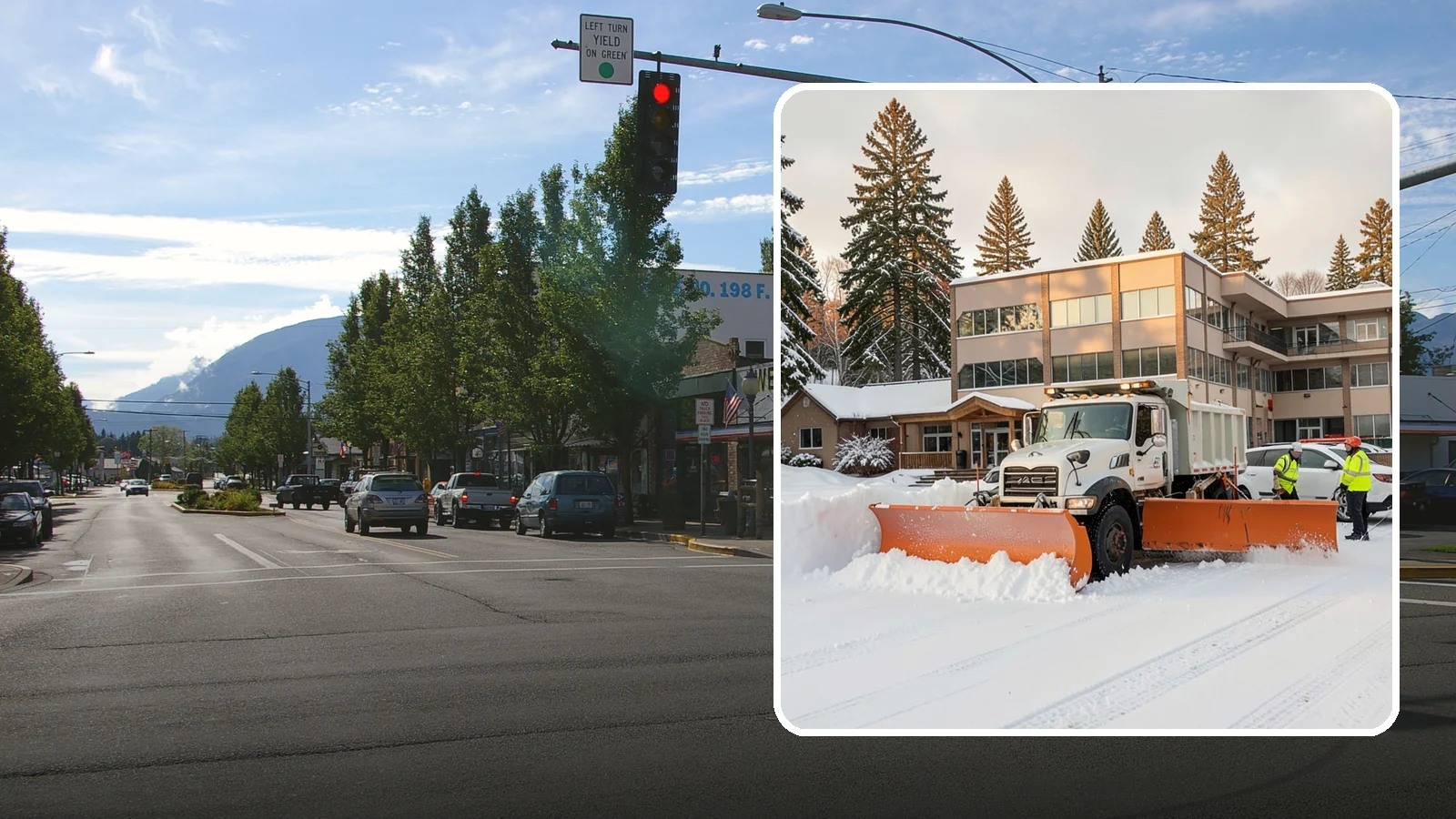
North Bend sits where the Snoqualmie Valley meets the Cascade foothills in King County, and that foothold in higher terrain shapes every winter here. Cold air pools against Mount Si and Rattlesnake Ledge, and the Snoqualmie River corridor funnels damp, freezing weather that turns to real accumulating snow far more often than the Puget Sound lowlands see. Homeowners around Si View and the Tanner area plan for genuine plowing seasons, not just the occasional dusting, which is why dependable snow and ice management matters across town.
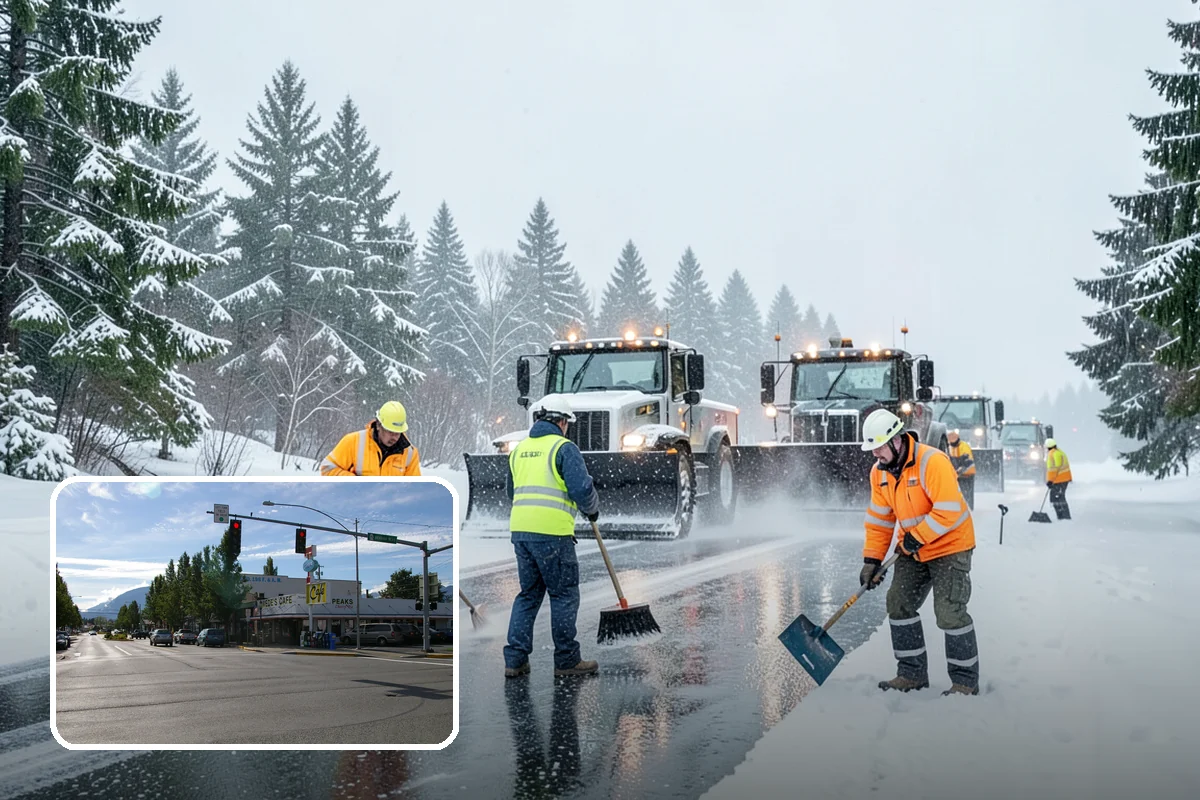
Our snow and ice crews work North Bend as a true elevation town, scaling plow routes, shoveling, and de-icing to the deeper, more frequent falls that arrive off the Cascades. We service long valley driveways, downtown storefront walks, and the civic and light-commercial properties that need to stay open when a storm parks over the foothills.
Site Conditions: Elevation and cold-air drainage off Mount Si push snow totals well above the flatlands, and repeated freeze-thaw cycles glaze driveways and north-facing walks with hard ice. Shaded lots near the river hold pack longer, and the mix of long rural driveways and downtown pavement calls for different clearing methods on the same street.
Seasonal Considerations: Winter arrives earlier and lingers here, so seasonal contracts and pre-storm scheduling carry more weight than in the lowlands. We track overnight lows against river-valley fog that refreezes cleared surfaces by dawn, and we stage ice melt ahead of the back-to-back systems that ride the Snoqualmie corridor from late fall into early spring.
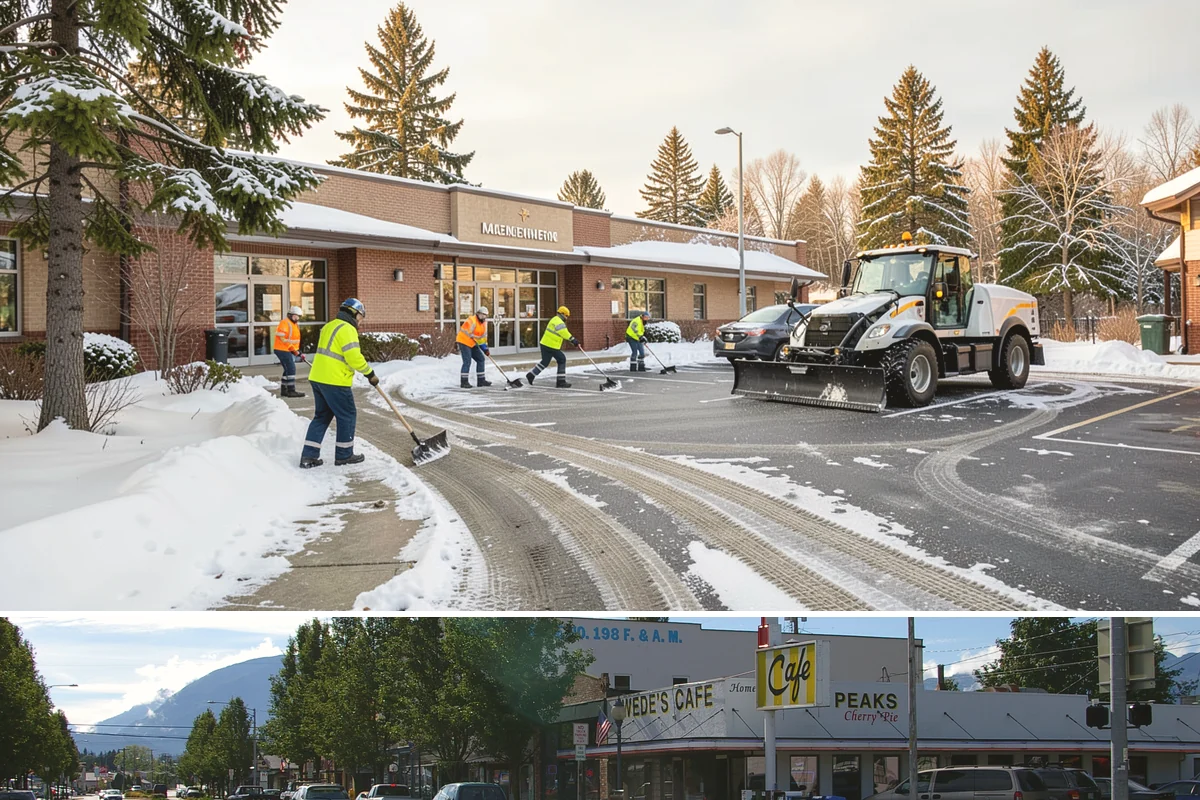
Common Project Types: Typical work runs from residential driveway plowing and walkway shoveling to storefront and sidewalk clearing downtown, roof snow-load removal on homes and light-commercial roofs after heavy falls, and full seasonal de-icing contracts for HOAs and civic properties that cannot afford to be snowed in.
Property Styles: The town leans to single-family homes with some townhomes and multifamily housing, plus small retail and civic buildings downtown. Many homes sit on generous foothill lots with sloped, tree-lined driveways that need careful plow staging and hand-work near landscaping.
Local Materials & Plants: For North Bend’s harder freezes we lean on calcium chloride and traction grit that keep working at low temperatures, applied sparingly near the mature conifers and native shrubs common on foothill lots. We berm snow away from root zones, flag plow lanes to spare split-rail fencing and ornamental beds, and rinse salt-splash zones in spring to protect lawns that green up slowly at elevation.
Planning Your Project: Because storms here can stack up fast, we map priority passes for steep driveways and emergency exits first, then circle back for widening and ice control. We coordinate roof-load checks after sustained snowfall and keep valley access routes open so residents on longer rural drives are never cut off between systems.
Lock in a North Bend seasonal snow and ice plan before the first Cascade system rolls through, and keep your foothill driveway and walks clear all winter long.