Local Service Information
Seattle
The region’s largest city and the King County seat, set between Puget Sound and Lake Washington on hilly terrain.
County: King County
ZIP Codes Served: 98101, 98103, 98105, 98115, 98118, 98122, 98133
Neighborhoods: Ballard, Capitol Hill, Fremont, West Seattle, Queen Anne, Rainier Valley, University District
Nearby Communities: Shoreline, Burien, Tukwila, Mercer Island, Bellevue
Common Property Types: Predominantly single-family homes along with townhomes, condominiums, and multifamily housing; commercial property includes retail, office, and mixed-use buildings.
Local Tree & Landscape Notes: Common regional trees include Douglas fir, western red cedar, western hemlock, bigleaf maple, and red alder, alongside many ornamental species. Wet soils and dense canopy are common considerations for access and scheduling.
Permit Considerations: Permit requirements vary depending on tree size, species, protected areas, shoreline regulations, critical areas, and local municipal code. Always verify current requirements with the local jurisdiction before beginning work.
Climate: Marine west coast climate typical of the Puget Sound region: mild, wet winters and warm, relatively dry summers, with most rainfall from fall through spring. Occasional wind, snow, and ice events and seasonal soil saturation influence tree health and the timing of tree work.
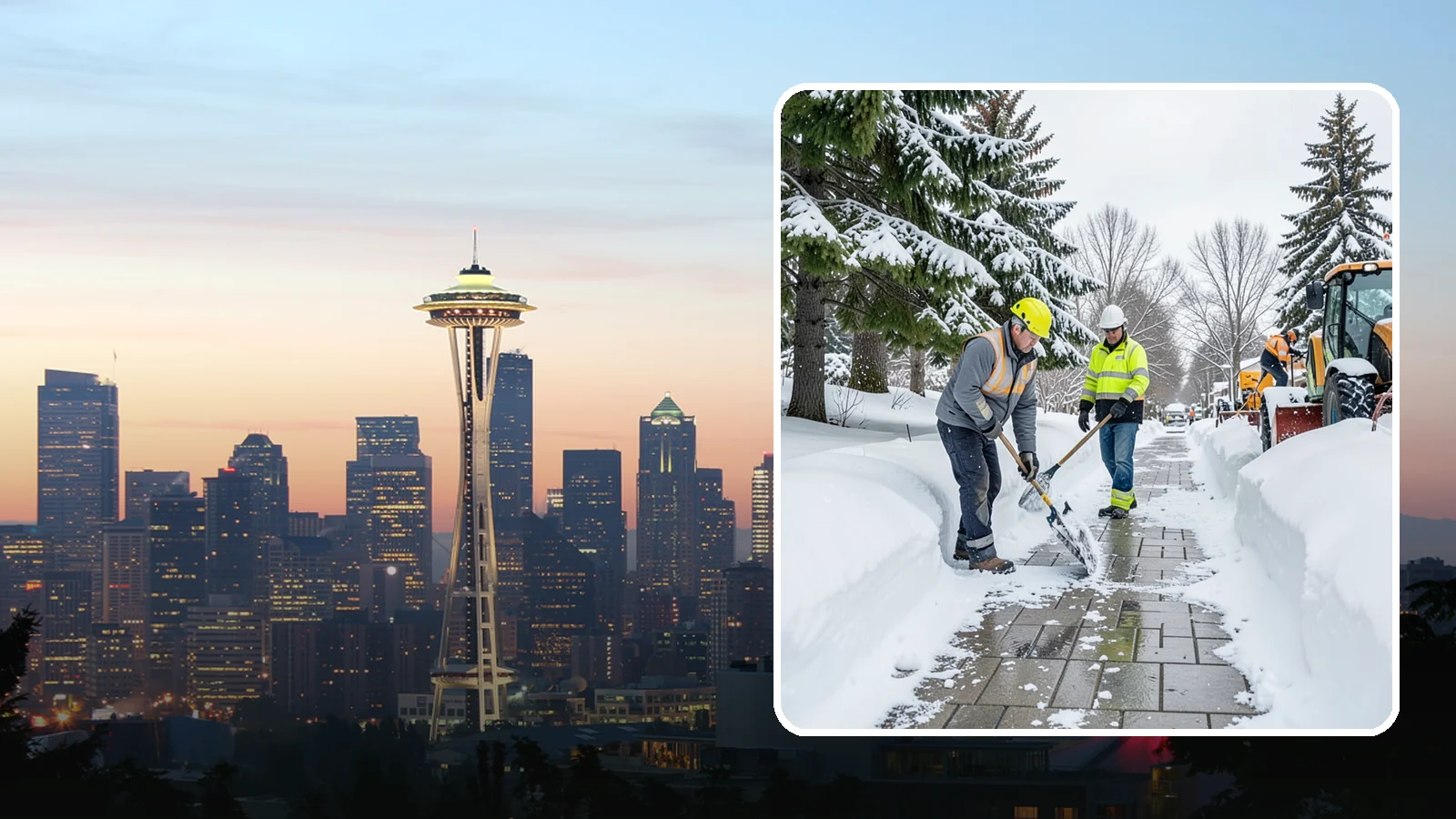
Seattle’s steep, hilly neighborhoods, from Queen Anne and Capitol Hill to West Seattle, Fremont, Ballard, the University District, and Rainier Valley, turn even a modest snowfall into a genuine ice problem, because the city’s grades hold packed snow long after flat suburbs have thawed. Snow is occasional here, but when it lands on the slopes near the Space Needle and Pike Place, sidewalks and driveways can stay treacherous for days. Property owners plan for a few sharp, short events rather than a long winter.
Across Seattle’s dense mix of neighborhoods our snow and ice work centers on steep residential driveways, shared stairways, and small commercial frontages where the city expects owners to keep sidewalks clear. Calls cluster on the hills of Queen Anne and Capitol Hill, where a light snow refreezes into a hard glaze that stalls both walking and parking.
Site Conditions: The defining challenge is grade: pitched driveways and hillside walks near Discovery Park and the Washington Park Arboretum shed poorly and refreeze in shade, while valley pockets in Rainier Valley trap cold air. North-facing steps and brick frontages hold black ice long after south-facing pavement clears.
Seasonal Considerations: Seattle typically sees a handful of snow or ice days from December into February, sometimes a single lowland dump followed by an icy week. We prioritize traction on slopes during these windows, re-treating as melt-refreeze cycles reglaze the hills, and clearing sidewalk frontages promptly to meet the city’s clearing expectations.
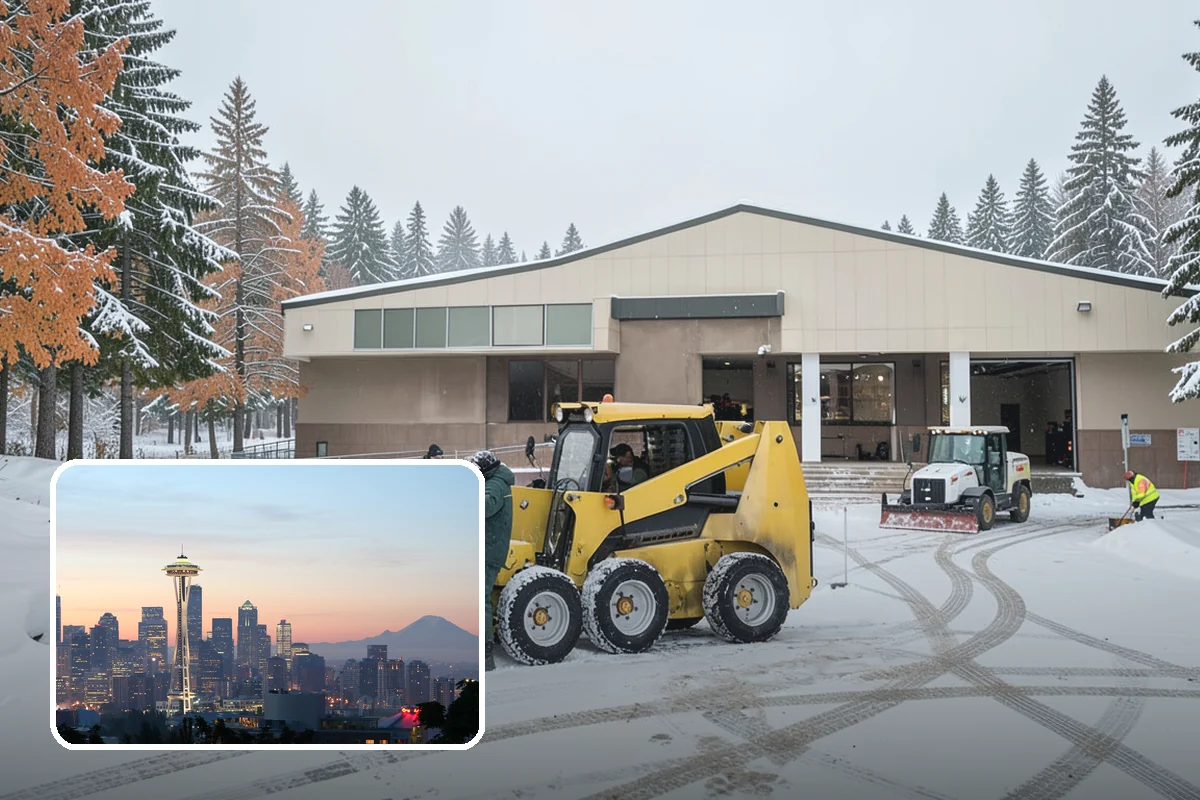
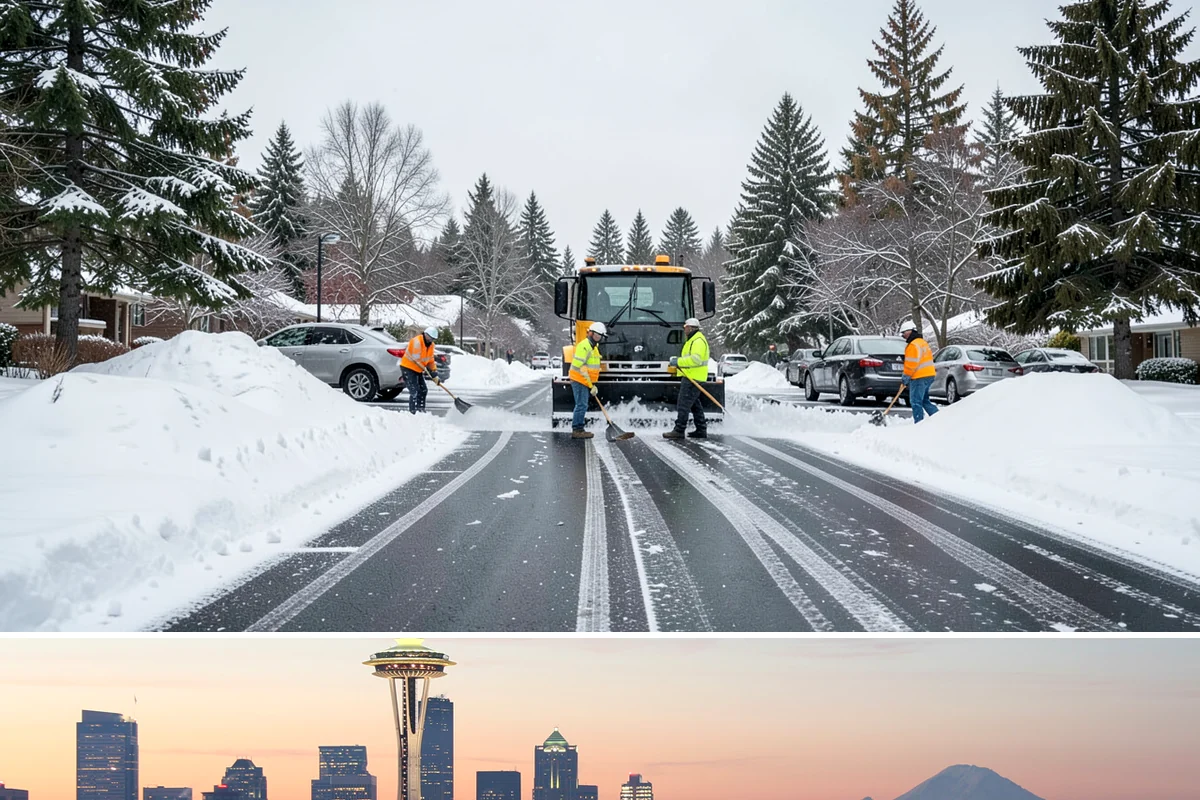
Common Project Types: Work ranges from plowing and de-icing steep hillside driveways, to hand-clearing shared stairs and entry landings on Capitol Hill, to salting sidewalk frontages and small mixed-use lots in Ballard and Fremont, plus traction treatment for multifamily entries in the University District.
Property Styles: The housing runs from single-family homes to townhomes, condominiums, and mixed-use buildings, many on tight urban lots and sloped sites, so clearing often means careful hand work on stairs and narrow drives where a plow simply cannot reach.
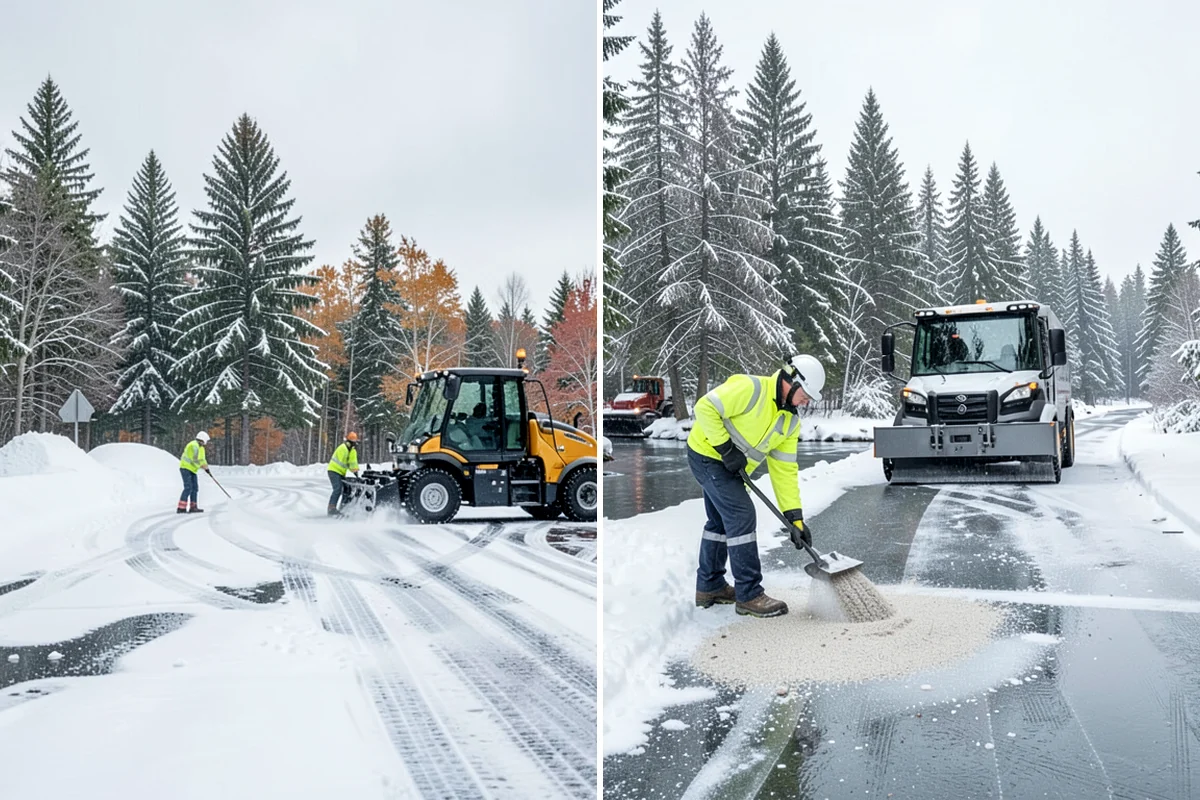
Local Materials & Plants: On the arboretum-adjacent streets we lean on liquid brine and traction grit to protect mature street trees and parking-strip plantings, choosing sand over heavy salt near garden beds; magnesium chloride is reserved for the steepest Queen Anne approaches where footing matters most.
Planning Your Project: We map routes by slope, hitting the steepest Capitol Hill and West Seattle driveways first while a storm is still building, then circling back for repeat traction passes as the hills reglaze, because in Seattle the ice, not the snowfall total, is what strands people.
When the next cold snap glazes your Seattle hillside driveway or sidewalk, have a plowing and de-icing plan ready, and reach out before snow reaches the slopes of Queen Anne or West Seattle.