Local Service Information
South Prairie
A very small town in the foothills of southeast Pierce County near the Carbon River.
County: Pierce County
ZIP Codes Served: 98385
Neighborhoods: A small rural town core near the Carbon River
Nearby Communities: Buckley, Wilkeson, Orting
Common Property Types: Predominantly single-family homes on larger and rural lots, with some farm and acreage properties; commercial property is limited to small retail and civic buildings.
Local Tree & Landscape Notes: Forested foothill setting with conifers such as Douglas fir, western hemlock, and western red cedar, plus bigleaf maple and alder. Slopes, wet soils, and larger trees are common considerations for access and rigging.
Permit Considerations: Permit requirements vary depending on tree size, species, protected areas, shoreline regulations, critical areas, and local municipal code. Always verify current requirements with the local jurisdiction before beginning work.
Climate: Marine west coast climate typical of the Puget Sound region: mild, wet winters and warm, relatively dry summers, with most rainfall from fall through spring. Occasional wind, snow, and ice events and seasonal soil saturation influence tree health and the timing of tree work.
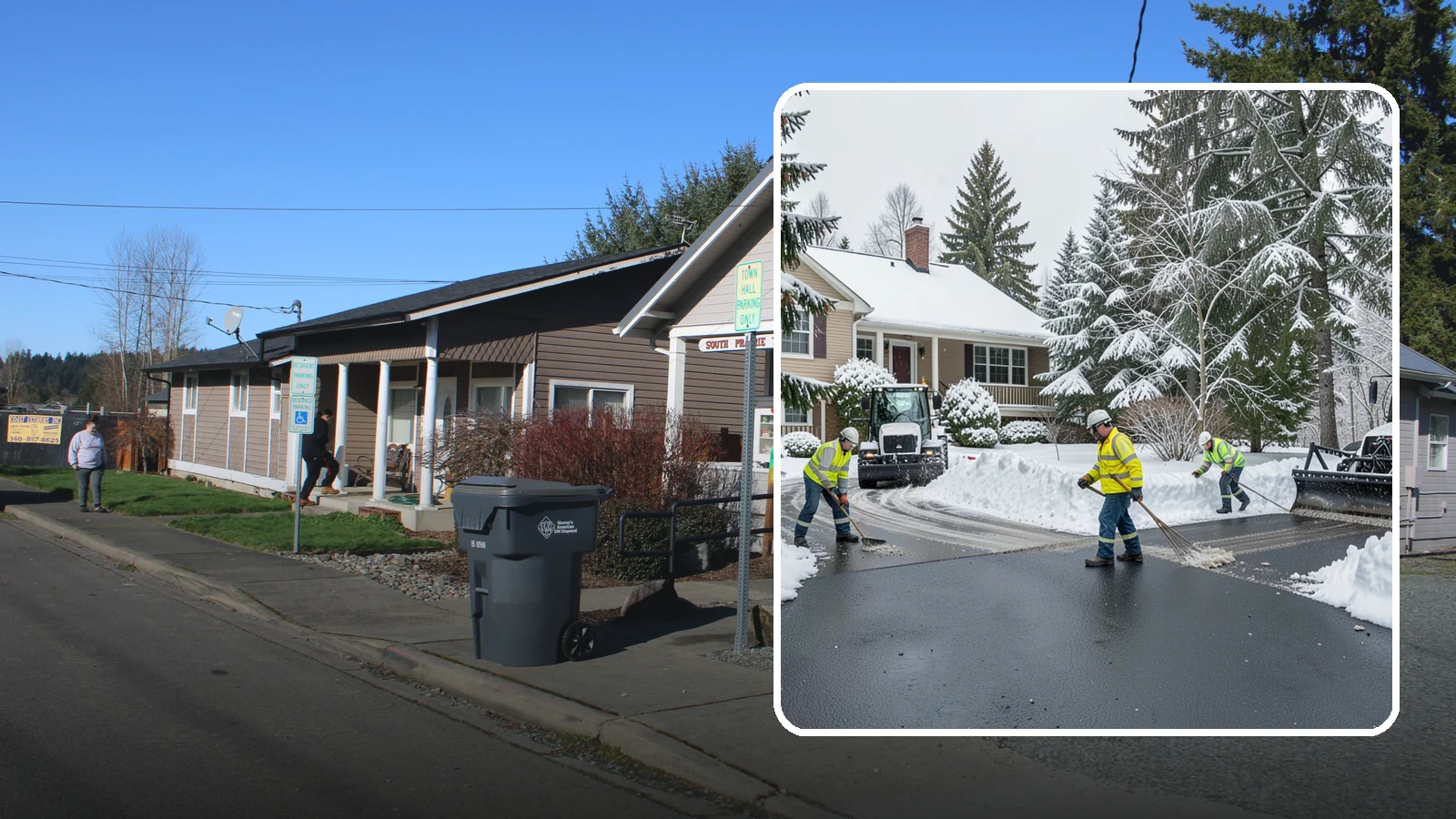
South Prairie sits in the rural Pierce County foothills near the Carbon River and the Foothills Trail, where the ground runs slightly cooler and snowier than the open Puget Sound lowlands. Cold air spilling off the Mount Rainier foothills through Buckley, Wilkeson, and Orting brings snow and hard frost that linger on the town’s rural and acreage lots. Residents here plan for real winter clearing across long country driveways rather than a rare urban dusting.
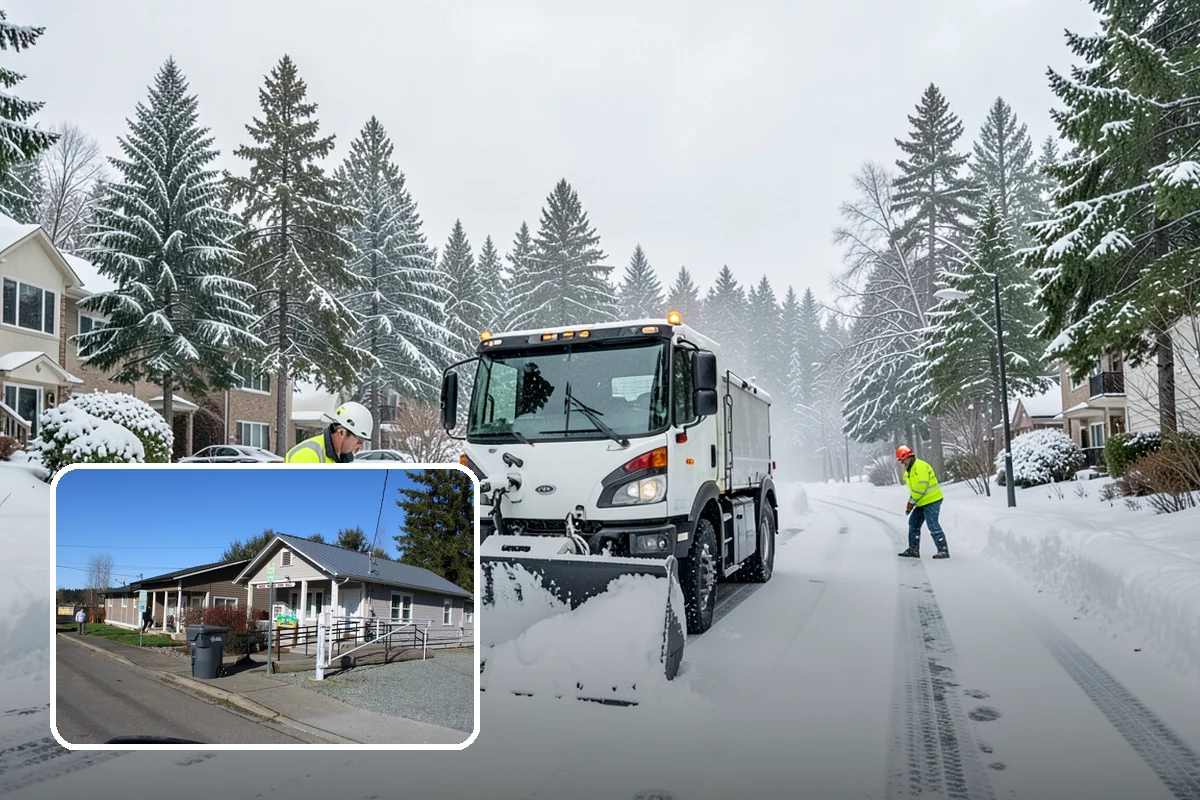
Serving this small rural core and the acreage properties around it near Buckley, Wilkeson, and Orting, our snow and ice work handles long driveway plowing, keeping country lanes open, and de-icing the handful of small-retail and civic frontages in town. The cooler foothill setting means more frequent frost than the flats see.
Site Conditions: Elevation off the Carbon River valley lets snow fall more readily and cold air pool overnight, so gravel and rural drives freeze hard and stay slick in shade; freeze-thaw grips the long approaches near the Foothills Trail, and plowed snow banks build up along narrow country lanes.
Seasonal Considerations: South Prairie can expect several snow and frost spells from late November into February, running colder and a bit longer than nearby lowland towns. We pre-treat ahead of foothill cold pushes and keep return plowing ready, since rural snowpack here can linger a day or two past when the Sound-side flats have cleared.
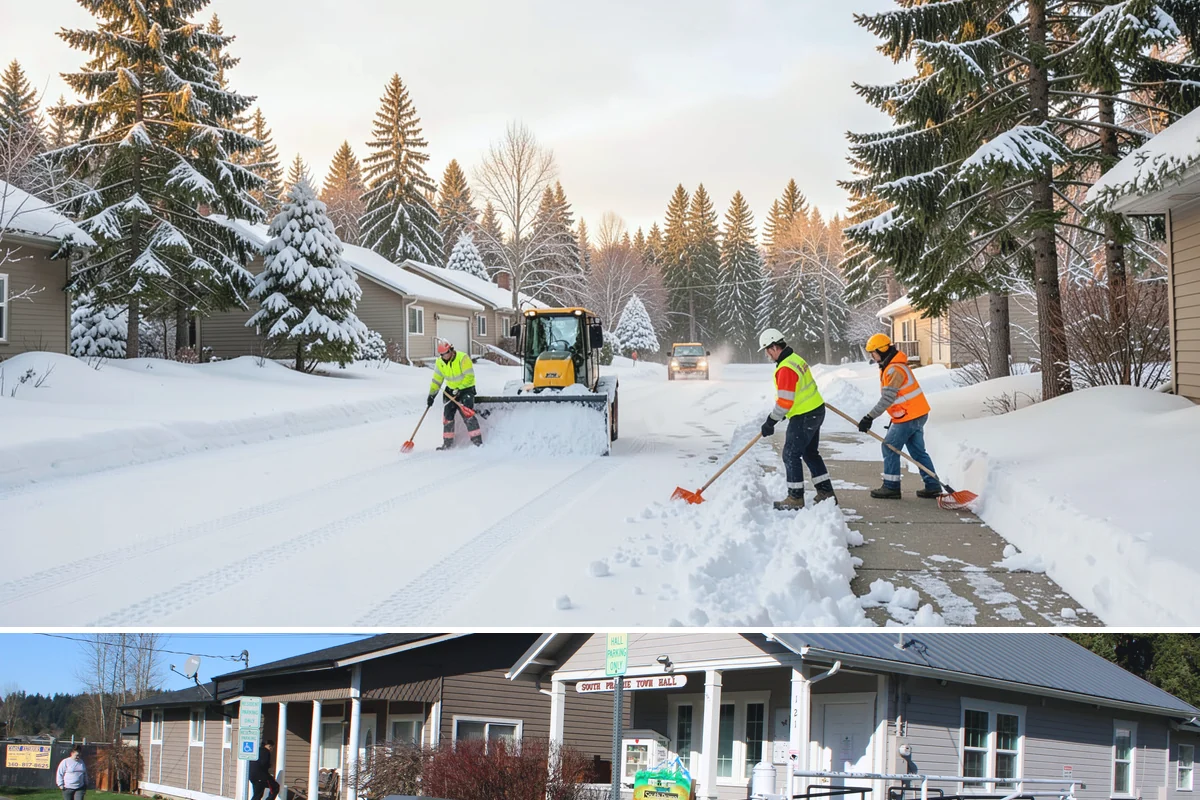
Common Project Types: Typical projects include plowing long single-family and acreage driveways, clearing gravel country lanes to the main road, de-icing small-retail and civic frontages in the town core, and knocking back plow banks that narrow the rural approaches near the Carbon River.
Property Styles: South Prairie is mostly single-family homes on larger and rural lots with farm and acreage properties, so clearing means long driveways, space for snow-storage banks, and wider plowing routes that a compact in-town lot would never demand.
Local Materials & Plants: On these country drives we spread traction sand and a mag-chloride blend that spares pasture edges, orchard rows, and the native conifers along the Carbon River, steering salt away from garden beds; sturdy stakes mark gravel shoulders, culverts, and well heads under the snow.
Planning Your Project: We plan South Prairie routes around the long rural approaches, revisiting shaded lanes for a second de-icing pass and managing where foothill snow gets banked, timing the work to Carbon-valley cold forecasts so acreage driveways stay passable through multi-day frost.
Keep your South Prairie acreage or country driveway open all winter by lining up plowing and de-icing before the foothill snow settles in along the Carbon River.