Local Service Information
Mukilteo
A waterfront city on Puget Sound with a ferry terminal to Whidbey Island.
County: Snohomish County
ZIP Codes Served: 98275
Neighborhoods: Old Town, Harbour Pointe
Nearby Communities: Everett, Edmonds, Lynnwood
Common Property Types: Predominantly single-family homes with townhomes and some condominiums and multifamily housing; commercial property includes retail, office, and small mixed-use buildings.
Local Tree & Landscape Notes: Shoreline setting with conifers, bigleaf maple, and ornamental species; coastal wind exposure, shoreline regulations, and access are common considerations for scheduling and permitting.
Permit Considerations: Permit requirements vary depending on tree size, species, protected areas, shoreline regulations, critical areas, and local municipal code. Always verify current requirements with the local jurisdiction before beginning work.
Climate: Marine west coast climate typical of the Puget Sound region: mild, wet winters and warm, relatively dry summers, with most rainfall from fall through spring. Occasional wind, snow, and ice events and seasonal soil saturation influence tree health and the timing of tree work.
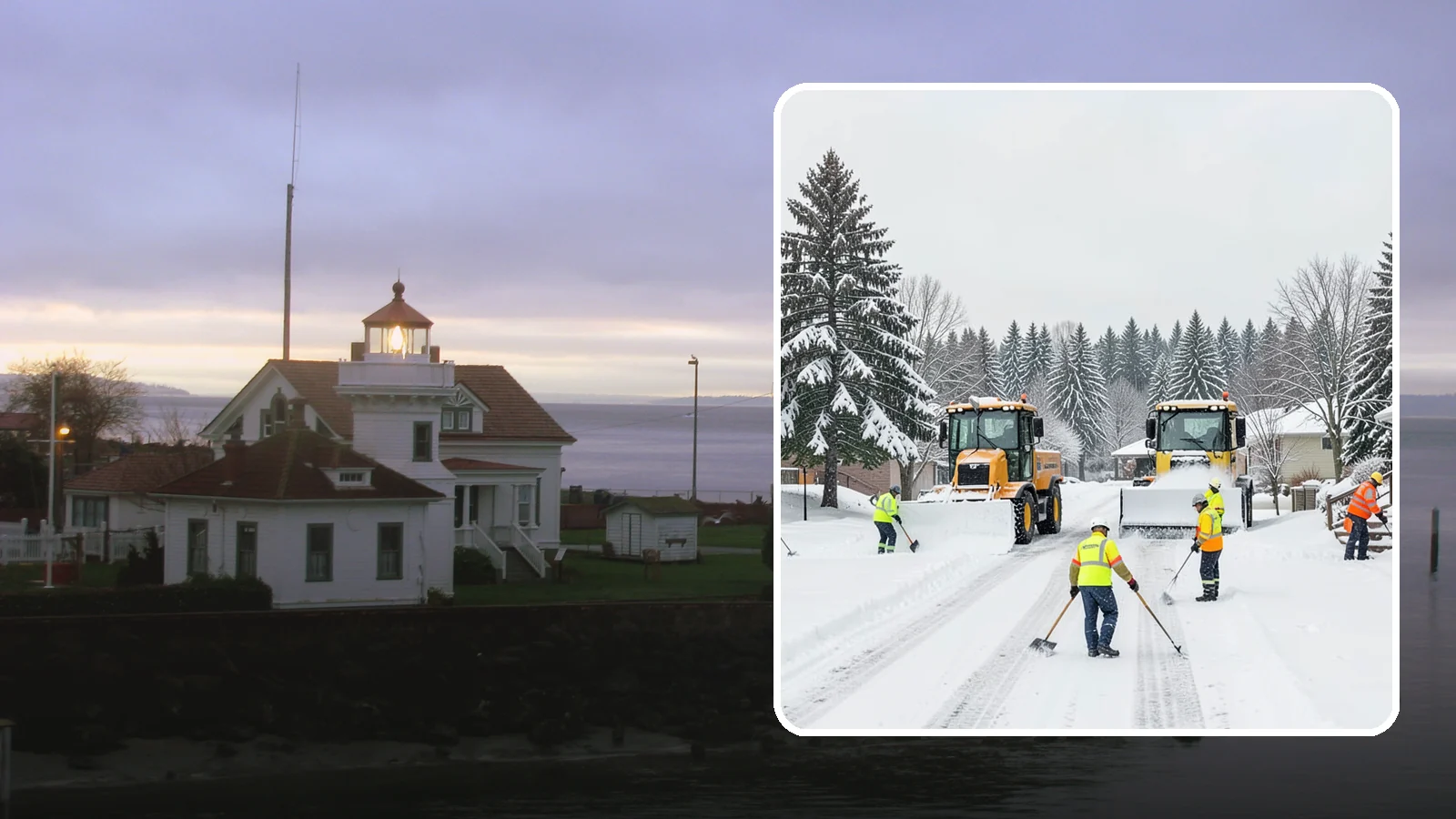
Mukilteo perches on the bluffs above Possession Sound, from Old Town down by the lighthouse and ferry terminal up to Harbour Pointe, and the surrounding marine water keeps its winters mild with only occasional snow. But mild does not mean safe: the town’s steep bluff streets and the grade down to the waterfront turn even a wet inch into slick, hard-to-climb hazards. When a cold snap follows a Sound system, those descents and shaded curves re-ice fast, so a snow and ice plan built around Mukilteo’s slopes keeps homes and the ferry approach reachable.
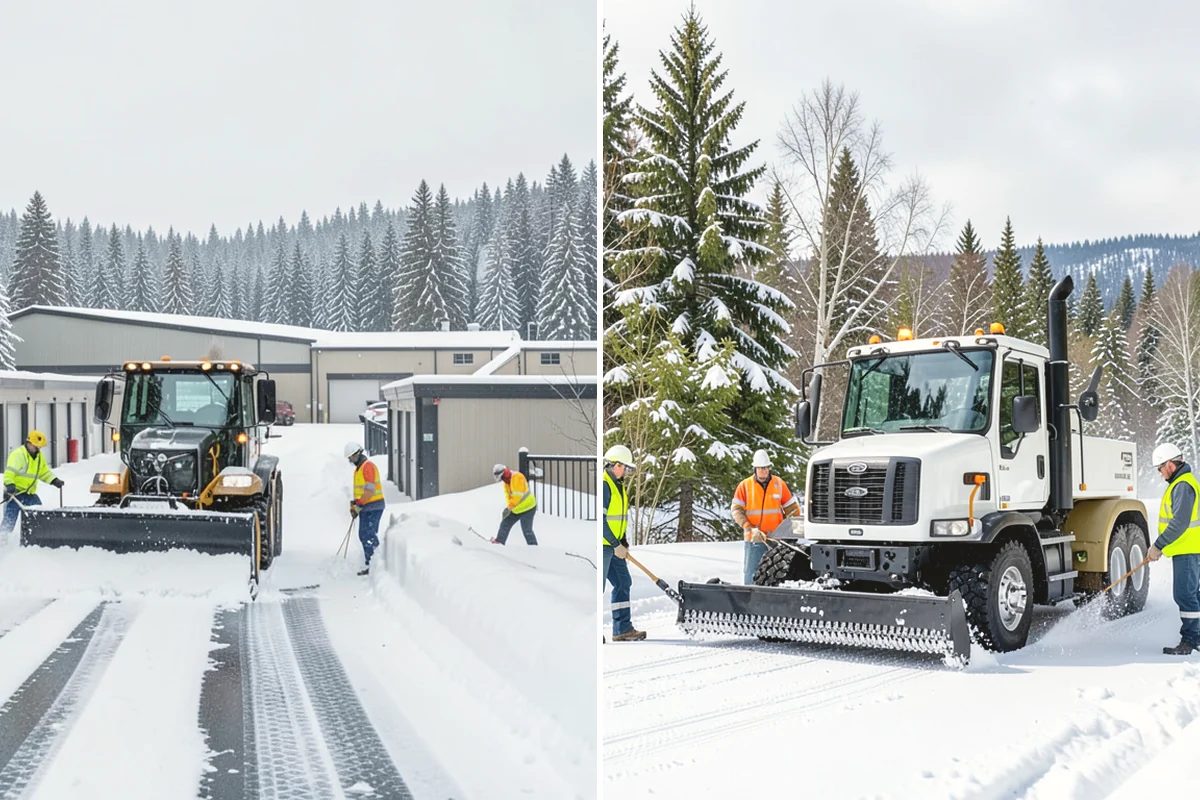
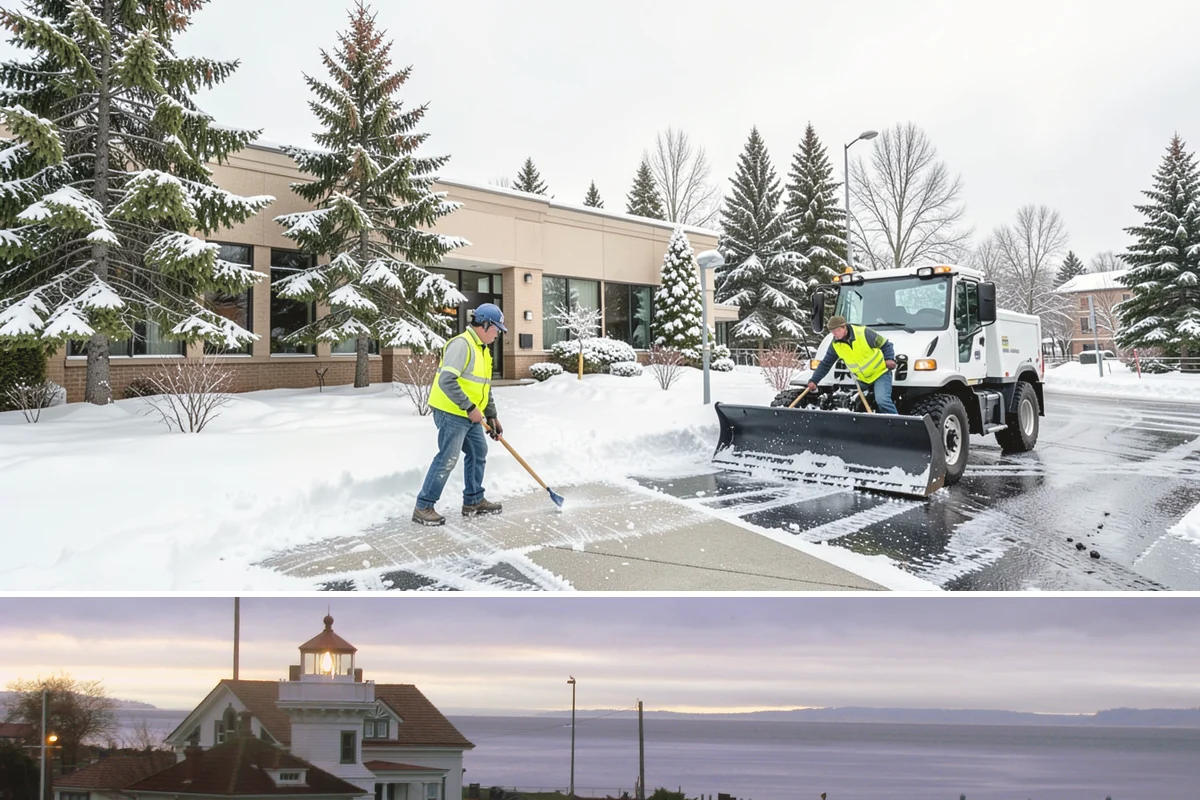
Mukilteo mixes single-family homes, townhomes, and condominiums with retail and office frontage, and much of it sits on the bluff grades between Harbour Pointe and Old Town. Snow and ice service here centers on sloped private drives, shared lanes, and the walkways feeding the waterfront and ferry area, where traction on the descent matters far more than the modest snowfall totals.
Site Conditions: Bluff-top grades define the risk: wet snow compacts on the descents toward the water, then freeze-thaw locks it into ice on north-facing and tree-shaded runs. Marine air keeps hard cold brief, but slope plus shade means the same hillside drives and switchbacks re-ice each morning. Long asphalt drives and bluff-edge walkways hold moisture and call for traction material as much as plowing.
Seasonal Considerations: Winters bring only a handful of accumulating events, usually when cold air meets a marine system, so timing and slope are everything. We treat the bluff drives and waterfront approaches before an evening freeze, keep the steepest descents usable through short cold snaps, and watch the overnight refreeze after a daytime thaw. Because snow is infrequent, staging traction material early prevents a scramble when the grades ice up.
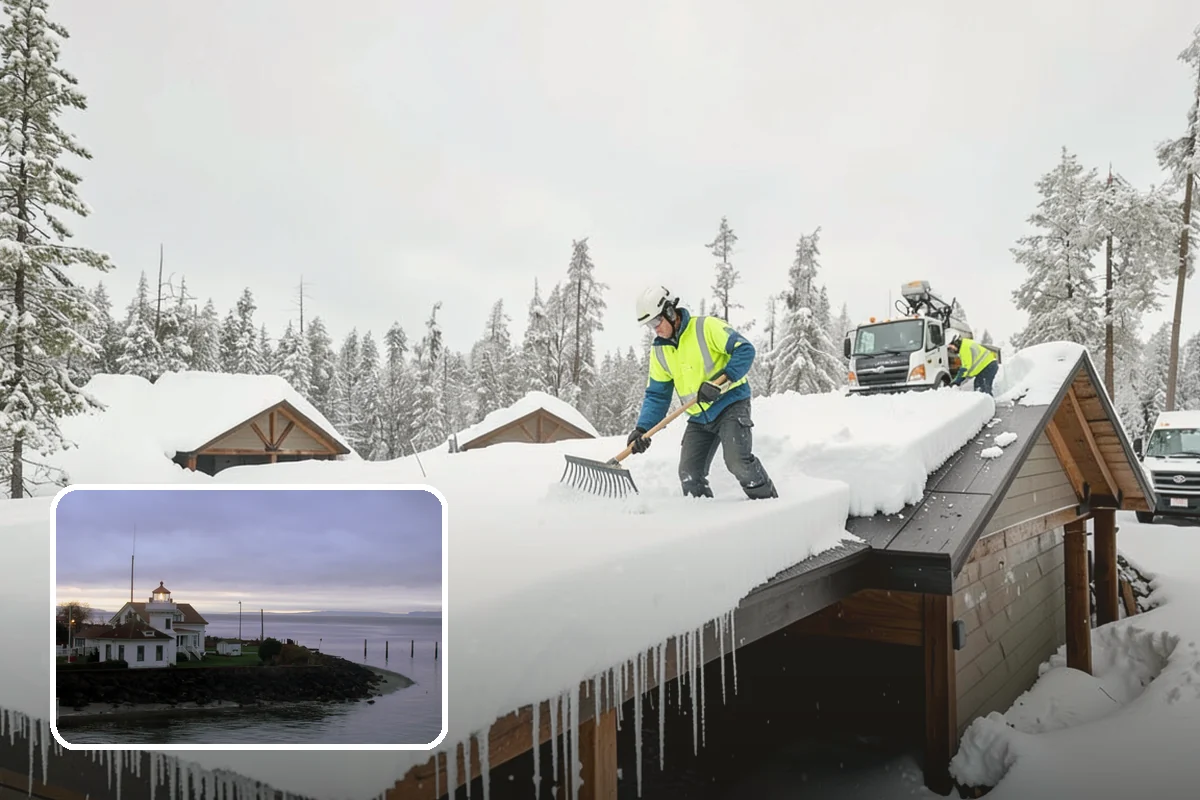
Common Project Types: Common jobs include plowing and de-icing sloped bluff driveways, adding traction on the descents toward Old Town, and clearing steps, landings, and shared lanes serving hillside homes. We keep walkways near the ferry approach and Harbour Pointe passable and offer seasonal standby so one icy event does not strand vehicles on a steep waterfront drive.
Property Styles: Homes range from Old Town cottages to Harbour Pointe’s newer single-family houses, townhomes, and condominiums, many on bluff grades with long descending drives and view-oriented hardscape. That terrain rewards sized-down clearing and generous traction over wide plowing, since retaining walls and view-lot plantings are easy to damage on a tight, sloping bluff parcel.
Local Materials & Plants: On Mukilteo’s bluffs we go traction-forward, pairing anti-icing brine on drives with grit on the steepest pitches, and keeping sodium chloride away from the salt-sensitive firs, rhododendrons, and lawns framing the water views. Snow is pushed to bare ground rather than onto beds, plow stakes guard irrigation and low lighting, and hardy shoreline edging plants take the spray so ornamentals stay unharmed.
Planning Your Project: Grade and access drive the plan: we flag which bluff drives need traction first, where cleared snow can rest without sliding back downhill, and how to reach homes on narrow shared lanes near the water. Gate codes, turnarounds, and priority descents are confirmed before winter so crews work Mukilteo’s slopes efficiently when a wet event lands.
If your Mukilteo bluff drive gets treacherous when snow hits, let’s set a traction-first plan sized to your slope so the descent to the waterfront stays safe.