How ADA Access Clearing Works in Edgewood, WA
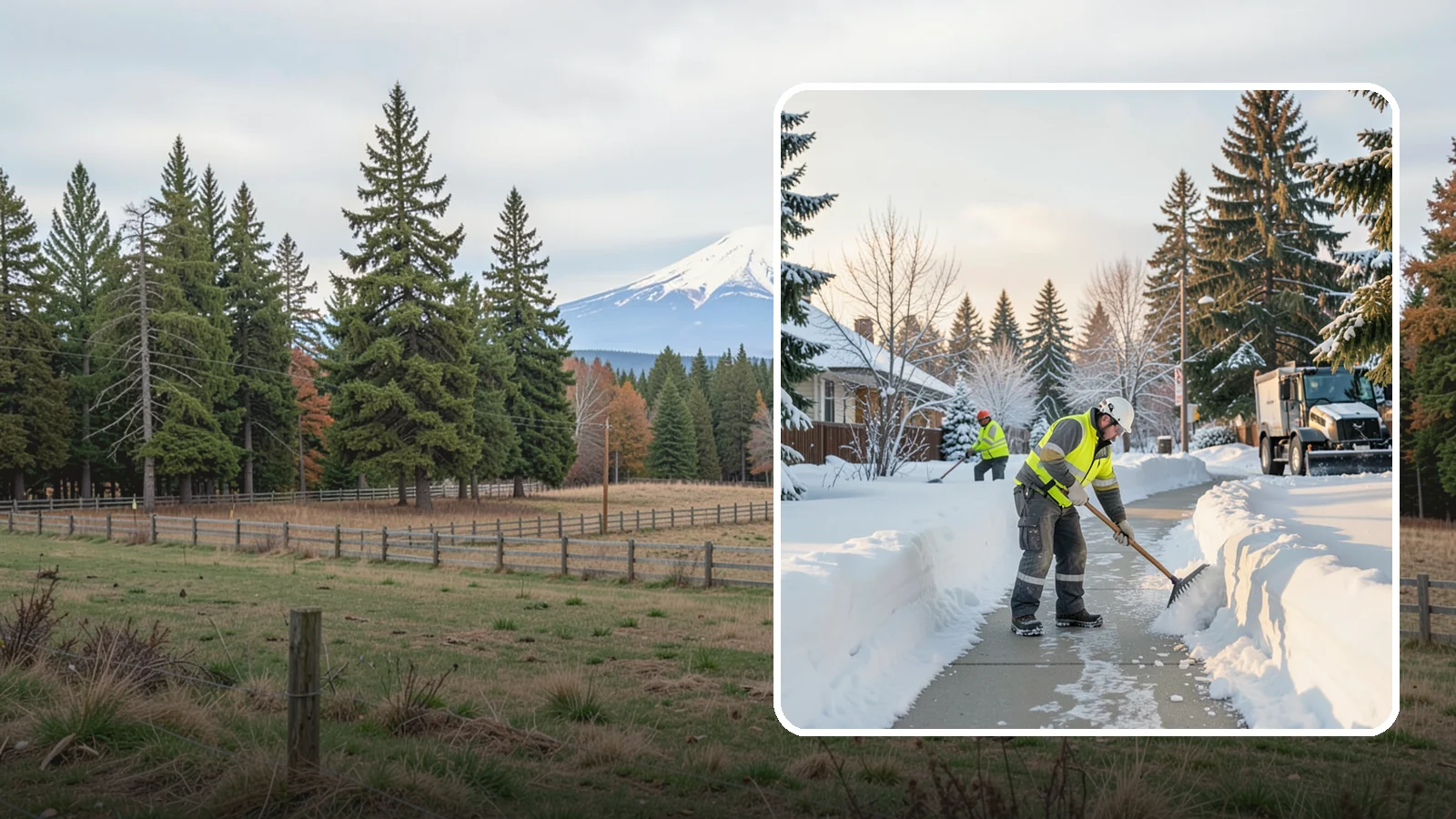
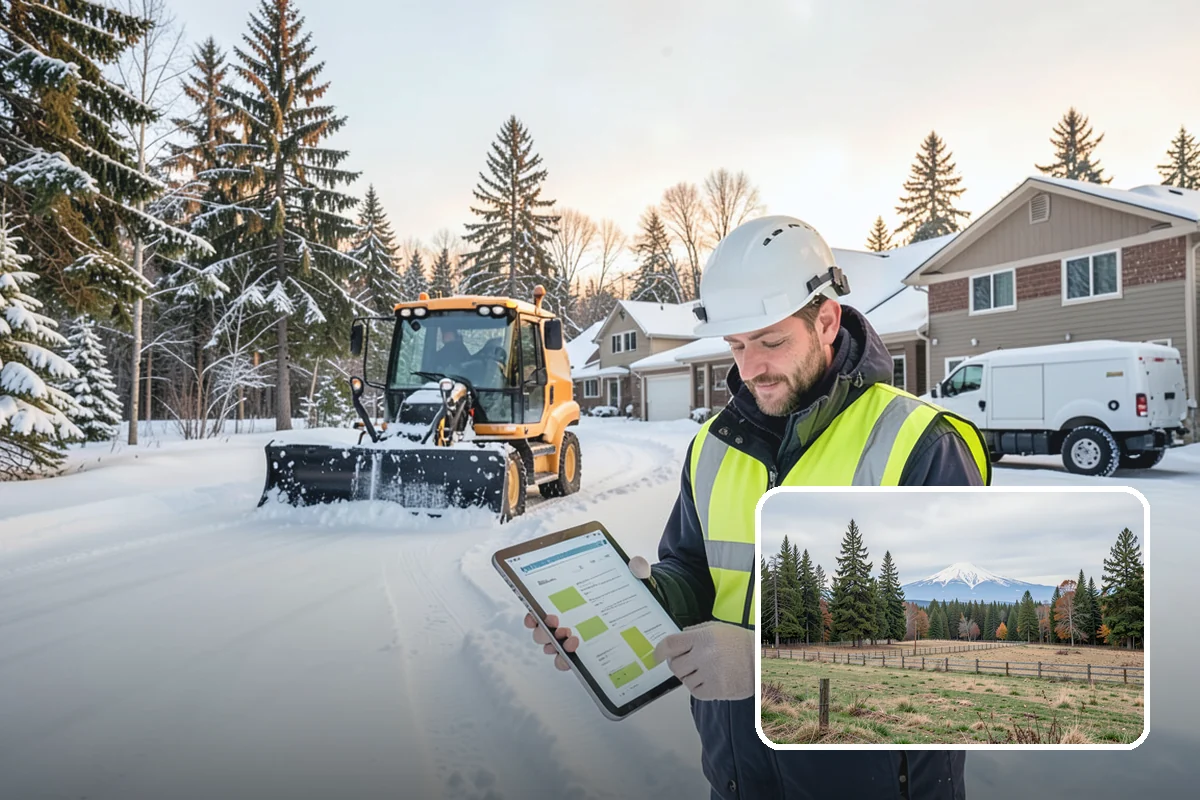
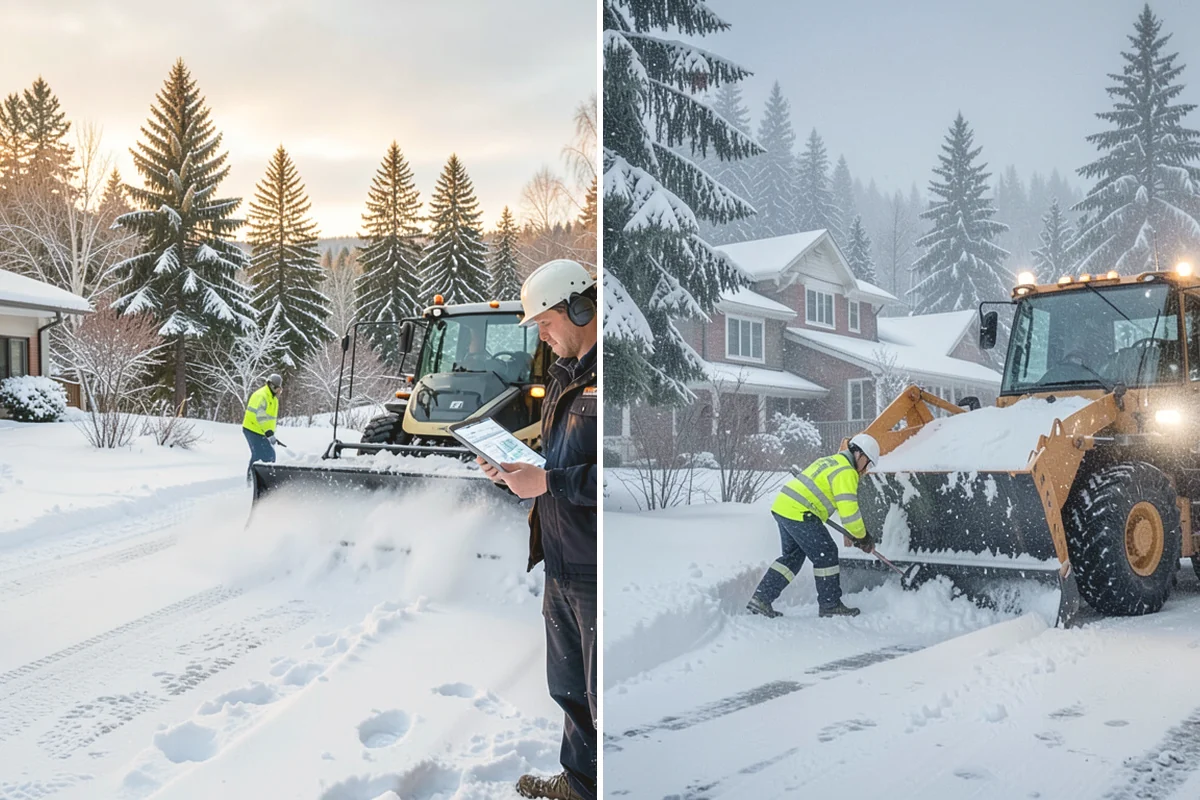
Access routes are small, so the work is mostly by hand. A crew member clears the ramp, the landing at the door, the aisle beside each accessible stall and the path linking them. Plows alone often miss these spots or pile snow onto them. A compact track loader with operator can move the stacked snow away so it does not block a route again.
Edgewood sees only about 2.1 days a year with 1 in or more of snow, and just 1.2 days a year stay below freezing. The bigger issue is ice. There are 30 freezing nights between October and April, and about 3.62 light-snow days a year need deicing. Thin ice on a ramp or stall can be as much of a barrier as deep snow. Recent events include an ice storm on Dec 23, 2022 and heavy snow on Dec 26, 2021, Feb 8, 2019 and Feb 5, 2017.
- Crew member for shoveling and hand work: $110 per person-hour
- Compact track loader with operator (Kubota SCL1000): $175 per hour
- Bagged ice melt: $45 per 50 lb bag
- Trip charge for Edgewood (zone C): $350 per dispatch
Each dispatch has a 2-hour minimum. Edgewood is 66 minutes from our Bothell yard, which is why the trip charge applies.