Emergency Deicing in Edgewood, WA: What to Expect
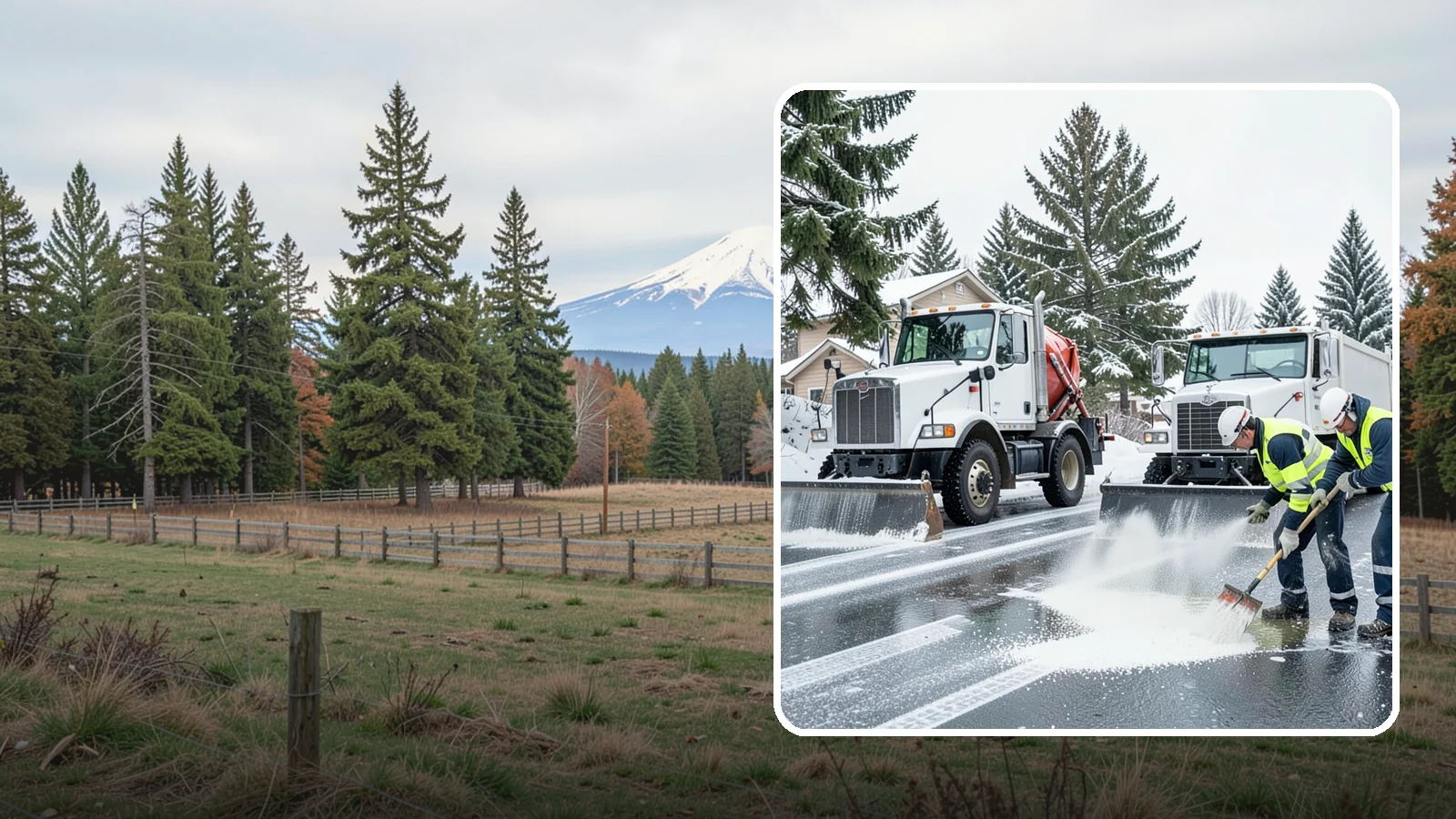
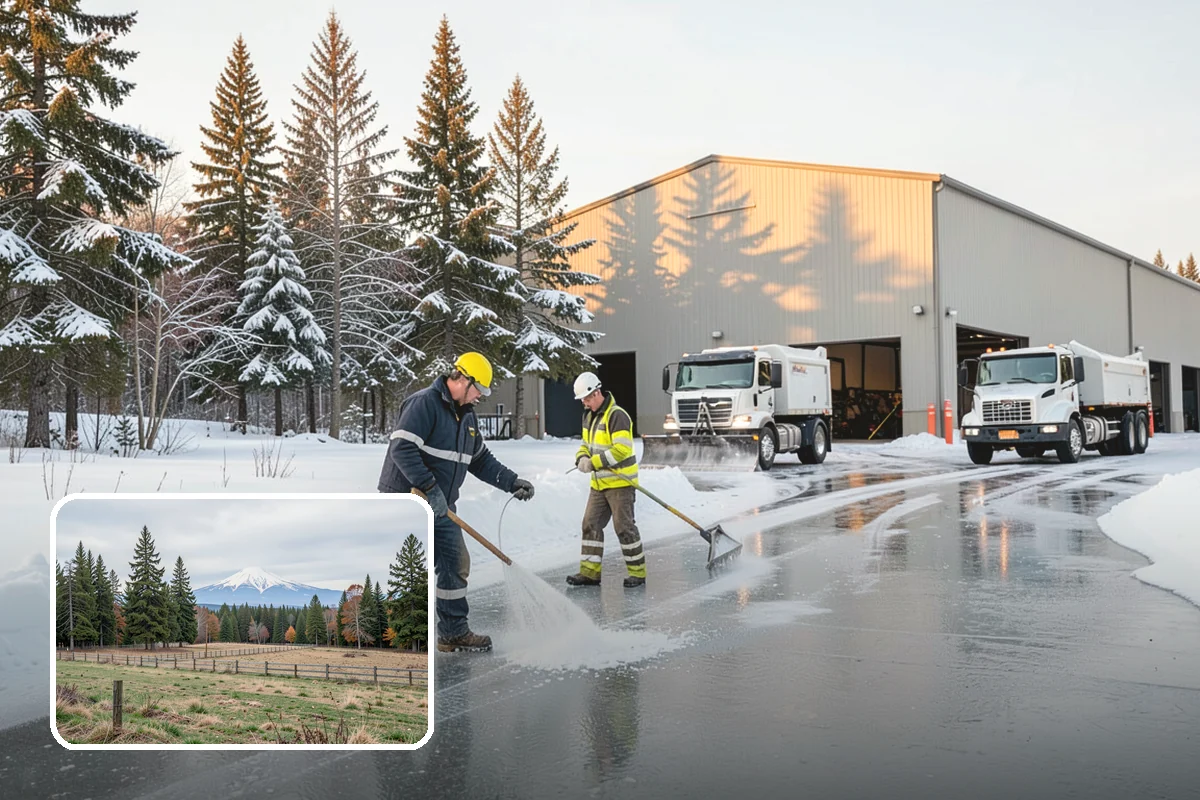
Emergency deicing is a one-time call to treat ice that has already formed or is about to. In Edgewood that usually means a refrozen parking lot, a shaded driveway, a sloped entry or a walkway that stays slick after a cold night.
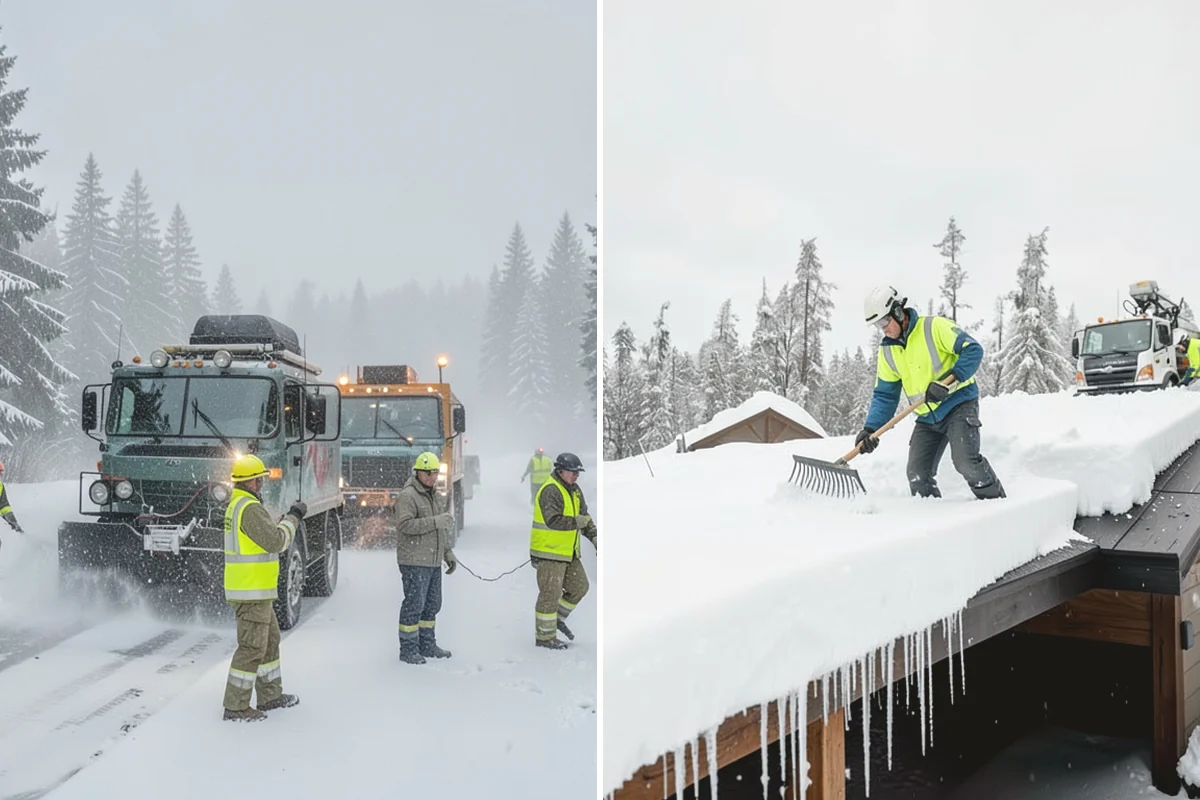
Edgewood averages 3.38 Winter Weather Advisories a year, yet heavy-snow days of 4 in or more happen only 0.33 times a year. Since 2005 there have been 11 winter storm and heavy snow reports. The biggest single day was 7.9 in. Storms like Feb 12–15, 2021 (10.8 in total) and Jan 15–20, 2012 (10.1 in total) show that a rare event can still leave ice behind for days.
Edgewood is 66 minutes from our Bothell yard, so a dispatch includes a trip charge. Here is how pricing works:
- Trip charge for Edgewood (zone C): $350 per dispatch
- Bulk salt, applied: $300 per ton
- Ice melt, bagged: $45 per 50 lb bag
- Plow and spreader truck with driver (Ram 5500): $325 per hour
- Crew member for sidewalks and hand work: $110 per person-hour
Every dispatch has a 2-hour minimum. Because ice events here are short and scattered, it often makes sense to treat several surfaces in one visit.