Keeping You Moving. Beyond Expectations.

Edgewood Municipal Snow Hauling
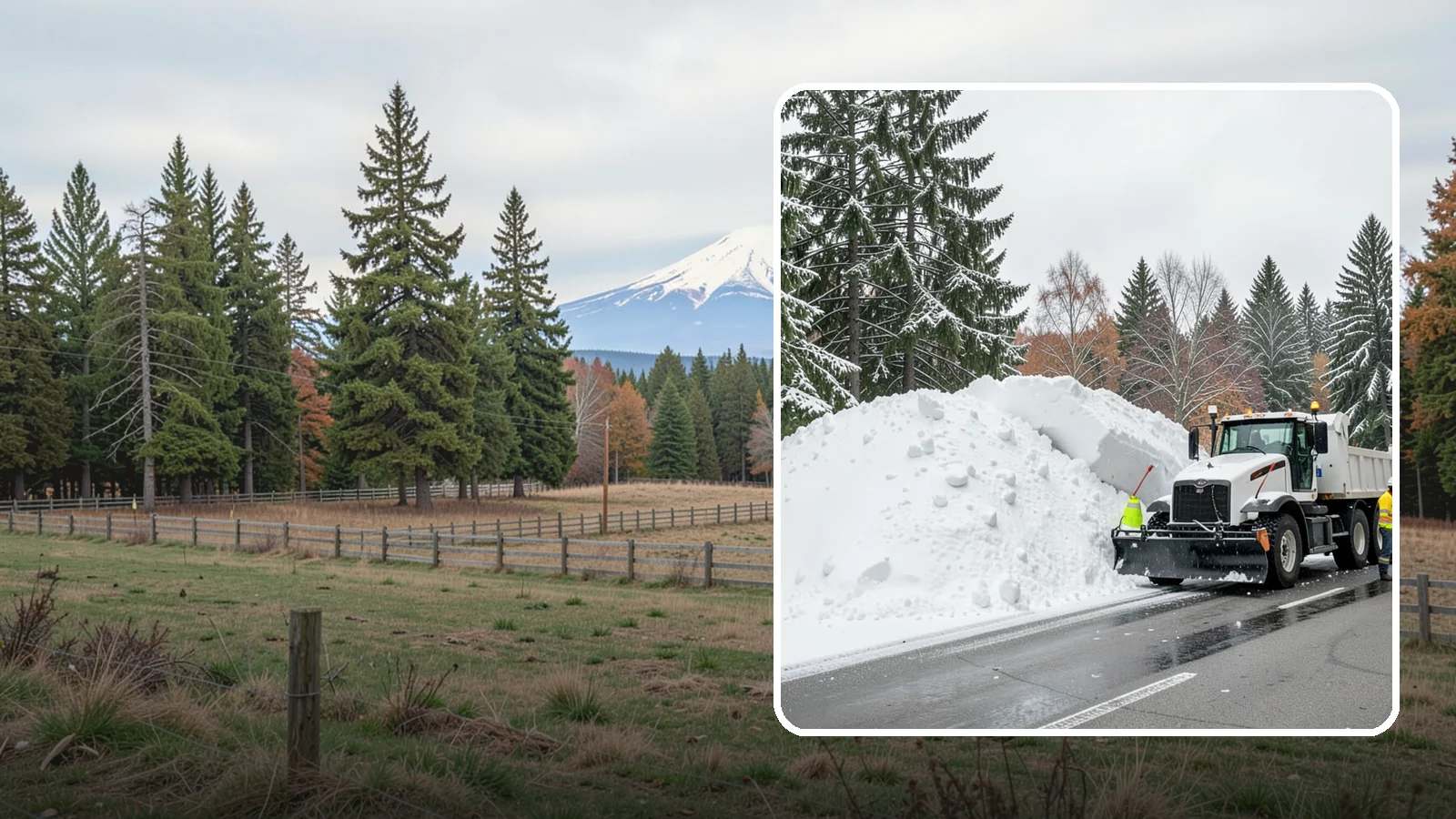
We support Western Washington municipalities by hauling snow from streets, civic lots, and transit areas after major events.
Municipal snow hauling in Edgewood means moving plowed snow off the lot or street edge so staff, visitors and vehicles can still get in. Edgewood has government buildings such as Edgewood City Hall, where clear entrances and parking matter on any storm day.
Washington Snow Removal is licensed, bonded and insured. We work from our Bothell yard, 66 minutes from Edgewood. Edgewood averages 6.8 in of snow per season, so hauling calls are occasional. Call 206-809-9669 to talk through your site.
Edgewood winter workload for property managers
Average snowfall by month in Edgewood
Largest snow totals reported near Edgewood
- Feb 9, 2019: Up to 8.3 in, 2 spotter reports: 2 NE Sumner 8.3 in, Puyallup 8 in
- Feb 6, 2017: Up to 8.1 in, 2 spotter reports: 2 NNE Puyallup 8.1 in, 3 SE Federal Way 6.8 in
- Jan 18, 2012: 7 in measured by a spotter at 5 ENE Puyallup
- Dec 26, 2021: 6.2 in measured by a spotter at 2 W Algona
Sources: NOAA and National Weather Service records for Edgewood, 2005–2026.
How Municipal Snow Hauling Works in Edgewood, WA
Hauling starts after plowing. Snow gets pushed into piles, then loaded and taken off site so piles do not block sight lines, drains or parking stalls at a civic property.
Edgewood sees about 2.1 days a year with 1 in or more of snow, and 30 freezing nights from October to April. Big totals are rare. The largest reported near Edgewood were 8 in at Puyallup on Feb 9, 2019 and 6.2 in at Algona on Dec 26, 2021. Winter Storm Warnings average 0.57 a year. Because snow is infrequent, piles often sit and refreeze overnight. Meltwater can then ice over walkways and drive lanes, and about 3.62 light-snow days a year need deicing.
What a job can include:
- Plow and spreader truck with driver (Ram 5500): $325 per hour
- Compact track loader with operator (Kubota SCL1000): $175 per hour
- Crew member for shoveling, sidewalks and hand work: $110 per person-hour
- Trip charge for Edgewood (zone C): $350 per dispatch
Each dispatch has a 2-hour minimum. Call 206-809-9669 to plan hauling for your site.
Prices in Edgewood
Billed by the hour for the crew and equipment on site, plus materials.
| Plow and spreader truck with driver (Ram 5500) | $325 / hour |
| Compact track loader with operator (Kubota SCL1000) | $175 / hour |
| Crew member (shoveling, sidewalks, hand work) | $110 / person-hour |
| Trip charge for Edgewood (zone C) | $350 / dispatch |
- 2-hour minimum per dispatch.
- Edgewood is 66 minutes from our Bothell yard.
Prices approved Oct 2026.
Government buildings, courthouses and post offices in Edgewood
There are 1 government buildings, courthouses and post offices mapped within Edgewood.
- Edgewood City Hall
Source: OpenStreetMap contributors, Oct 2026. Named sites are examples of local facilities, not customers.
Service Area
Edgewood
Benefits
Adds hauling capacity when city resources are stretched; Clears priority streets, civic lots, and transit stops; Works under municipal direction and priorities; Supports agencies not staffed for major events