Refreeze Prevention in Edgewood, WA: What It Involves
Refreeze prevention means treating surfaces before standing water or packed snow turns to ice. It also means clearing meltwater paths and piles so they do not drain across walking areas and freeze overnight.
Edgewood does not see much snow. The average is 6.8 in per season, and only 2.1 days a year bring 1 in or more. Just 1.2 days a year stay below freezing all day. The risk comes from the 30 freezing nights between October and April, when wet pavement can ice over after a mild afternoon.
Freezing rain is the other concern. Reports near Edgewood include Dec 23, 2022 at 1 S Federal Way, and Jan 19 and Jan 20, 2012 near Summit and Puyallup. Two ice storm reports have been logged since 2005. These events are rare, but ice on a driveway or entry is a hazard.
What we can do on a visit:
- Spread bulk salt at $300 / ton applied
- Provide bagged ice melt at $45 / 50 lb bag
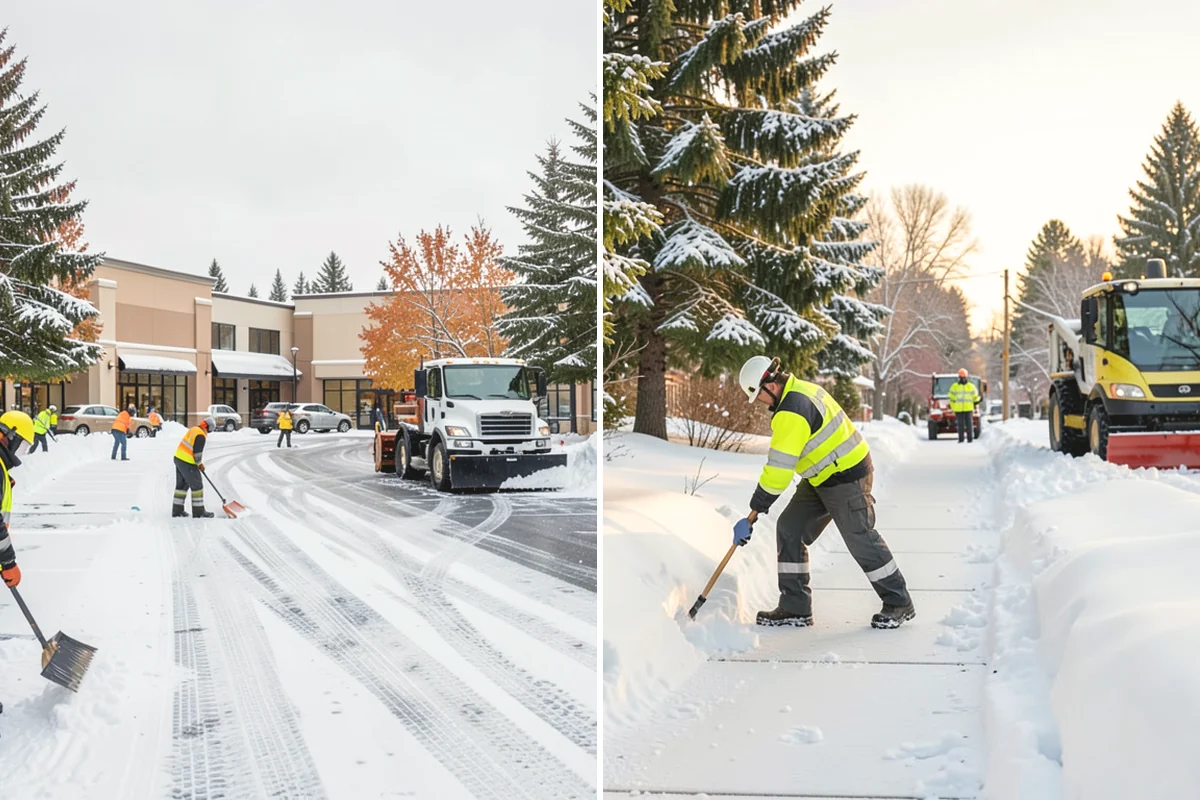
- Send crew members for sidewalks and hand work at $110 / person-hour
- Plow and spread with a Ram 5500 and driver at $325 / hour
Edgewood is trip zone C. The trip charge is $350 / dispatch, and each dispatch has a 2-hour minimum.