Keeping You Moving. Beyond Expectations.
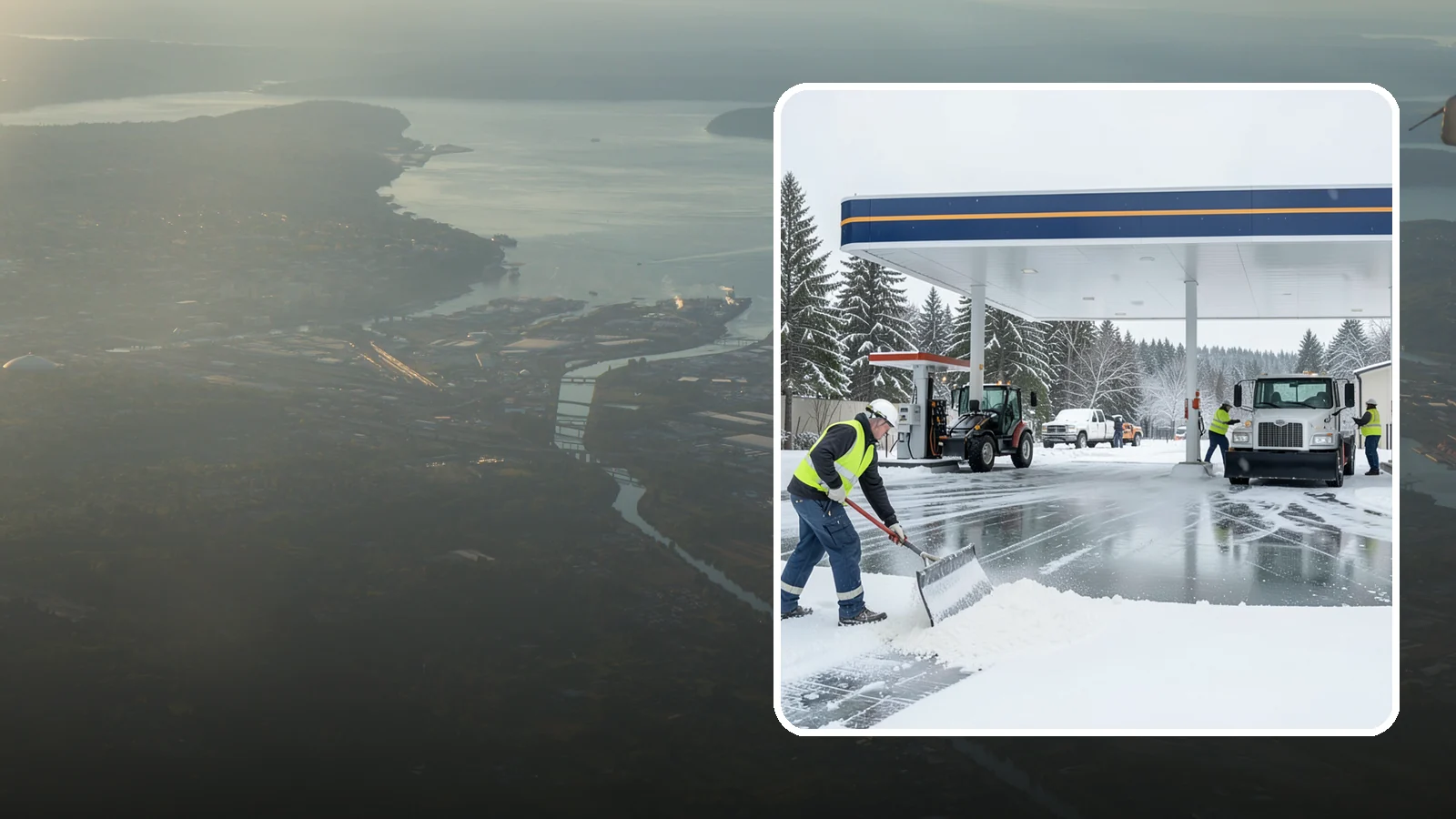
Deicing for gas stations and convenience stores, keeping fuel islands, pump approaches, and store entrances safe during a hard freeze.
Gas stations in Fife have a lot of surface to keep safe. Pump islands, drive aisles, entrances and walks all get ice, and customers are on foot at the pumps and the door. Washington Snow Removal deicing keeps those areas treated when frost or light snow hits.
We are based in Bothell, 65 minutes from Fife, and we are licensed, bonded and insured. Fife has 16 gas stations on the map, including 7-Eleven locations. Call 206-809-9669 to talk through your site and how we would treat it.
Sources: NOAA and National Weather Service records for Fife, 2005–2026.
Fife does not get much snow. The average is 5.8 in per season, with about 4 days a year of snow on the ground and 1.8 days with 1 in or more. The bigger issue is ice. There are 27 freezing nights from October to April, and about 3.29 light-snow days a year that need deicing. Thin ice on a fuel lot is easy to miss and easy to slip on.
Heavy snow does still happen. Our logs for the Fife area show Heavy Snow on Dec 26, 2021, Feb 5, 2017 and Feb 8, 2014. Those events call for plowing as well as deicing.
At a gas station, the work usually focuses on:
We apply bagged ice melt at $45 per 50 lb bag, or bulk salt at $300 per ton for larger lots. Crew members for hand work are $110 per person-hour. A plow and spreader truck with driver (Ram 5500) is $325 per hour. Fife is trip zone C, with a $350 dispatch charge and a 2-hour minimum per dispatch.

Billed by the hour for the crew and equipment on site, plus materials.
| Plow and spreader truck with driver (Ram 5500) | $325 / hour |
| Ice melt, bagged | $45 / 50 lb bag |
| Bulk salt, applied | $300 / ton |
| Crew member (shoveling, sidewalks, hand work) | $110 / person-hour |
| Trip charge for Fife (zone C) | $350 / dispatch |
Prices approved Oct 2026.
Fife has 16 gas stations on the map, each with lots, walks or entrances to keep clear.
Source: OpenStreetMap contributors, Oct 2026. Named sites are examples of local facilities, not customers.
Keeps fuel islands and store entrances safe for customers; Treats pump approaches where vehicles and people mix; Handles nonstop turnover with frequent service; Reduces slip liability at a high-traffic fueling site; Uses deicer safe for sealed concrete around pumps