Keeping You Moving. Beyond Expectations.

Gig Harbor Apartment Complex Parking Lot Snow Removal
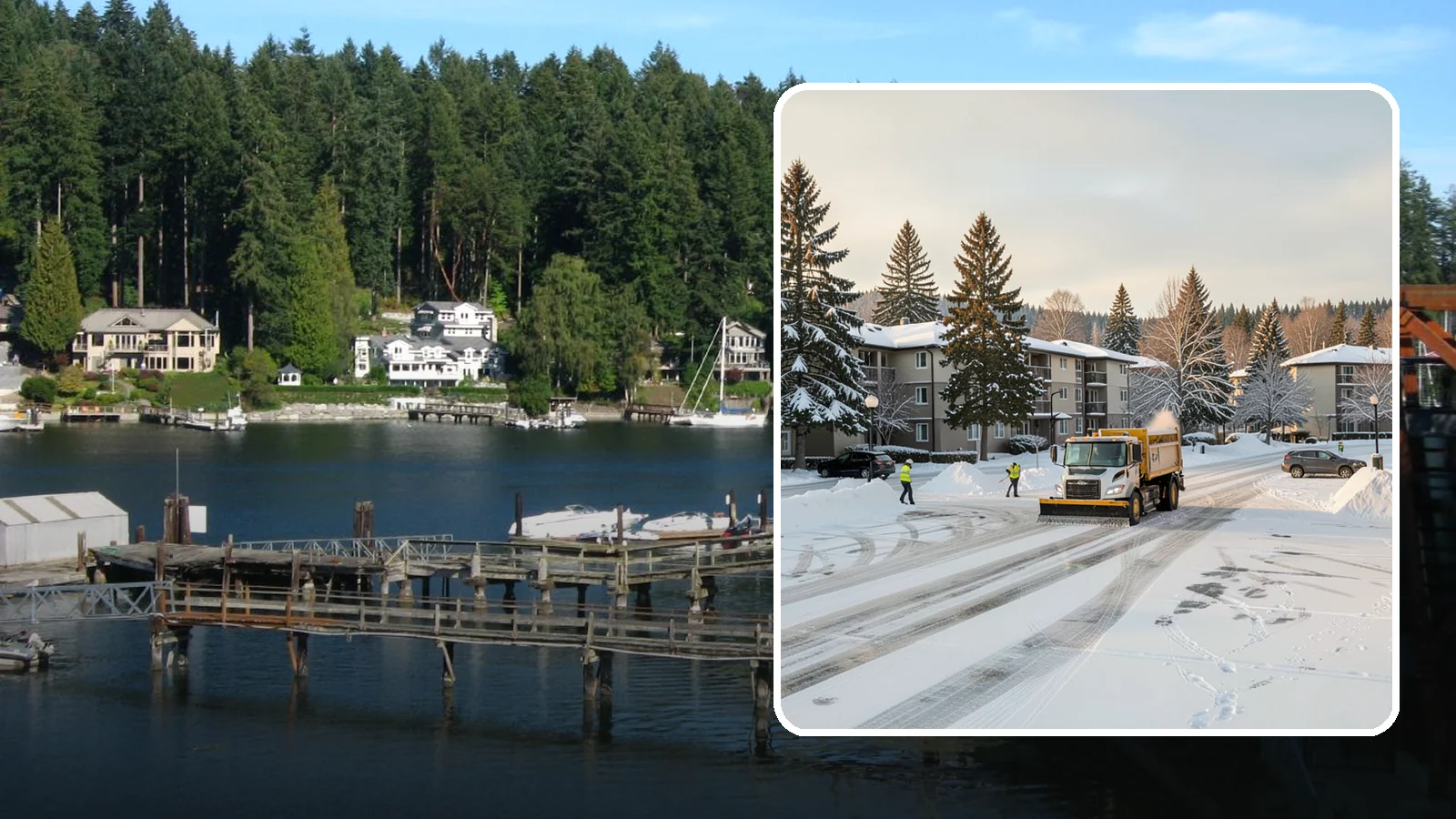
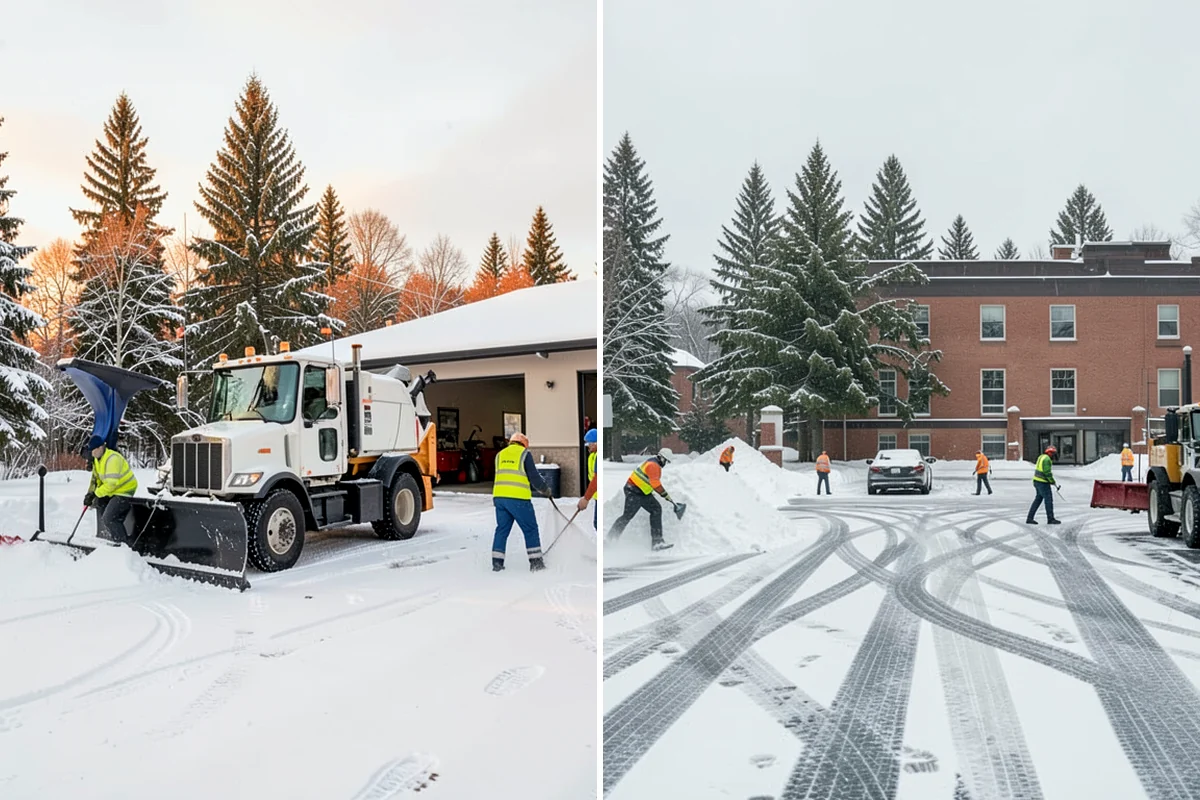
We plow sprawling apartment lots full of overnight tenant vehicles before residents leave for the Western Washington morning rush.
Washington Snow Removal plows and treats apartment complex parking lots in Gig Harbor, Pierce County. We are licensed, bonded and insured, and we work out of our Bothell yard, 84 minutes away.
Gig Harbor averages 5.5 inches of snow a season, so a plow call is rare. The city sees 1.48 plow events in an average season and 31 freezing nights between October and April. OpenStreetMap lists 11 apartment buildings inside the city limits. Call 206-809-9669 to talk through your lot.
What a Gig Harbor winter means for your lot
Recent winter storm and ice events logged for the Gig Harbor area
- Dec 23, 2022: Ice Storm
- Feb 8, 2019: Heavy Snow
- Feb 8, 2014: Heavy Snow
- Jan 18–19, 2012: Ice Storm; Heavy Snow
Sources: NOAA and National Weather Service records for Gig Harbor, 2005–2026.
Apartment Lot Snow and Ice Work in Gig Harbor
An apartment lot has residents leaving for work early and coming home late. The job is to clear drive lanes, parking stalls, fire access and walkways, then treat the surface so it does not refreeze.
Gig Harbor gets only 1.5 days a year with 1 inch or more of snow. Winter Storm Warnings average 0.57 a year. But the area has had real events: Heavy Snow on Jan 18, 2012, Feb 8, 2014 and Feb 8, 2019, and an Ice Storm on Dec 23, 2022. With 31 freezing nights from October to April, ice can matter as much as snow.
Here is what a visit can include:
- Plowing with a Ram 3500 at $250 per hour or a Ram 5500 plow and spreader truck at $325 per hour
- A Kubota SCL1000 compact track loader at $175 per hour for tight spots and stacking snow
- Crew members at $110 per person-hour for shoveling, sidewalks and stairs
- Bulk salt, applied, at $300 per ton, or bagged ice melt at $45 per 50 lb bag
Each dispatch has a 2-hour minimum and a $350 trip charge for Gig Harbor (zone C). Because the drive from Bothell is 84 minutes, we suggest property managers call us before a forecast storm rather than after it.
Prices in Gig Harbor
Billed by the hour for the crew and equipment on site, plus materials.
| Plow truck with driver (Ram 3500) | $250 / hour |
| Plow and spreader truck with driver (Ram 5500) | $325 / hour |
| Compact track loader with operator (Kubota SCL1000) | $175 / hour |
| Crew member (shoveling, sidewalks, hand work) | $110 / person-hour |
| Ice melt, bagged | $45 / 50 lb bag |
| Bulk salt, applied | $300 / ton |
| Trip charge for Gig Harbor (zone C) | $350 / dispatch |
- 2-hour minimum per dispatch.
- Gig Harbor is 84 minutes from our Bothell yard.
Prices approved Oct 2026.
Apartment buildings in Gig Harbor
OpenStreetMap lists 11 apartment buildings inside Gig Harbor city limits.
Source: OpenStreetMap contributors, Oct 2026. Named sites are examples of local facilities, not customers.
Service Area
Gig Harbor
Benefits
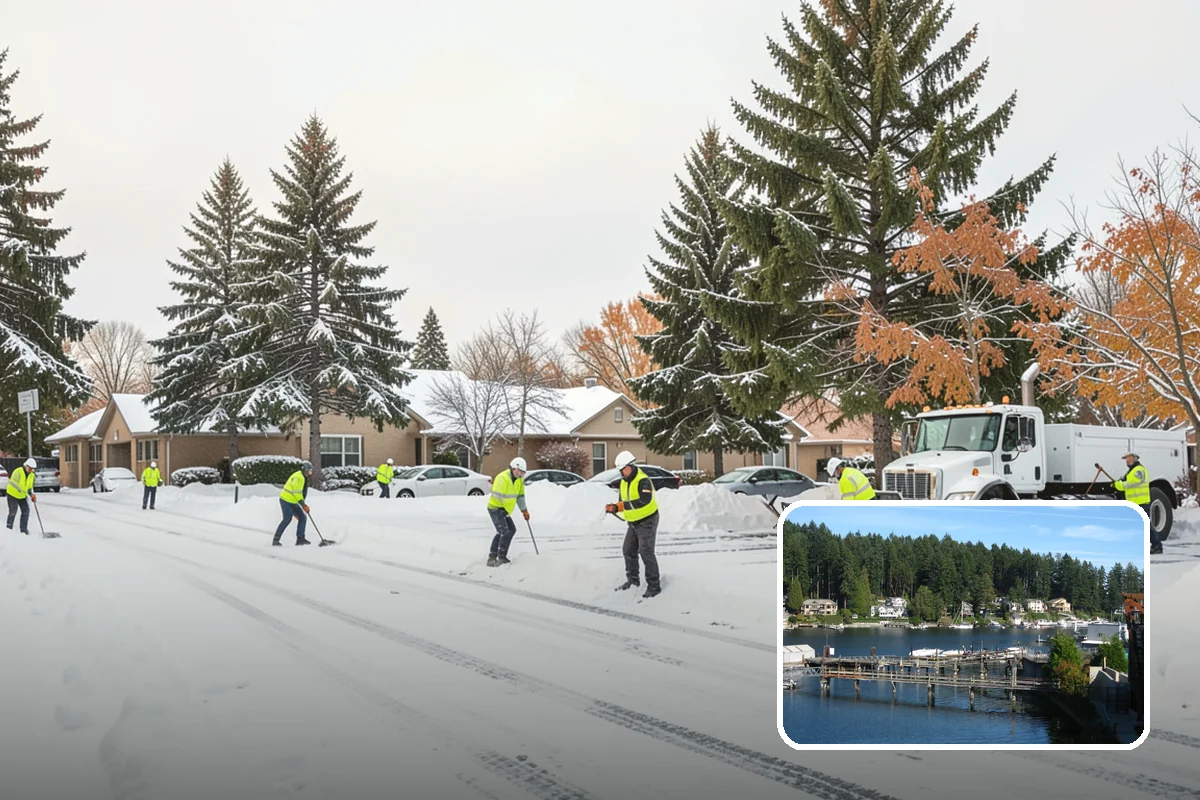
Travel lanes stay open for tenants, first responders, and package delivery; staged clearing works around a lot that is never fully empty; entrances and walkways get deicing to cut slip-and-fall liability; managers get a coordinated schedule instead of ad hoc calls; carport and covered rows are handled alongside open parking