Keeping You Moving. Beyond Expectations.

Gig Harbor Emergency Deicing
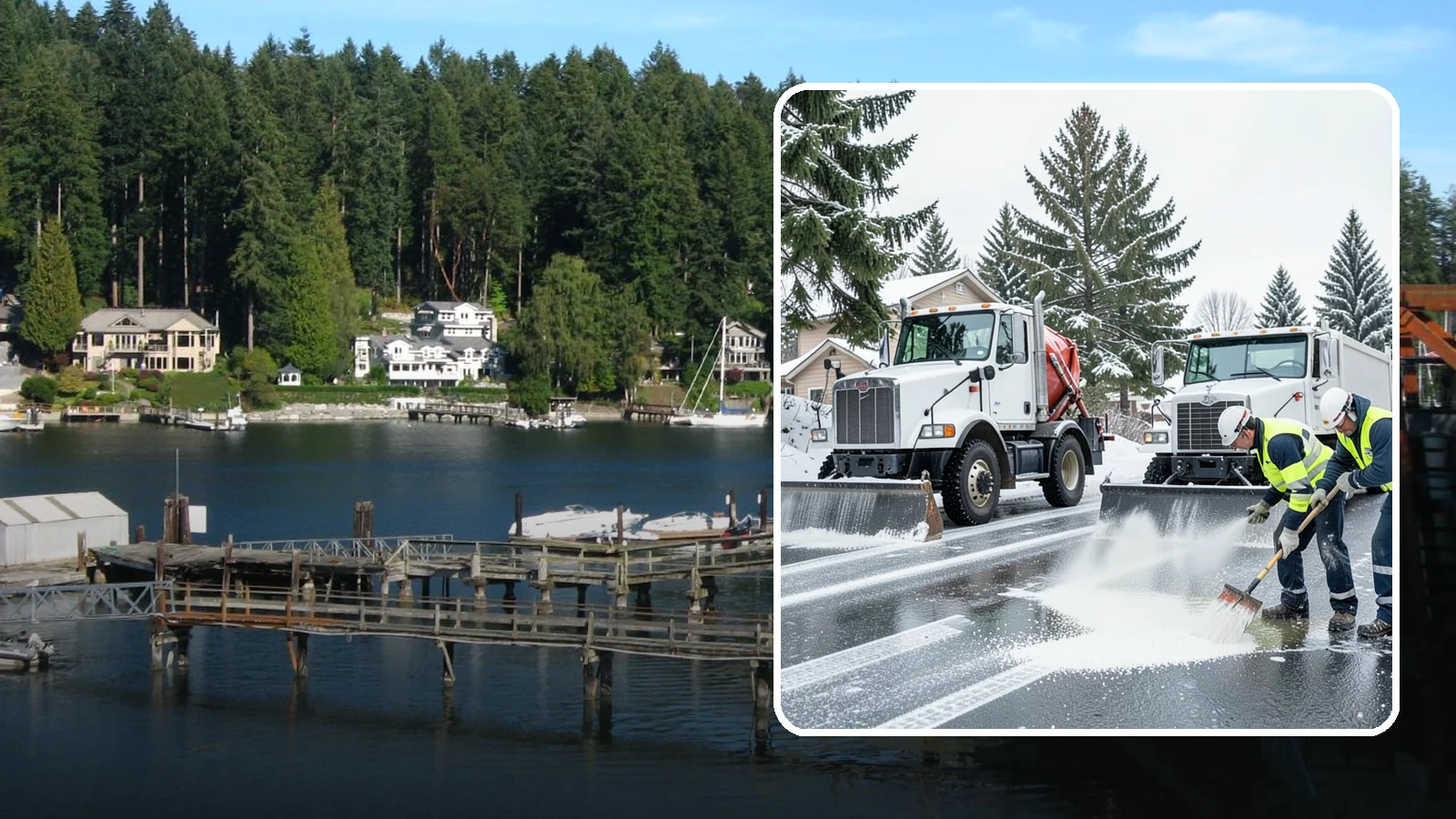
We respond fast across Western Washington to treat icy lots, walks, and entrances when a freeze turns your surfaces into a slip hazard.
Snow is not common in Gig Harbor, which averages 5.5 in per season and about 1.5 days a year with 1 in or more. Freezing nights are common, though: 31 between October and April. A thin glaze on a hill road, a dock ramp or a parking lot can cause trouble when little snow has fallen.
Washington Snow Removal is licensed, bonded and insured. We run emergency deicing dispatches to Gig Harbor from our Bothell yard, 84 minutes away. Call 206-809-9669 to set up a dispatch.
Storm history for Gig Harbor
Largest snow totals reported near Gig Harbor
- Feb 9–12, 2019: Up to 12 in, 3 spotter reports: Gig Harbor 12 in, Artondale 5 in, Gig Harbor 5 in
- Feb 13–14, 2021: Up to 10 in, 3 spotter reports: Gig Harbor 10 in, 1 NE Artondale 7.8 in, 4 NNE Gig Harbor 3.8 in
- Feb 6, 2017: 5 in measured by a spotter at 4 NW Tacoma
- Dec 27, 2021: 4.2 in measured by a spotter at 1 NE Artondale
Sources: NOAA and National Weather Service records for Gig Harbor, 2005–2026.
How Emergency Deicing Works in Gig Harbor, WA
Emergency deicing means a truck or crew arrives to treat ice that has already formed or is about to. In Gig Harbor that usually means entrances, sloped drives, walkways and parking areas where cold nights leave a slick surface.
The local pattern shapes the work. The area sees about 3.38 Winter Weather Advisories a year, but only 0.24 heavy-snow days of 4 in or more. Big events are rare, yet they happen. Since 2005 there have been 11 winter storm and heavy snow reports, and the largest storm was 16.7 in. A spotter at Gig Harbor measured 10 in on Feb 13, 2021, and another measured 5 in there on Feb 12, 2019. Because storms are infrequent, many properties have no ice plan until the day it is needed.
Our pricing for this service:
- Plow and spreader truck with driver (Ram 5500): $325 / hour
- Plow truck with driver (Ram 3500): $250 / hour
- Crew member for sidewalks and hand work: $110 / person-hour
- Bulk salt, applied: $300 / ton
- Ice melt, bagged: $45 / 50 lb bag
- Trip charge for Gig Harbor (zone C): $350 / dispatch
Each dispatch has a 2-hour minimum. Call 206-809-9669 to talk through your property.
Prices in Gig Harbor
Billed by the hour for the crew and equipment on site, plus materials.
| Plow truck with driver (Ram 3500) | $250 / hour |
| Plow and spreader truck with driver (Ram 5500) | $325 / hour |
| Compact track loader with operator (Kubota SCL1000) | $175 / hour |
| Crew member (shoveling, sidewalks, hand work) | $110 / person-hour |
| Ice melt, bagged | $45 / 50 lb bag |
| Bulk salt, applied | $300 / ton |
| Trip charge for Gig Harbor (zone C) | $350 / dispatch |
- 2-hour minimum per dispatch.
- Gig Harbor is 84 minutes from our Bothell yard.
Prices approved Oct 2026.
Service Area
Gig Harbor
Benefits
Rapid response to sudden ice and freeze events; Deicer matched to temperature and surface type; Targets the highest-traffic slip hazards first; Reduces injury risk and liability from icy surfaces