Keeping You Moving. Beyond Expectations.

Gig Harbor Fire Lane Clearing
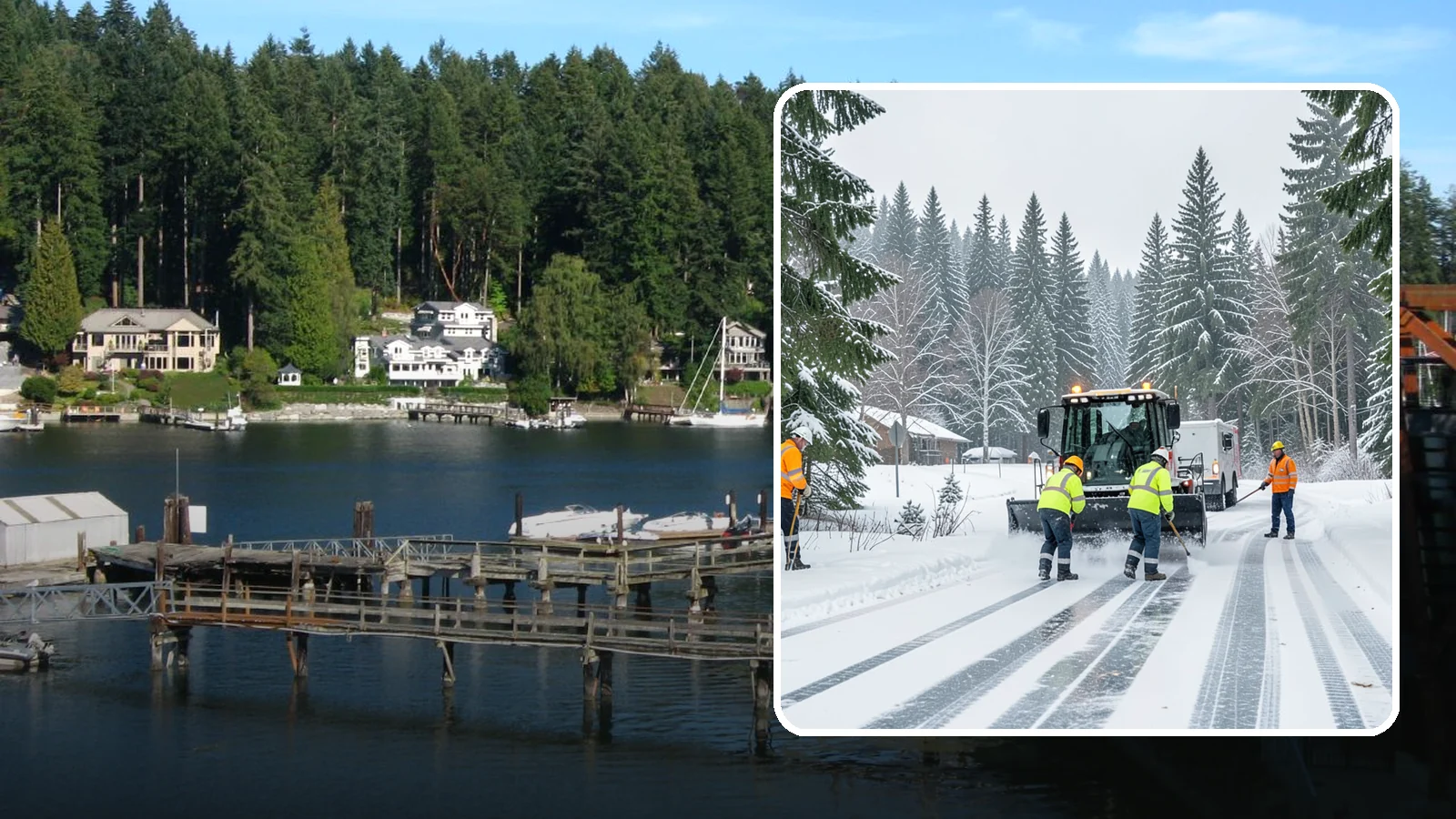
We keep marked fire lanes clear during snow events so emergency vehicles always have unobstructed access.
Fire lanes have to be open when snow does fall. In Gig Harbor that is not often. The city averages 5.5 in of snow per season and sees 1.5 days a year with 1 in or more. Washington Snow Removal clears fire lanes at Gig Harbor properties when those days arrive.
We are licensed, bonded and insured, and we dispatch from our Bothell yard, 84 minutes away. Call 206-809-9669 to talk through your property and how we would clear the lane, the hydrant access and the apparatus turnaround.
Gig Harbor winter workload for property managers
Average snowfall by month in Gig Harbor
Largest snow totals reported near Gig Harbor
- Feb 9–12, 2019: Up to 12 in, 3 spotter reports: Gig Harbor 12 in, Artondale 5 in, Gig Harbor 5 in
- Feb 13–14, 2021: Up to 10 in, 3 spotter reports: Gig Harbor 10 in, 1 NE Artondale 7.8 in, 4 NNE Gig Harbor 3.8 in
- Feb 6, 2017: 5 in measured by a spotter at 4 NW Tacoma
- Dec 27, 2021: 4.2 in measured by a spotter at 1 NE Artondale
Sources: NOAA and National Weather Service records for Gig Harbor, 2005–2026.
Fire Lane Clearing in Gig Harbor: What It Involves
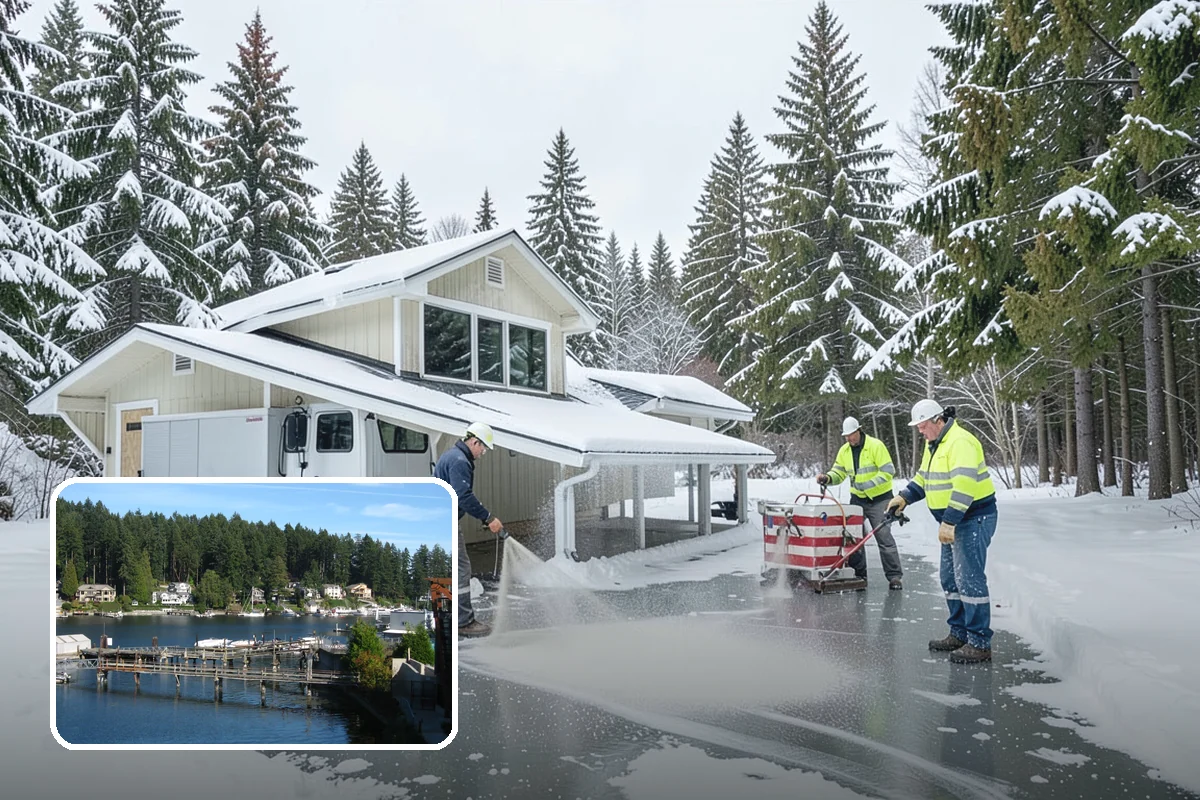
A fire lane is only useful if a fire truck can drive it. Clearing means more than a single pass. We open the full lane width, keep access to hydrants and fire department connections, and clear the turnaround and entry so apparatus can get in and out.
Gig Harbor snow is light and infrequent. An average season brings 1.48 plow events and 0.57 Winter Storm Warnings a year. The biggest totals near the city were 7.8 in on Feb 13, 2021, measured by a spotter near Artondale, and 5 in on Feb 12, 2019. Those few events can still block a lane on short notice.
Ice is the more regular problem. The area has 31 freezing nights from Oct to Apr, so melted snow and wet pavement can refreeze in a lane after the plowing is done. We can treat it with ice melt or salt.
Rates for Gig Harbor:
- Plow truck with driver (Ram 3500): $250 / hour
- Plow and spreader truck with driver (Ram 5500): $325 / hour
- Crew member for hydrants and hand work: $110 / person-hour
- Ice melt, bagged: $45 / 50 lb bag
- Bulk salt, applied: $300 / ton
- Trip charge (zone C): $350 / dispatch
There is a 2-hour minimum per dispatch.
Prices in Gig Harbor
Billed by the hour for the crew and equipment on site, plus materials.
| Plow truck with driver (Ram 3500) | $250 / hour |
| Plow and spreader truck with driver (Ram 5500) | $325 / hour |
| Compact track loader with operator (Kubota SCL1000) | $175 / hour |
| Crew member (shoveling, sidewalks, hand work) | $110 / person-hour |
| Ice melt, bagged | $45 / 50 lb bag |
| Bulk salt, applied | $300 / ton |
| Trip charge for Gig Harbor (zone C) | $350 / dispatch |
- 2-hour minimum per dispatch.
- Gig Harbor is 84 minutes from our Bothell yard.
Prices approved Oct 2026.
Service Area
Gig Harbor
Benefits
Fire lanes kept clear to full required width; Support for local fire code compliance; Unobstructed access for emergency responders; Careful clearing that avoids blocking adjacent zones; Reduced liability during winter events