Keeping You Moving. Beyond Expectations.

Gig Harbor Office Snow Hauling

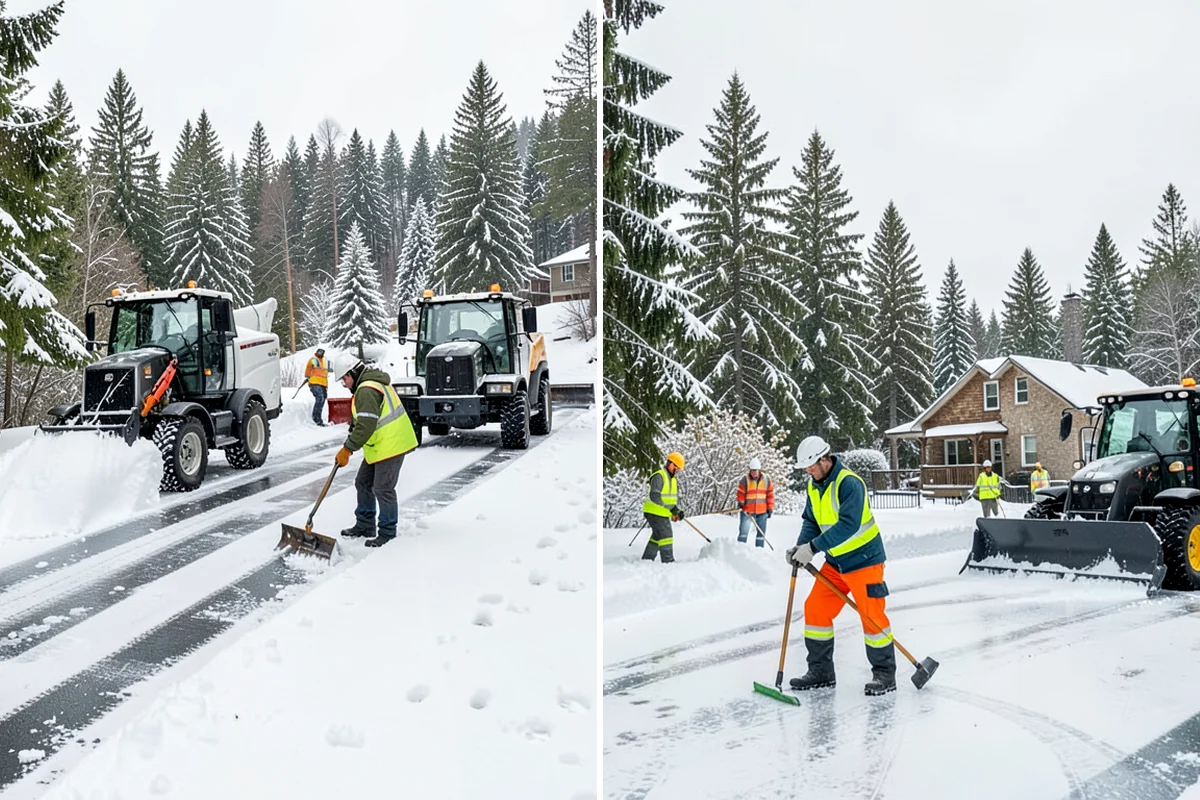
We remove and haul away snow from office parking and approaches so employees and visitors keep full, safe access.
Office Snow Hauling in Gig Harbor means moving piled snow off your site so staff and visitors can park and walk in safely. Gig Harbor has 32 offices and office buildings mapped within the city, and many have tight lots where plowed snow takes up parking stalls.
Washington Snow Removal is licensed, bonded and insured. We work from our Bothell yard, which is 84 minutes from Gig Harbor. Call 206-809-9669 to talk through your lot and what hauling would involve.
Gig Harbor winter workload for property managers
Average snowfall by month in Gig Harbor
Largest snow totals reported near Gig Harbor
- Feb 9–12, 2019: Up to 12 in, 3 spotter reports: Gig Harbor 12 in, Artondale 5 in, Gig Harbor 5 in
- Feb 13–14, 2021: Up to 10 in, 3 spotter reports: Gig Harbor 10 in, 1 NE Artondale 7.8 in, 4 NNE Gig Harbor 3.8 in
- Feb 6, 2017: 5 in measured by a spotter at 4 NW Tacoma
- Dec 27, 2021: 4.2 in measured by a spotter at 1 NE Artondale
Sources: NOAA and National Weather Service records for Gig Harbor, 2005–2026.
How Office Snow Hauling Works in Gig Harbor
Snow hauling is the step after plowing. When a lot has nowhere left to push snow, we load it and take it off site. At an office, that usually means clearing the stalls lost to snow piles, keeping entrances open and freeing space near accessible parking.
Gig Harbor does not see much snow. The average is 5.5 in per season, and only 1.5 days a year bring 1 in or more. Our records show 1.48 plow events in an average season. But the big days can be large. A spotter measured 10 in at Gig Harbor on Feb 13, 2021, and 5 in on Feb 12, 2019. On those days, a small office lot fills up fast.
Ice is the more regular problem. There are about 31 freezing nights from Oct to Apr, and about 3.19 light-snow days a year need deicing. Hauling is only part of the work at an office, so we can pair it with spreading.
- Plow and spreader truck with driver (Ram 5500): $325 / hour
- Compact track loader with operator (Kubota SCL1000): $175 / hour
- Crew member for shoveling, sidewalks and hand work: $110 / person-hour
- Trip charge for Gig Harbor (zone C): $350 / dispatch
There is a 2-hour minimum per dispatch.
Prices in Gig Harbor
Billed by the hour for the crew and equipment on site, plus materials.
| Plow and spreader truck with driver (Ram 5500) | $325 / hour |
| Compact track loader with operator (Kubota SCL1000) | $175 / hour |
| Crew member (shoveling, sidewalks, hand work) | $110 / person-hour |
| Trip charge for Gig Harbor (zone C) | $350 / dispatch |
- 2-hour minimum per dispatch.
- Gig Harbor is 84 minutes from our Bothell yard.
Prices approved Oct 2026.
Offices and office buildings in Gig Harbor
There are 32 offices and office buildings mapped within Gig Harbor.
- Chandler Media & Design
- Coldwell Banker Bain Associates
- Conestoga Wealth Partners LLC
- Envoy Mortgage
Source: OpenStreetMap contributors, Oct 2026. Named sites are examples of local facilities, not customers.

Service Area
Gig Harbor
Benefits
Restores full parking capacity for the workday; Clears narrowed lanes that cause arrival congestion; Removes hazards before employees and visitors arrive; Coordinates with facilities and building security