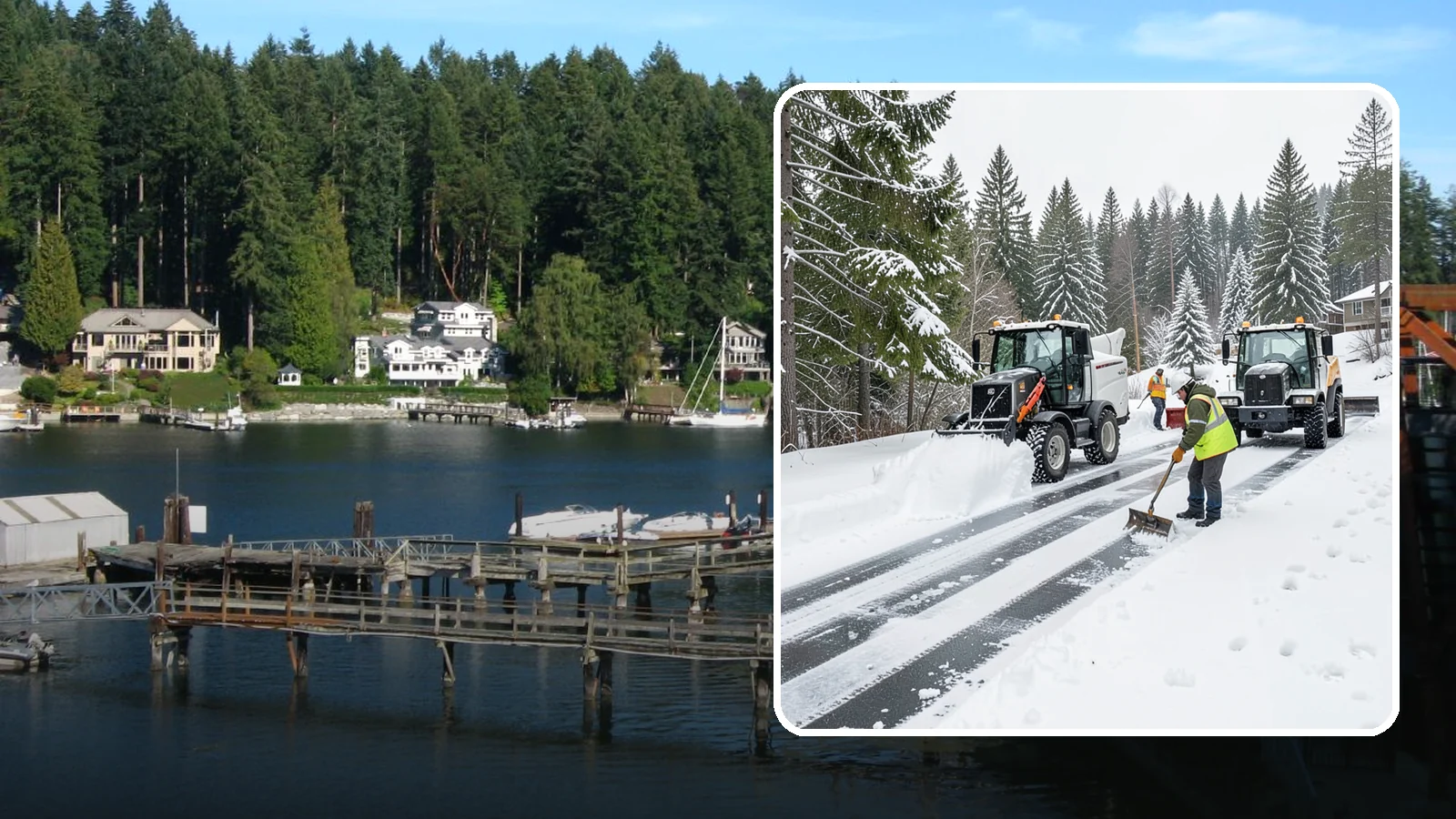
How Ramp Snow Removal Works in Gig Harbor
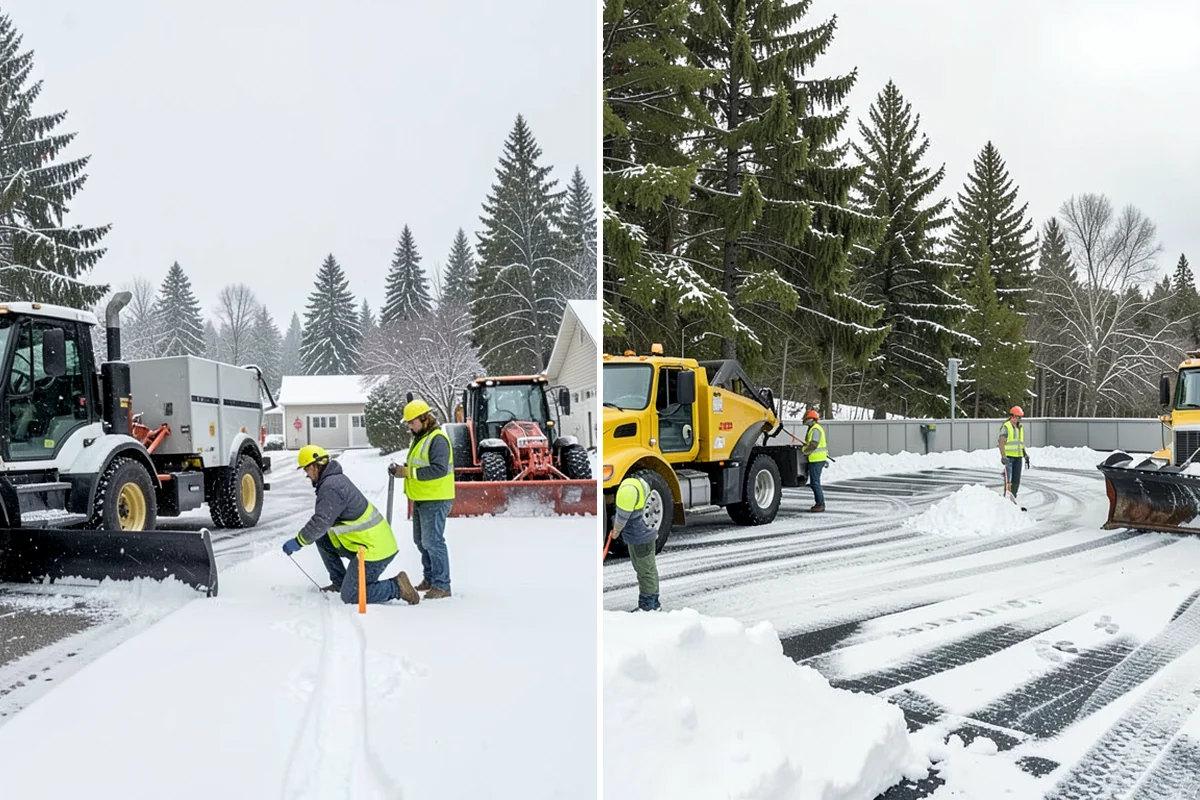
Ramp work is mostly hand work. Our crew clears the surface by shovel, cuts snow back from the edges and landings, and applies ice melt where needed. We keep the slope, handrail areas and the top and bottom of the ramp clear, since those are the spots where people slip or wheels lose grip.
Gig Harbor does not get snow often. The area sees about 1.5 days a year with 1 in or more, and snow stays on the ground about 3 days a year. But there are about 31 freezing nights from October to April, and about 3.19 light-snow days a year need deicing. Thin ice on a ramp can be a bigger risk than deep snow.
Big storms do happen. February 9-12, 2019 brought 16.7 in in total, with 8.4 in on the biggest day. January 2012 brought 11.9 in. Plans should allow for both light ice and a rare heavy event.
Our prices for this work:
- Crew member for shoveling and hand work: $110 per person-hour
- Ice melt, bagged: $45 per 50 lb bag
- Compact track loader with operator (Kubota SCL1000): $175 per hour, for larger lots that feed a ramp
- Trip charge for Gig Harbor (zone C): $350 per dispatch
Each dispatch has a 2-hour minimum. Gig Harbor is 84 minutes from our Bothell yard, so we plan routes with that drive in mind.