Keeping You Moving. Beyond Expectations.

Gig Harbor Snow Drift Removal
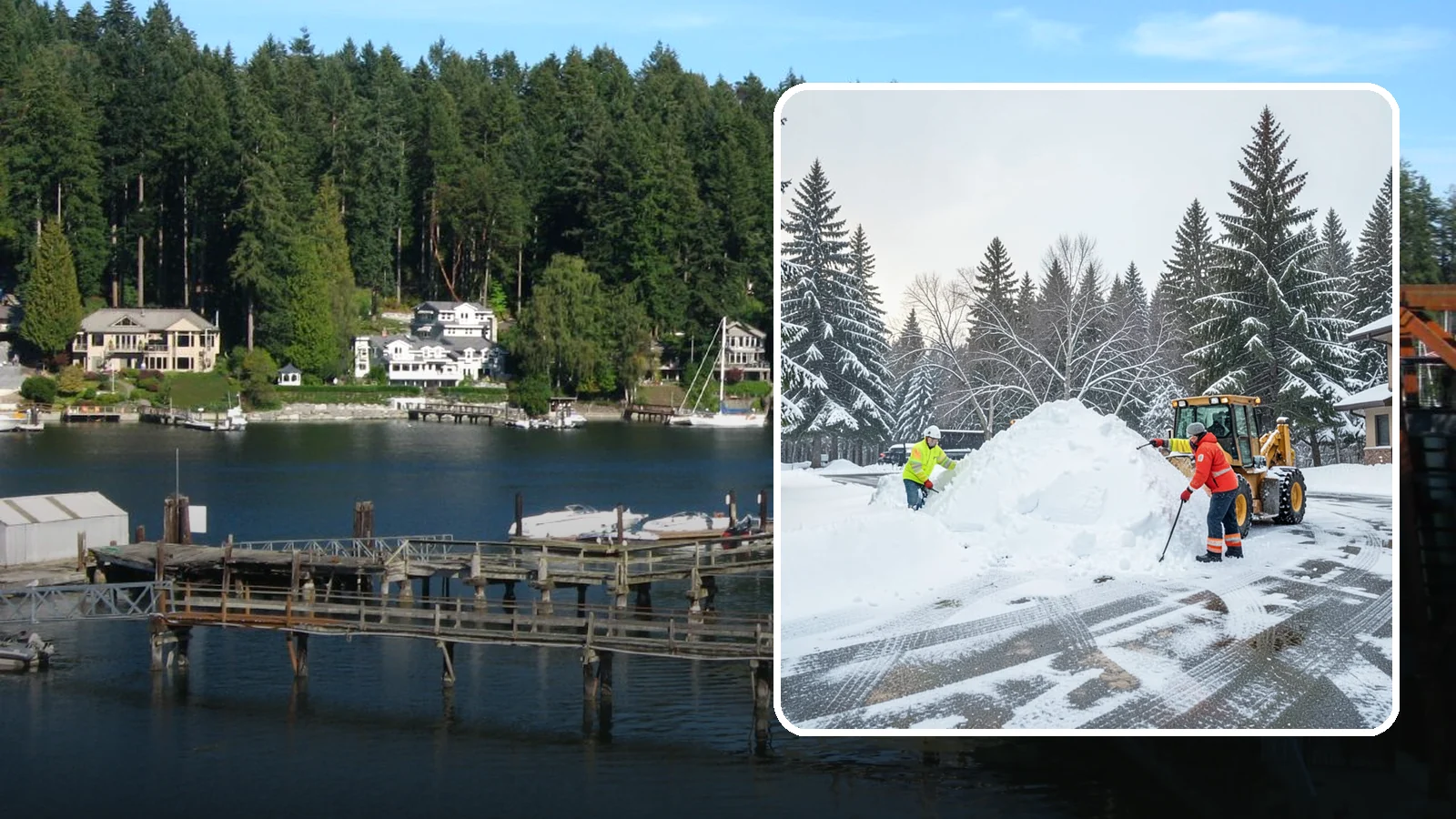
We clear the deep drifts that wind piles against your buildings, gates, and driveways during a storm.
Snow drift removal in Gig Harbor is about clearing wind-packed piles that block driveways, garage doors, walkways and parking areas. Gig Harbor averages only 5.5 in of snow per season, so drifts are rare, but they do happen when a storm lands on a cold night.
Washington Snow Removal is licensed, bonded and insured. We dispatch from our Bothell yard, which is 84 minutes from Gig Harbor. Call 206-809-9669 to talk through your property and the equipment it needs.
Storm history for Gig Harbor
Largest snow totals reported near Gig Harbor
- Feb 9–12, 2019: Up to 12 in, 3 spotter reports: Gig Harbor 12 in, Artondale 5 in, Gig Harbor 5 in
- Feb 13–14, 2021: Up to 10 in, 3 spotter reports: Gig Harbor 10 in, 1 NE Artondale 7.8 in, 4 NNE Gig Harbor 3.8 in
- Dec 27, 2021: 4.2 in measured by a spotter at 1 NE Artondale
Sources: NOAA and National Weather Service records for Gig Harbor, 2005–2026.
Snow Drift Removal in Gig Harbor: What It Involves
Gig Harbor sees about 1.5 days a year with 1 in or more of snow, and only 0.24 heavy-snow days a year at 4 in or more. Since 2005 there have been 11 winter storm and heavy snow reports. The biggest single day in that time was 8.4 in. Spotters near Gig Harbor reported 7.8 in on Feb 13, 2021, and 5 in on Feb 12, 2019.
Because big snow is uncommon, drifts tend to catch properties off guard. Wind pushes snow against buildings, fences and slopes, and it can pile up much deeper than the reported total. The area also has 31 freezing nights from Oct to Apr, so a drift left alone can harden into ice. Gig Harbor averages 3.38 Winter Weather Advisories a year, which is a useful cue to plan ahead.
Depending on the drift, a job may include:
- Plowing with a Ram 3500 at $250 / hour or a Ram 5500 plow and spreader at $325 / hour
- A Kubota SCL1000 compact track loader at $175 / hour for deep or tight piles
- Crew members at $110 / person-hour for hand work and sidewalks
- Ice melt at $45 / 50 lb bag, or bulk salt applied at $300 / ton
Gig Harbor is trip zone C, with a $350 / dispatch trip charge. Each dispatch has a 2-hour minimum.
Prices in Gig Harbor
Billed by the hour for the crew and equipment on site, plus materials.
| Plow truck with driver (Ram 3500) | $250 / hour |
| Plow and spreader truck with driver (Ram 5500) | $325 / hour |
| Compact track loader with operator (Kubota SCL1000) | $175 / hour |
| Crew member (shoveling, sidewalks, hand work) | $110 / person-hour |
| Ice melt, bagged | $45 / 50 lb bag |
| Bulk salt, applied | $300 / ton |
| Trip charge for Gig Harbor (zone C) | $350 / dispatch |
- 2-hour minimum per dispatch.
- Gig Harbor is 84 minutes from our Bothell yard.
Prices approved Oct 2026.
Service Area
Gig Harbor
Benefits
Targeted clearing of wind-built drifts; Restored access at gates and driveway ends; Attention to spots that repeatedly drift over; Equipment capable of cutting deep piles; Fewer surprise blockages during a windy storm