Keeping You Moving. Beyond Expectations.

Gig Harbor Trigger-Depth Snow Removal
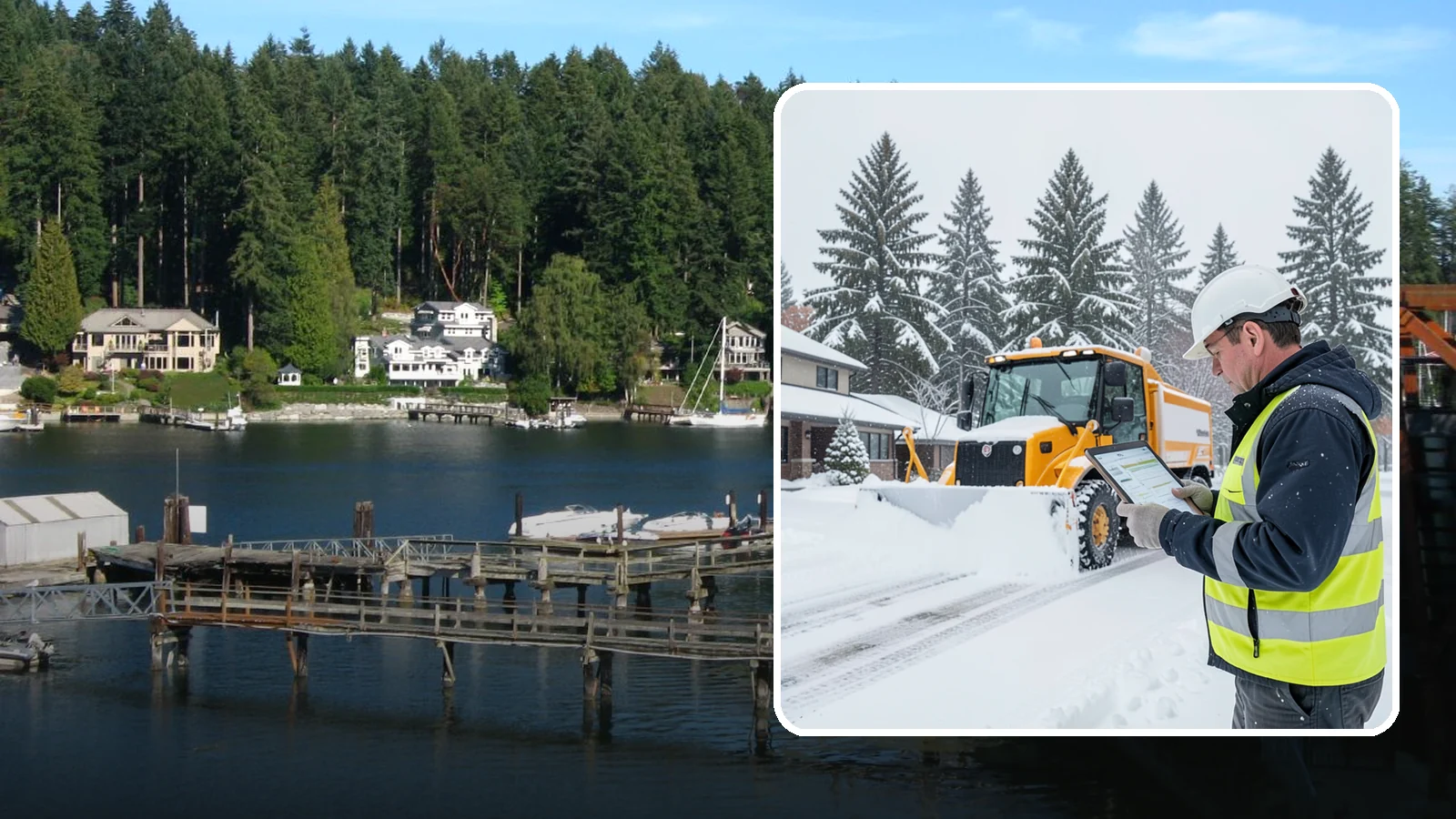
We dispatch automatically once snow reaches your chosen trigger depth so clearing starts at a consistent Western Washington threshold.
Trigger-depth snow removal means we plow and shovel when snow reaches a set depth. In Gig Harbor, service starts at 1 inch of accumulation. You do not have to call each time it snows.
Gig Harbor gets about 5.5 in of snow in an average season, and snow sits on the ground about 3 days a year. Storms are rare, but they can be big. Washington Snow Removal is licensed, bonded and insured. Call 206-809-9669 to set up service.
What to expect from a Gig Harbor snow season
Biggest storms in Gig Harbor since 2005
- Feb 9–12, 2019: 16.7 in total, 8.4 in on the biggest day
- Feb 12–15, 2021: 12.7 in total, 7.6 in on the biggest day
- Jan 15–20, 2012: 11.9 in total, 4.5 in on the biggest day
- Dec 26–28, 2021: 4.7 in total, 3.5 in on the biggest day
Sources: NOAA and National Weather Service records for Gig Harbor, 2005–2026.
How Trigger-Depth Service Works in Gig Harbor, WA
At a Gig Harbor home, a visit covers the driveway, the front walk and the steps. Once 1 inch has fallen, we clear them. Under 1 inch, we do not plow.
The local pattern shapes the plan. An average season brings about 1.48 plow events and about 1.5 days with 1 in or more of snow. There are 31 freezing nights from October to April, so ice can matter even when little snow falls. Some winters are much heavier. The 2008-09 season reached 19.9 in. The storm of Feb 9-12, 2019 dropped 16.7 in, with 8.4 in on the biggest day.
Pricing, per visit, from:
- Single-car driveway with front walk and steps: $220
- Two-car driveway with front walk and steps: $330
- Deicing application: $100
Seasonal plans cover up to 4 visits. They start at $550 for a single-car driveway and $825 for a two-car driveway. We price them from Gig Harbor's snow history of about 1.48 plow visits in an average season. Visits beyond a plan's limit are half the per-visit price. An ice plan add-on starts at $385 per season.
Residential snow removal prices in Gig Harbor
Starting prices for Gig Harbor. Final price depends on size, slope and snow depth. Gig Harbor is in travel zone C.
| Two-car driveway incl. front walk and steps, per visit | from $330 |
| Single-car driveway incl. front walk and steps, per visit | from $220 |
| Deicing application, per visit | from $100 |
| Seasonal plan, two-car (up to 4 visits) | from $825 |
| Seasonal plan, single-car (up to 4 visits) | from $550 |
| Ice plan add-on, per season | from $385 |
- Seasonal plans are priced from Gig Harbor's snow history: about 1.48 plow visits in an average season.
- Visits beyond a plan's limit are half the per-visit price.
- Service starts at 1 inch of accumulation.
Prices approved Oct 2026.
Service Area
Gig Harbor
Benefits
Starts service at a precise, agreed depth; Removes debate over when clearing begins; Allows different triggers by risk zone; Ensures high-priority areas clear first; Aligns response with our variable storms