How we handle trail snow removal in Kirkland
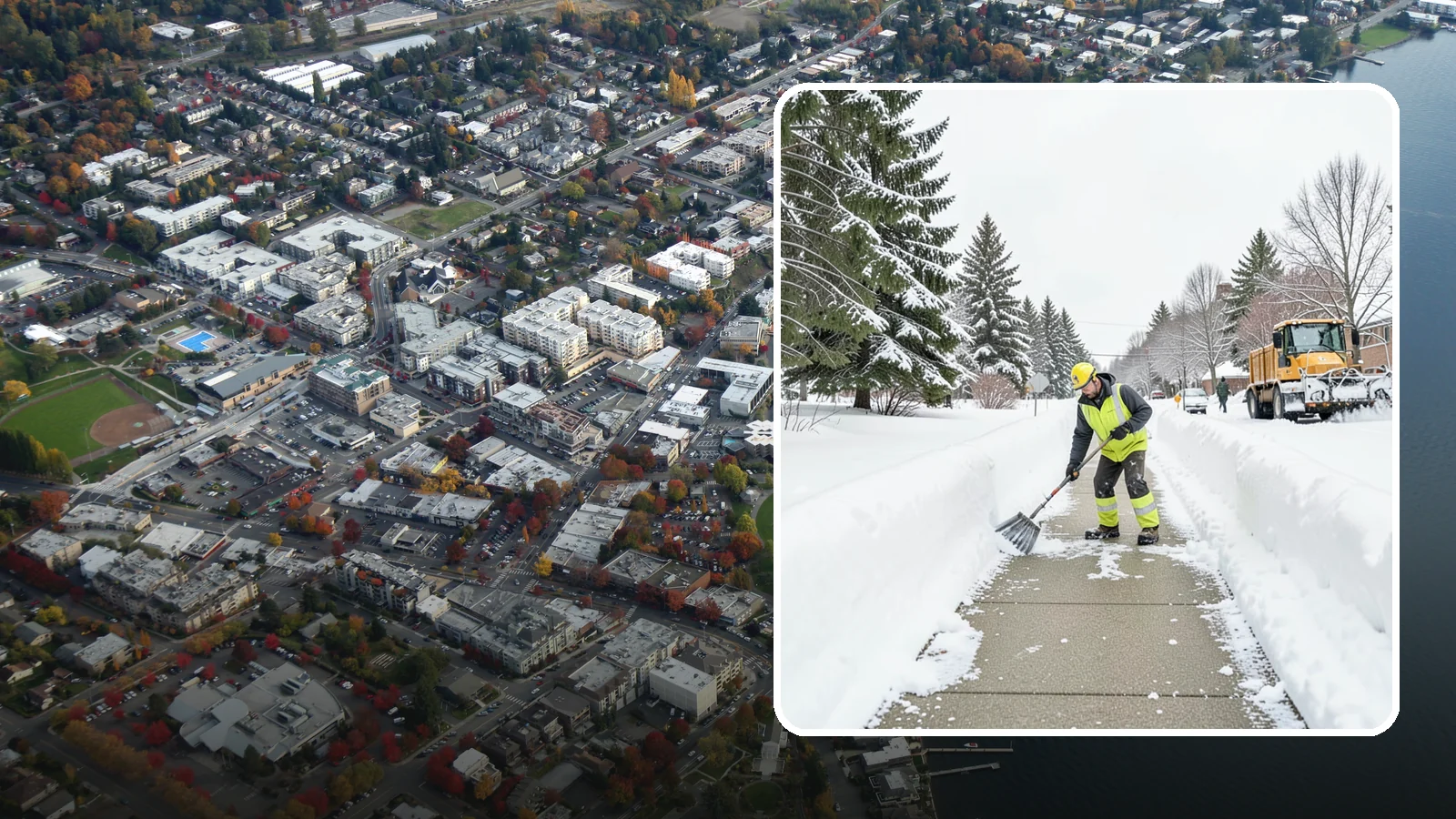
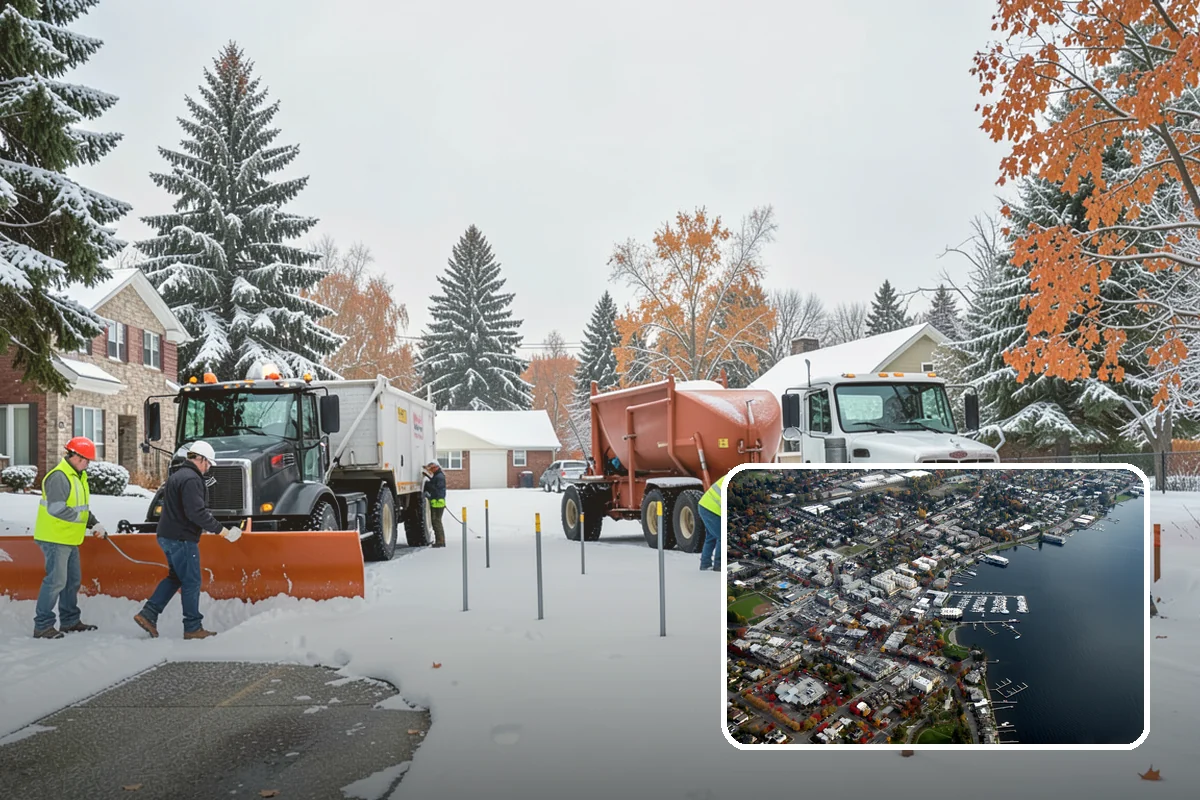
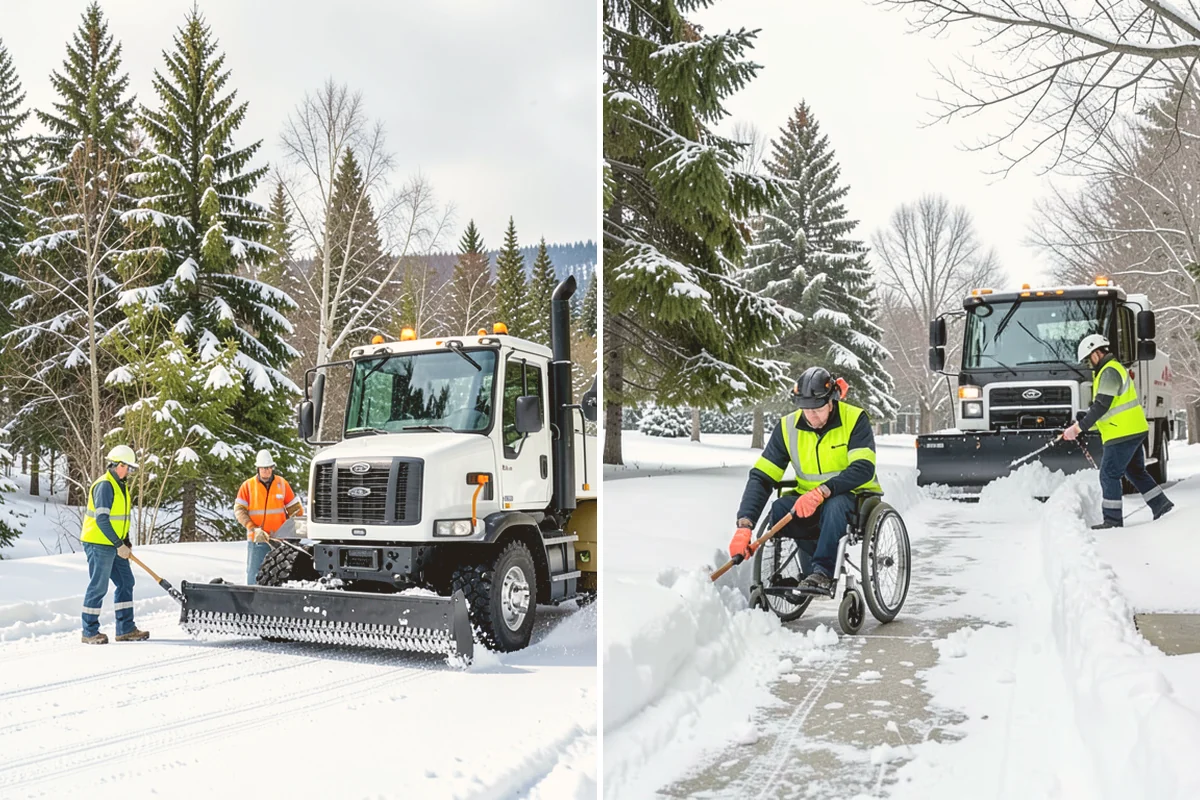
Trails are different from parking lots. They are narrow, often shaded, and sometimes lined with trees, fences or landscaping. Most of the work is done by hand or with a compact track loader, depending on the width and surface.
A typical trail job in Kirkland can include:
- Shoveling and pushing snow off the walking surface
- Clearing around gates, bollards, benches and trailheads
- Spreading bagged ice melt on slick spots
- Using a Kubota SCL1000 compact track loader with operator on wider paths
Snow is rare here, so the bigger risk is often ice. Kirkland has 29 freezing nights from Oct to Apr. Shaded trail sections can stay icy after the rest of the area has thawed, and a thin skim of snow can turn slick fast.
If your trail runs beside a public sidewalk, note the city rule. Under KMC 19.20.020, the owner of property abutting a public sidewalk must keep it safe at all times, free of obstructions or defects, including ice and snow. The deadline is at all times.
Pricing is simple. Crew members are $110 per person-hour. The loader with operator is $175 per hour. Bagged ice melt is $45 per 50 lb bag. The Kirkland trip charge is $200 per dispatch, with a 2-hour minimum.