Wheelchair Ramp Snow and Ice Removal in Lakewood, WA
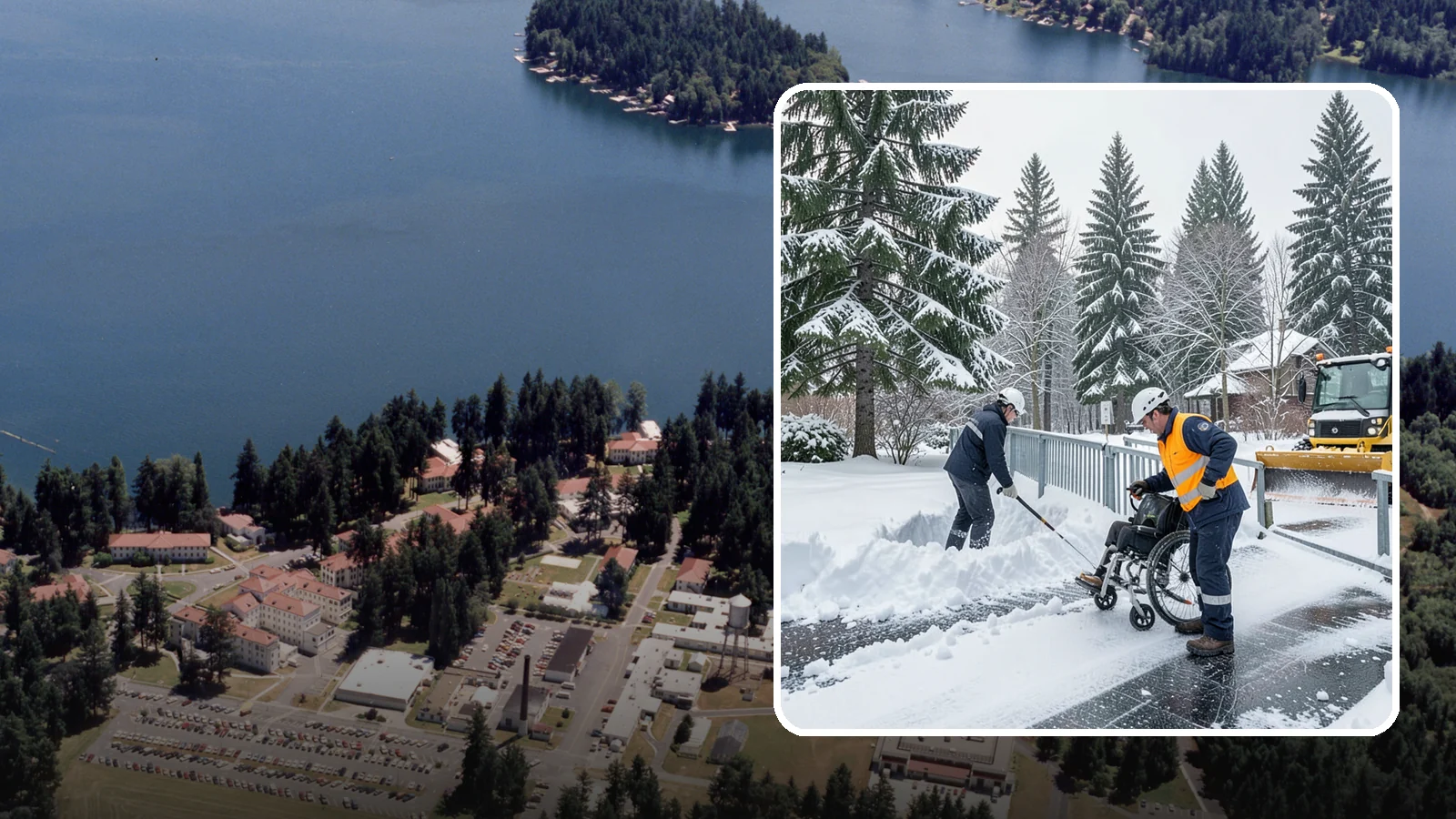
Ramp work is hand work. A crew member shovels the ramp surface, the landing at the top, the approach at the bottom and the path to the street or parking space. We keep the edges and handrail areas clear, then apply ice melt where ice could form.
Lakewood does not get much snow. The average is 5.0 in per season, and only 1.6 days a year bring 1 in or more. Snow stays on the ground about 3 days a year. The bigger issue is ice. Lakewood has 35 freezing nights from October to April, and about 3.0 light-snow days a year need deicing. A thin layer of frost or slush can freeze on a ramp slope and become slick.
Big storms do happen. Feb 12–15, 2021 brought 9.3 in, with 4.6 in on the biggest day. Feb 8–12, 2019 brought 6.9 in. Jan 11, 2007 dropped 6.5 in in one day. Ramps need clearing in storms like these, not only on mild days.
What the job involves and what it costs:
- Crew member for shoveling and hand work: $110 per person-hour
- Ice melt, bagged: $45 per 50 lb bag
- Trip charge for Lakewood (zone C): $350 per dispatch
- 2-hour minimum per dispatch
If your ramp serves a longer walkway or a shared entrance, tell us when you call. We will plan the clearing around it.