Keeping You Moving. Beyond Expectations.

Newcastle Asphalt Driveway Deicing
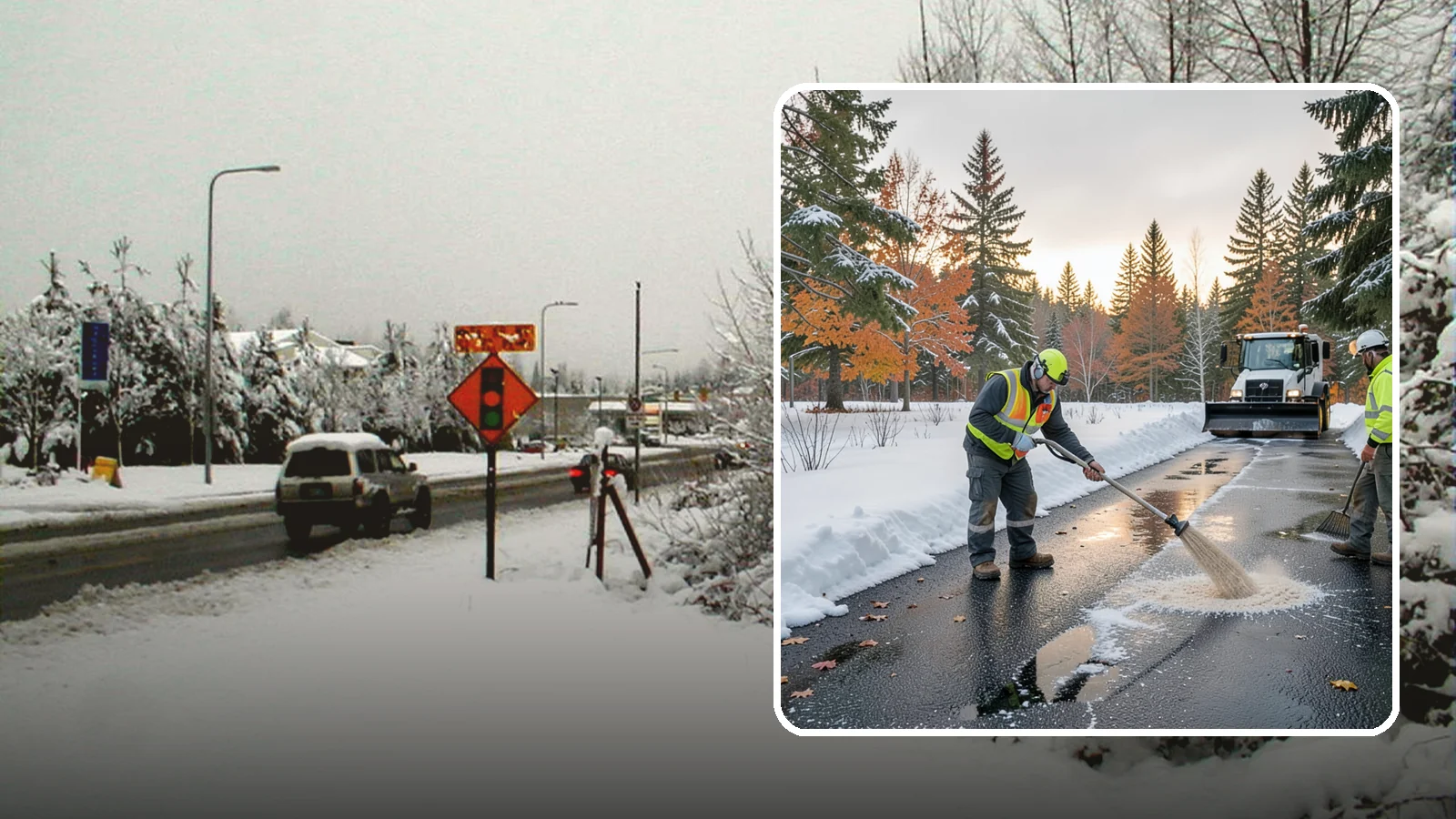
Targeted deicing of asphalt driveways to break the black ice that forms during Western Washington’s melt-and-refreeze nights.
Washington Snow Removal provides asphalt driveway deicing in Newcastle, King County. Newcastle sees about 30 freezing nights between October and April. Most of them are dry, so a thin glaze can form on a driveway with no snow at all.
We apply deicer to your asphalt driveway so ice does not bond to the surface. A deicing application starts from $85 per visit. We are based in Bothell, and we are licensed, bonded and insured. Call 206-809-9669 to set up service for your home.
How often Newcastle pavement freezes
Average snowfall by month in Newcastle
Recent winter events logged for the Newcastle area
- Nov 29–Dec 1, 2022: Winter Weather; Heavy Snow
- Feb 8–11, 2019: Heavy Snow
- Feb 4, 2019: Heavy Snow
- Feb 5, 2017: Heavy Snow
Sources: NOAA and National Weather Service records for Newcastle, 2005–2026.
How Asphalt Driveway Deicing Works in Newcastle
Asphalt is dark and absorbs heat in daylight. That melts a little snow, then the meltwater refreezes after dark. Newcastle's driveways are often sloped, so that water runs downhill and turns to ice where you park or turn.
Newcastle averages 7.1 inches of snow per season and only 2.1 days a year with an inch or more. Only about 1.5 days a year stay below freezing all day. The bigger risk is the 30 freezing nights. Recent events in the area include Heavy Snow on Feb 5, 2017, Feb 4, 2019 and Feb 11, 2019, and Winter Weather on Dec 1, 2022. Two ice storm reports have been logged since 2005. The area also averages 4.29 Winter Weather Advisories a year.
A typical visit involves:
- Checking the slope, apron and any low spots where water collects
- Applying deicer evenly across the asphalt
- Treating the front walk and steps if they are included
A two-car driveway including front walk and steps starts from $275 per visit. An ice plan add-on starts from $280 per season. Seasonal plans are priced from Newcastle's snow history, about 2.1 visits in an average season. Visits beyond a plan's limit are half the per-visit price. Service starts at 1 inch of accumulation.
Residential snow removal prices in Newcastle
Starting prices for Newcastle. Final price depends on size, slope and snow depth. Newcastle is in travel zone A.
| Deicing application, per visit | from $85 |
| Ice plan add-on, per season | from $280 |
| Two-car driveway incl. front walk and steps, per visit | from $275 |
- Seasonal plans are priced from Newcastle's snow history: about 2.1 plow visits in an average season.
- Visits beyond a plan's limit are half the per-visit price.
- Service starts at 1 inch of accumulation.
Prices approved Oct 2026.
Service Area
Newcastle
Benefits
Breaks the black ice that forms on asphalt after sunset; Matches deicer type and rate to the actual conditions; Concentrates treatment on sloped, high-traction-need areas; Avoids over-application that runs off into landscaping