ADA Access Clearing in Redmond: Ramps, Stalls and Paths
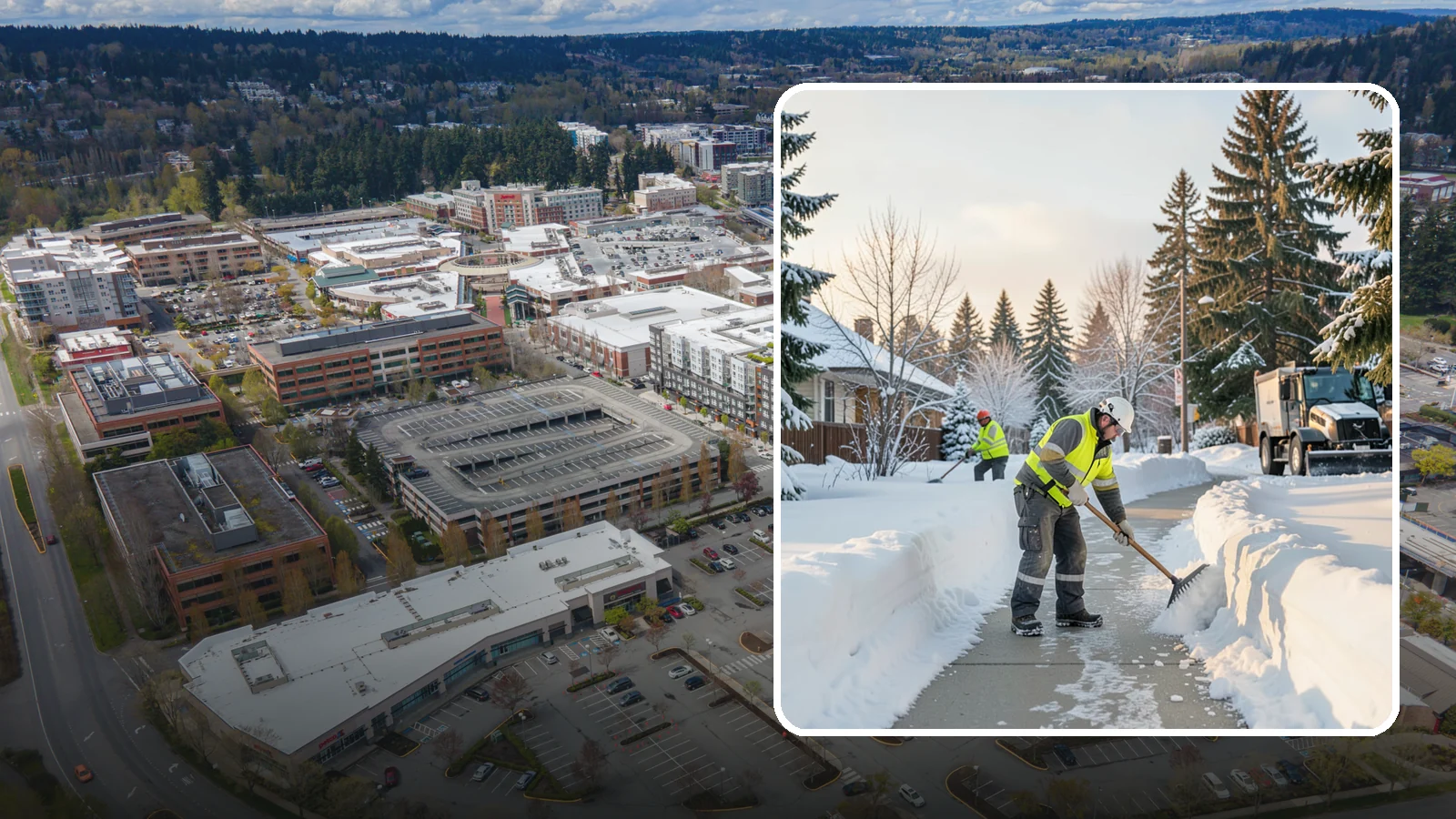
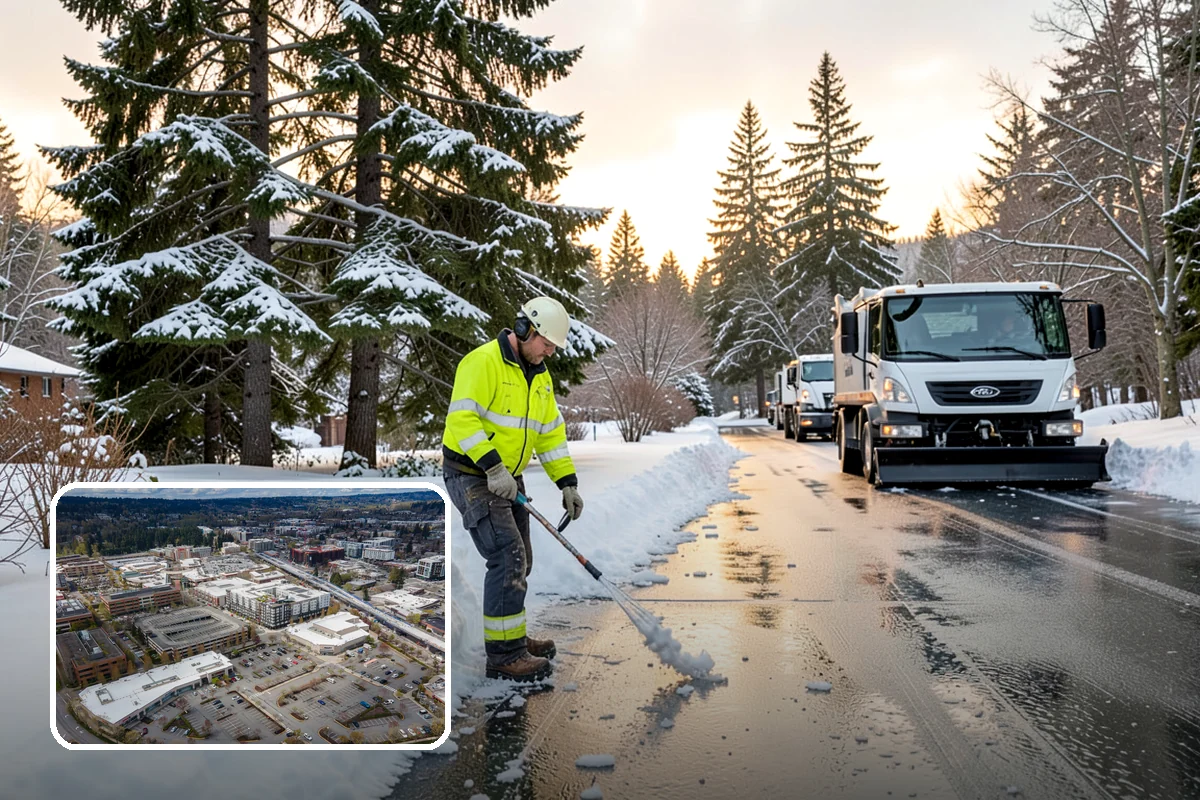
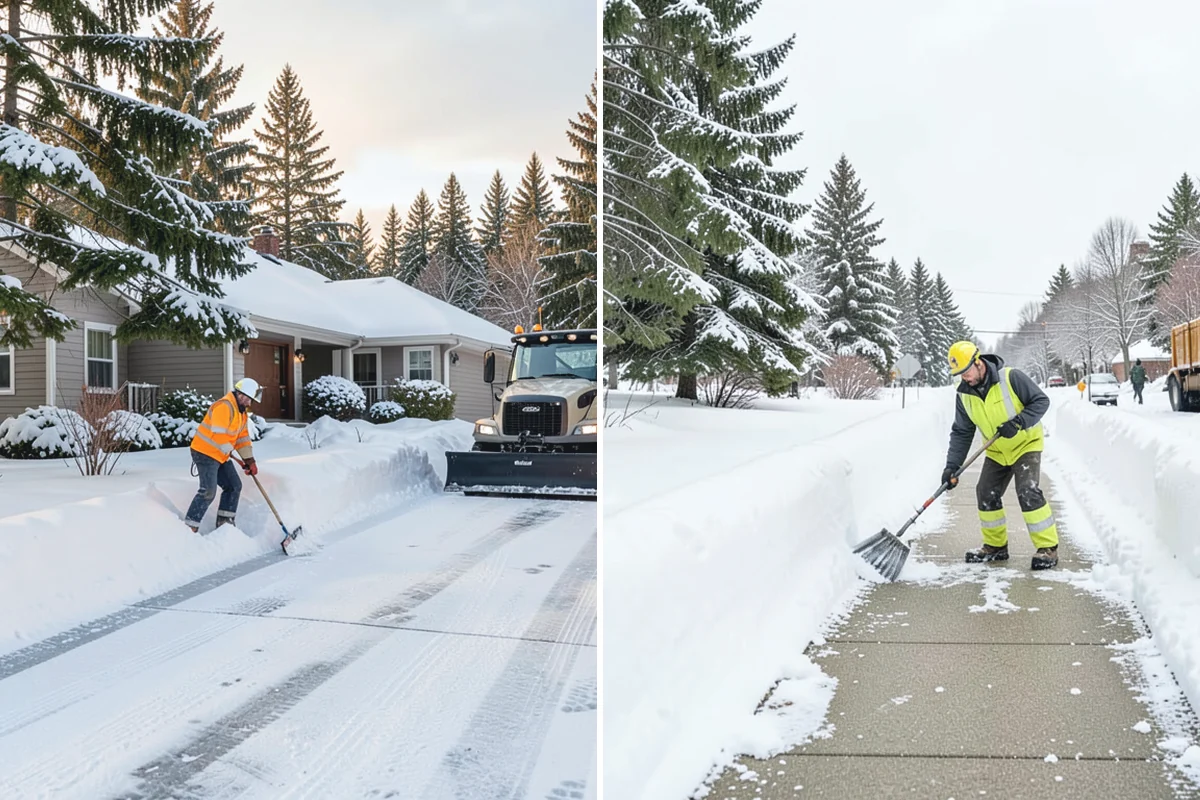
ADA access clearing is detail work. A plow can open a lot, but it often leaves snow piled at curb ramps and in the striped aisle beside an accessible stall. Our crews finish those spots by hand so the route works from the stall to the door.
Redmond gets an average of 7.8 inches of snow per season, with snow on the ground about 6 days a year. Days with 1 inch or more are rare, at 2.3 a year, and 67% of winters have at least one. The bigger recurring problem is ice. Redmond has 31 freezing nights from October through April, so meltwater refreezes on ramps and walkways. Freezing rain was reported near Kirkland and Sammamish on Dec 23, 2022, and sleet was reported near Redmond on Nov 29, 2014.
A typical visit may include:
- Shoveling curb ramps and landings
- Clearing accessible stalls and access aisles
- Clearing the path to the entrance
- Applying ice melt where ice is a risk
Pricing is $110 per person-hour for crew members, $175 per hour for a compact track loader with operator, and $45 per 50 lb bag of ice melt. The Redmond trip charge is $200 per dispatch, with a 2-hour minimum per dispatch.