How Asphalt Driveway Deicing Works in Redmond
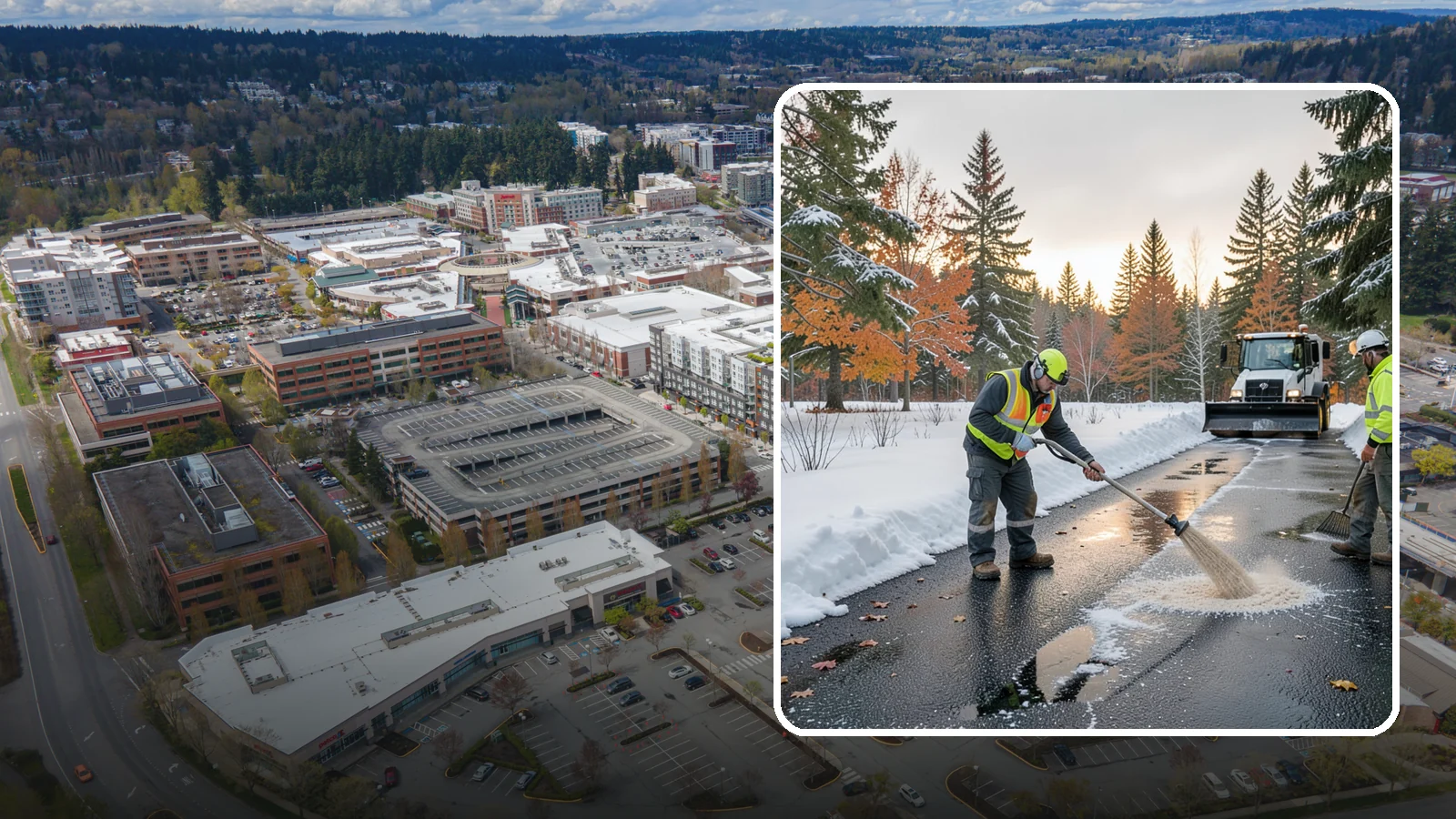
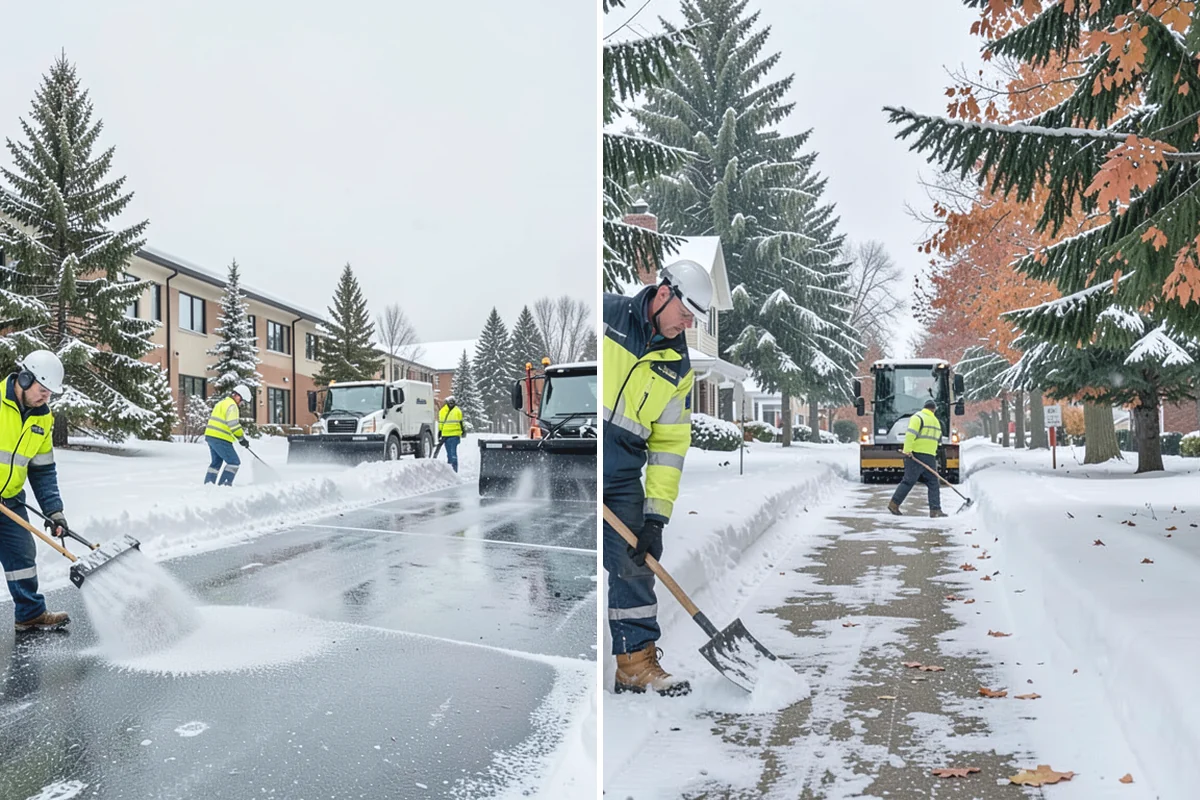
Deicing on asphalt means spreading material to stop ice from bonding to the surface, or to break up ice that has already formed. Dark asphalt can warm in weak sun, then refreeze at night. That cycle leaves thin, hard-to-see ice on slopes and at the street apron.
Redmond's pattern explains why this matters. Only 1.1 days a year stay below freezing all day, but the area sees 31 freezing nights between October and April. About 3.19 light-snow days a year need deicing, and Redmond averages 4.29 Winter Weather Advisories a year. Freezing rain also happens here. Records near Redmond include an ice storm on Dec 23, 2022, freezing rain reported near Sahalee on Jan 17, 2024, and sleet reported near Redmond on Nov 29, 2014.
Here is what the service covers and how it is priced:
- Deicing application: from $85 per visit.
- Two-car driveway including front walk and steps: from $275 per visit.
- Ice plan add-on: from $325 per season.
Seasonal plans are priced from Redmond's snow history, about 2.29 plow visits in an average season. Visits beyond a plan's limit are half the per-visit price. Plowing service starts at 1 inch of accumulation.