Keeping You Moving. Beyond Expectations.

Redmond Black Ice Treatment
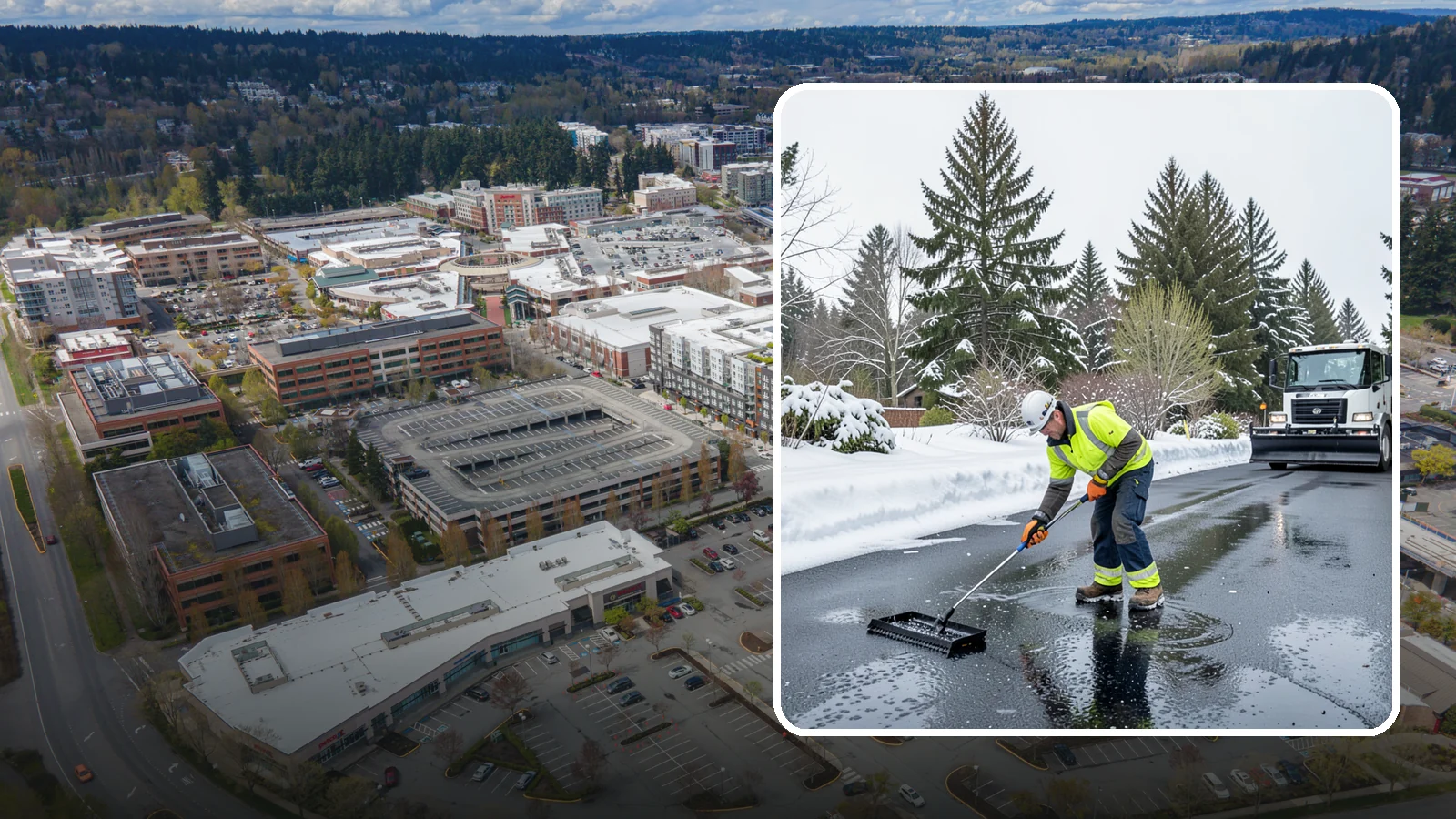
Black ice treatment tackles the nearly invisible glaze that forms when Western Washington’s wet pavement refreezes after dark.
Black ice forms when thin moisture freezes on pavement, and it is hard to see until you are on it. In Redmond, it tends to show up on freezing nights, on shaded walkways, and in parking lots where meltwater refreezes. Washington Snow Removal treats these surfaces so people can walk and drive across them more safely.
We are based in Bothell, 27 minutes from Redmond, and we are licensed, bonded and insured. Call 206-809-9669 to talk through your property and set up a dispatch.
Redmond ice season, by the numbers
Average snowfall by month in Redmond
Ice storms and freezing rain near Redmond
- Dec 23, 2022: Ice Storm; Freezing Rain reported at 1 SSW Kirkland; Freezing Rain reported at 1 WSW Kirkland; Freezing Rain reported at Sammamish
- Jan 17, 2024: Freezing Rain reported at 1 SSW Sahalee
- Nov 29, 2014: Sleet reported at 1 NE Redmond
Sources: NOAA and National Weather Service records for Redmond, 2005–2026.
How Black Ice Treatment Works in Redmond, WA
Redmond does not see much snow. The average is 7.8 in per season, and only 2.3 days a year bring 1 in or more. Just 1.1 days a year stay below freezing all day. The bigger issue is the cold nights. Redmond has 31 freezing nights from October to April, and that is when wet pavement turns to ice.
Ice events do happen nearby. An ice storm hit on Dec 23, 2022, with freezing rain reported at Sammamish and near Kirkland. Sleet was reported near Redmond on Nov 29, 2014. Light snow also matters: about 3.19 days a year are light-snow days that need deicing.
A typical treatment visit involves:
- Checking walkways, entries, ramps, stairs and lot drainage spots
- Applying bulk salt with our spreader truck on larger lots
- Hand-applying ice melt on sidewalks and steps
- Re-treating areas where meltwater keeps refreezing
Pricing is simple. Our Redmond trip charge is $200 per dispatch. The spreader truck with driver is $325 per hour, and bulk salt applied is $300 per ton. Crew members for hand work are $110 per person-hour, and bagged ice melt is $45 per 50 lb bag. Each dispatch has a 2-hour minimum.
Prices in Redmond
Billed by the hour for the crew and equipment on site, plus materials.
| Plow and spreader truck with driver (Ram 5500) | $325 / hour |
| Ice melt, bagged | $45 / 50 lb bag |
| Bulk salt, applied | $300 / ton |
| Crew member (shoveling, sidewalks, hand work) | $110 / person-hour |
| Trip charge for Redmond (zone A) | $200 / dispatch |
- 2-hour minimum per dispatch.
- Redmond is 27 minutes from our Bothell yard.
Prices approved Oct 2026.
Service Area
Redmond
Benefits
Neutralizes the transparent glaze that causes surprise falls; Focuses on bridge decks, shaded corners, and drainage low points; Applied before dawn when black ice peaks in the lowlands; Reduces liability on high-traffic entry and drive areas