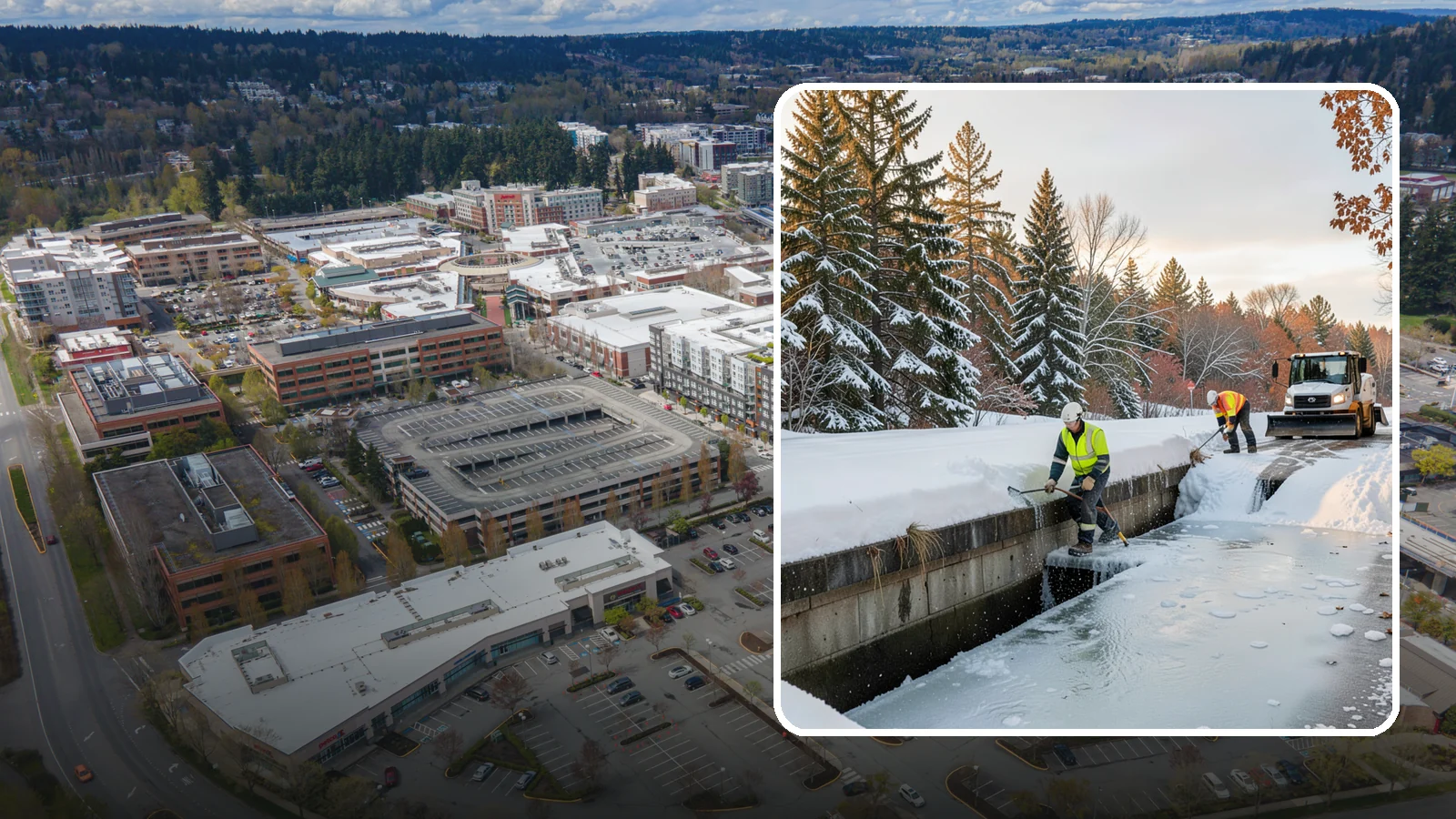
What Culvert Thawing Involves in Redmond, WA
Redmond averages 7.8 in of snow per season and only 2.3 days a year with 1 in or more. Snow is not the main problem here. Cold nights are. With 31 freezing nights from October to April, meltwater from a light day can freeze again in a culvert overnight.
The area also gets ice events. Redmond had an ice storm on Dec 23, 2022, and sleet was reported 1 Ne Redmond on Nov 29, 2014. Freezing rain the same day in 2022 was reported near Kirkland. Ice like this can seal an inlet or outlet and leave water with nowhere to go.
Redmond also has about 4.29 Winter Weather Advisories a year and 3.19 light-snow days that need deicing. Those are the days when a partly frozen culvert is most likely to cause trouble on a driveway or lot.
On a visit, the work is done by hand and usually includes:
- Checking the inlet and outlet for ice, snow and debris
- Clearing the openings so water can move
- Thawing the blockage so flow resumes
- Noting where water is pooling on pavement
Pricing is a $200 trip charge per dispatch for Redmond (zone A), plus crew time at $110 per person-hour for hand work.