Emergency Parking Access in Redmond: What the Work Involves
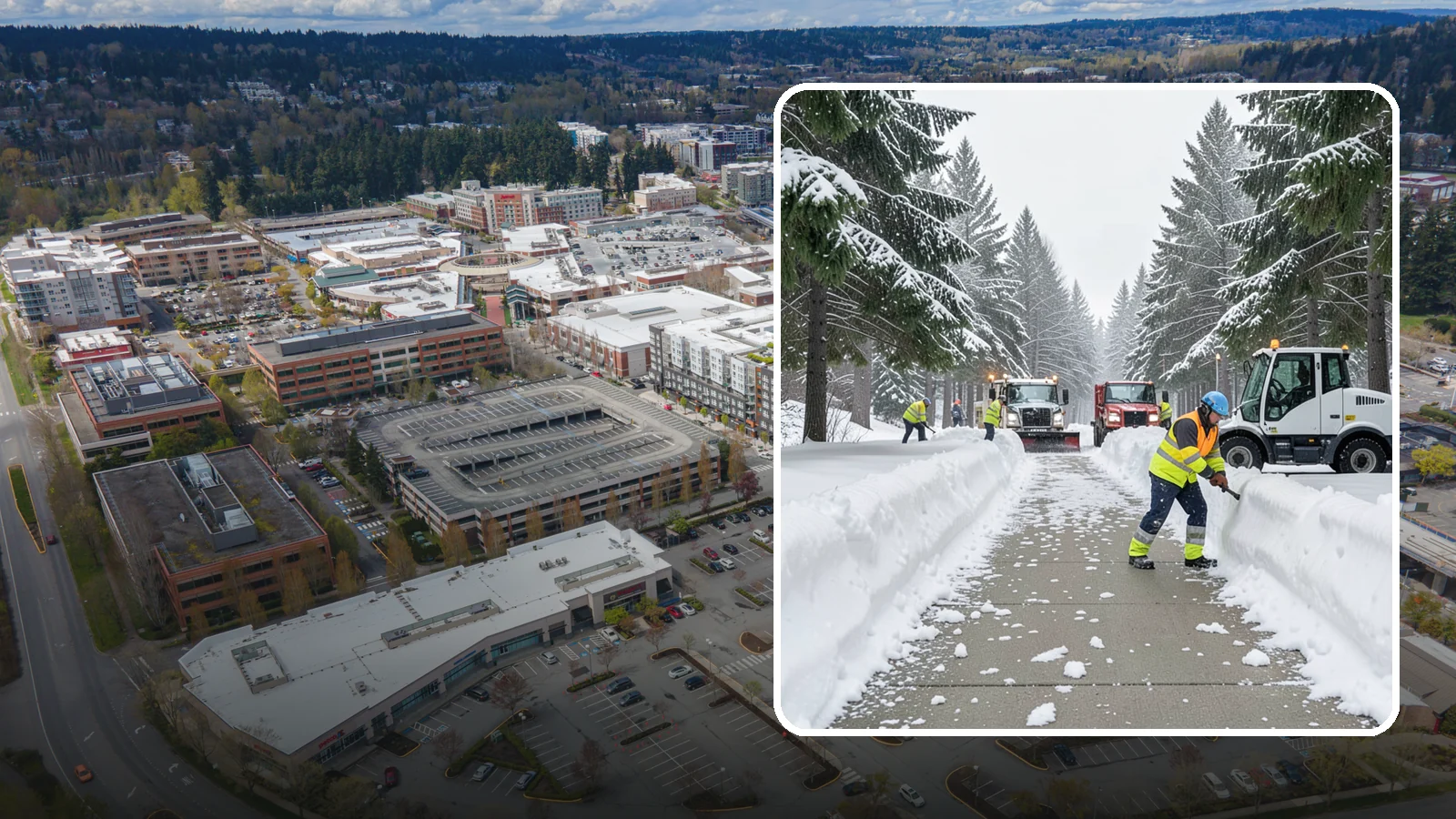
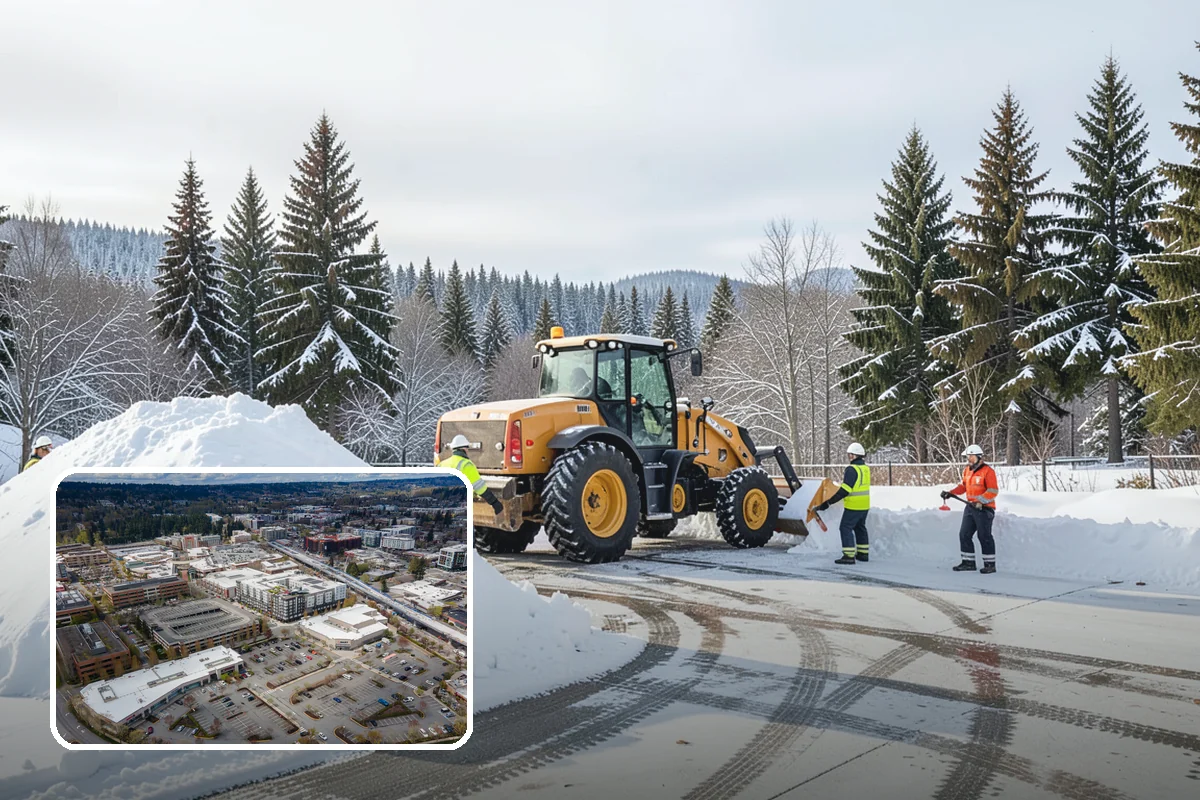
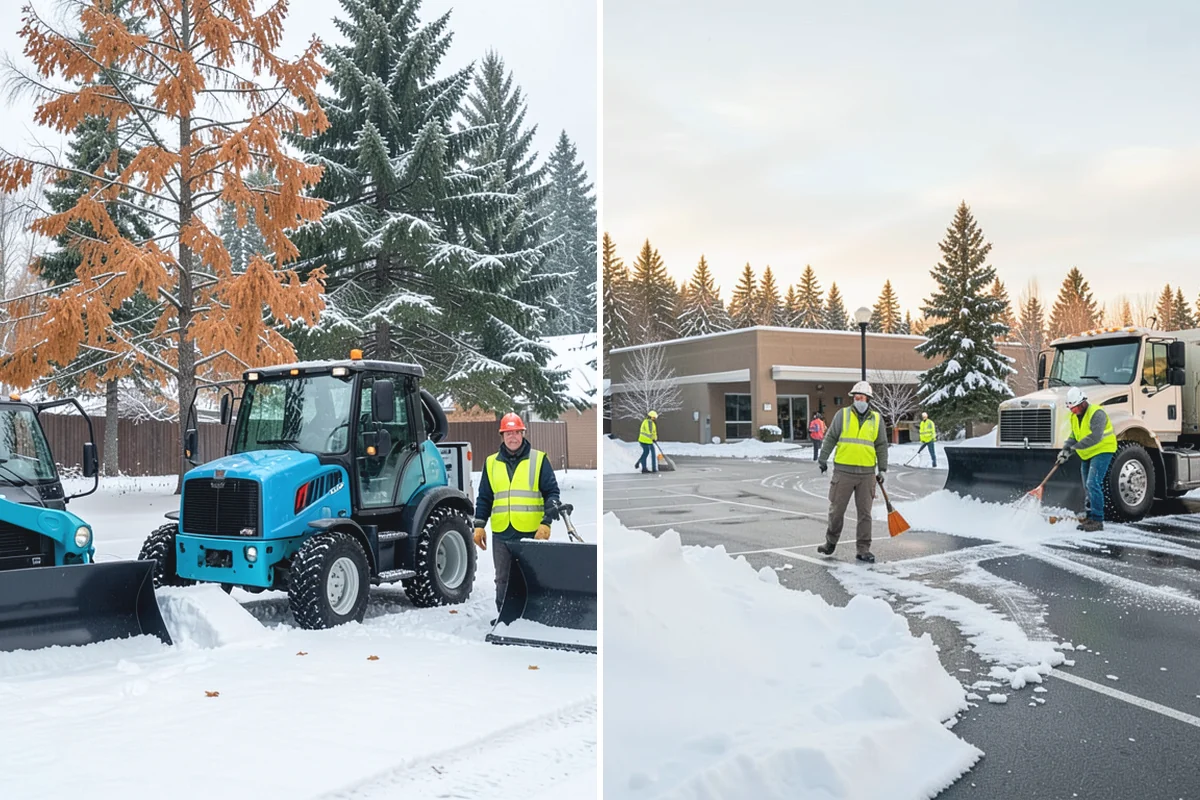
Emergency Parking Access means clearing a path so people can get vehicles in and out of a lot or drive aisle. The goal is a usable route, not a perfect lot. We plow entrances, main lanes and key spaces, and use hand crews where trucks cannot reach.
Redmond's pattern shapes the job. Heavy-snow days of 4 in or more average 0.38 a year, and Winter Storm Warnings average 1.05 a year. Since 2005 the largest storm brought 11.2 in. Storms such as Feb 12–15, 2021 (10.3 in total) and Dec 18–19, 2008 (10.3 in total) show that a few days can bury a lot that is not set up for snow. Redmond also has 31 freezing nights from Oct to Apr, so packed snow can turn to ice and may need treatment.
Equipment and rates for this work:
- Plow truck with driver (Ram 3500): $250 / hour
- Plow and spreader truck with driver (Ram 5500): $325 / hour
- Compact track loader with operator (Kubota SCL1000): $175 / hour
- Crew member for shoveling and hand work: $110 / person-hour
- Ice melt, bagged: $45 / 50 lb bag
- Bulk salt, applied: $300 / ton
The Redmond trip charge is $200 per dispatch (zone A). Each dispatch has a 2-hour minimum.