Keeping You Moving. Beyond Expectations.

Redmond Industrial Snow Removal
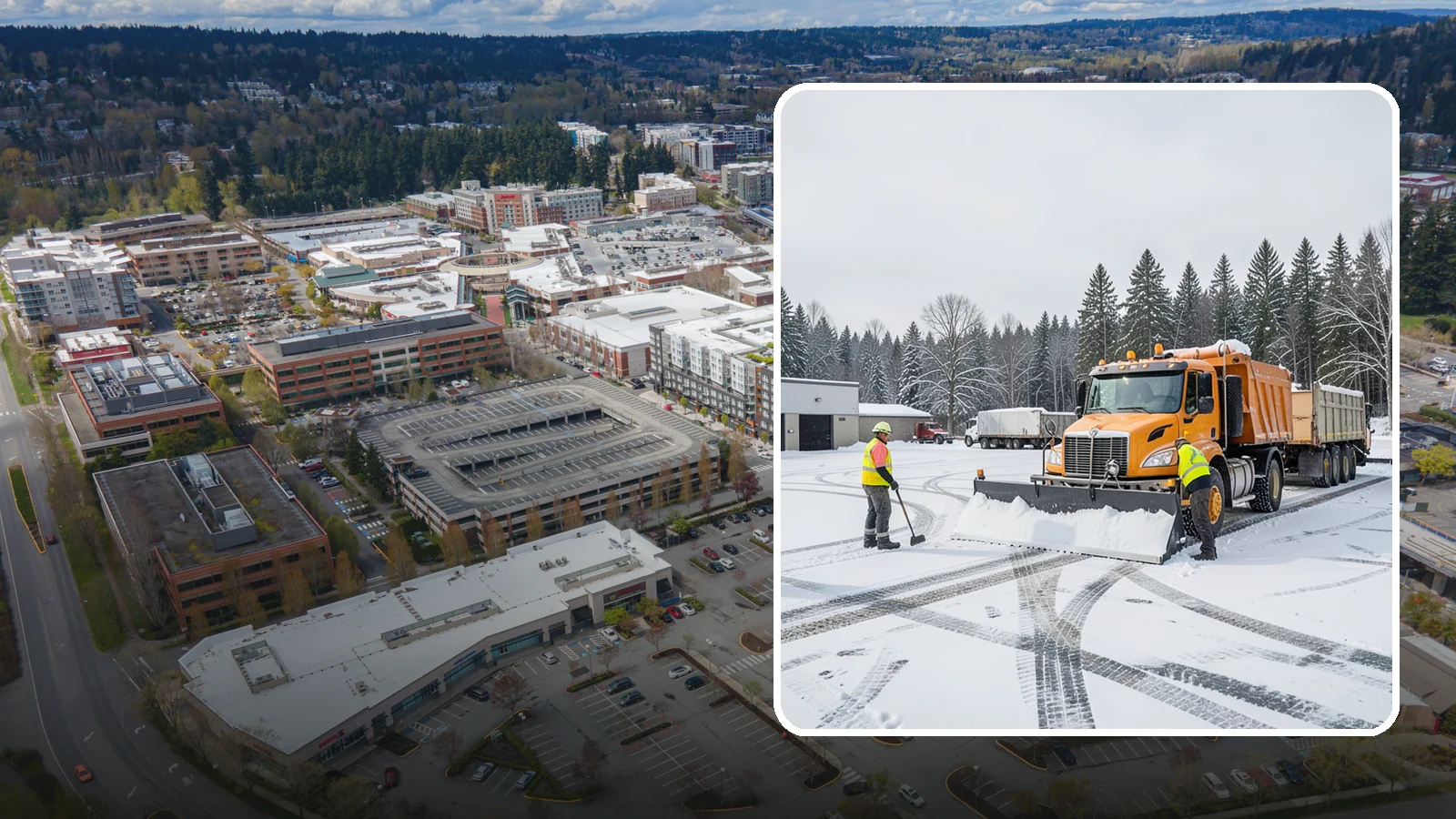
Keep industrial yards, truck lanes, and employee access open and productive through Western Washington winter weather.
Industrial sites in Redmond have large lots, truck lanes, loading docks and gates that need to stay open. Washington Snow Removal plows and treats these areas from our Bothell yard, which is 27 minutes away. We are licensed, bonded and insured.
Redmond averages 7.8 in of snow per season, so the work comes in short bursts. A typical season has 2.29 plow events and 3.19 light-snow days that need deicing. Call 206-809-9669 to set up service for your site.
Redmond winter workload for property managers
Average snowfall by month in Redmond
Largest snow totals reported near Redmond
- Dec 18–19, 2008: Up to 11 in, 2 spotter reports: 3 ENE Redmond 11 in, 3 ENE Redmond 9 in
- Feb 9–12, 2019: Up to 10.5 in, 2 spotter reports: 2 E Woodinville 10.5 in, 2 NNE Sammamish 10 in
- Feb 4, 2019: Up to 9.5 in, 3 spotter reports: Sammamish 9.5 in, 4 N Redmond 9 in, 1.3 ESE Woodinville 9 in
Sources: NOAA and National Weather Service records for Redmond, 2005–2026.
Industrial Snow Removal in Redmond: What the Work Involves
At an industrial property, snow removal means more than clearing a parking lot. Trucks need to enter and leave, docks need clear aprons, and walkways need to be safe for workers. There are 12 industrial sites mapped within Redmond, including All Wood Recycling and Puget Sound Energy.
Redmond does not get snow often. It sees 2.3 days a year with 1 in or more, but it has 31 freezing nights between October and April. That means ice is often the bigger problem. On Feb 4, 2019, spotters reported 9.5 in at Sammamish and 9 in near Redmond and Woodinville. Since 2005 there have been 27 winter storm and heavy snow reports.
Typical equipment and rates for a Redmond site:
- Plow truck with driver (Ram 3500): $250 / hour
- Plow and spreader truck with driver (Ram 5500): $325 / hour
- Compact track loader with operator (Kubota SCL1000): $175 / hour
- Crew member for sidewalks and hand work: $110 / person-hour
- Bulk salt, applied: $300 / ton
- Bagged ice melt: $45 / 50 lb bag
The trip charge for Redmond (zone A) is $200 per dispatch. Each dispatch has a 2-hour minimum.
Prices in Redmond
Billed by the hour for the crew and equipment on site, plus materials.
| Plow truck with driver (Ram 3500) | $250 / hour |
| Plow and spreader truck with driver (Ram 5500) | $325 / hour |
| Compact track loader with operator (Kubota SCL1000) | $175 / hour |
| Crew member (shoveling, sidewalks, hand work) | $110 / person-hour |
| Ice melt, bagged | $45 / 50 lb bag |
| Bulk salt, applied | $300 / ton |
| Trip charge for Redmond (zone A) | $200 / dispatch |
- 2-hour minimum per dispatch.
- Redmond is 27 minutes from our Bothell yard.
Prices approved Oct 2026.
Industrial sites in Redmond
There are 12 industrial sites mapped within Redmond.
- All Wood Recycling
- Puget Sound Energy
Source: OpenStreetMap contributors, Oct 2026. Named sites are examples of local facilities, not customers.
Service Area
Redmond
Benefits
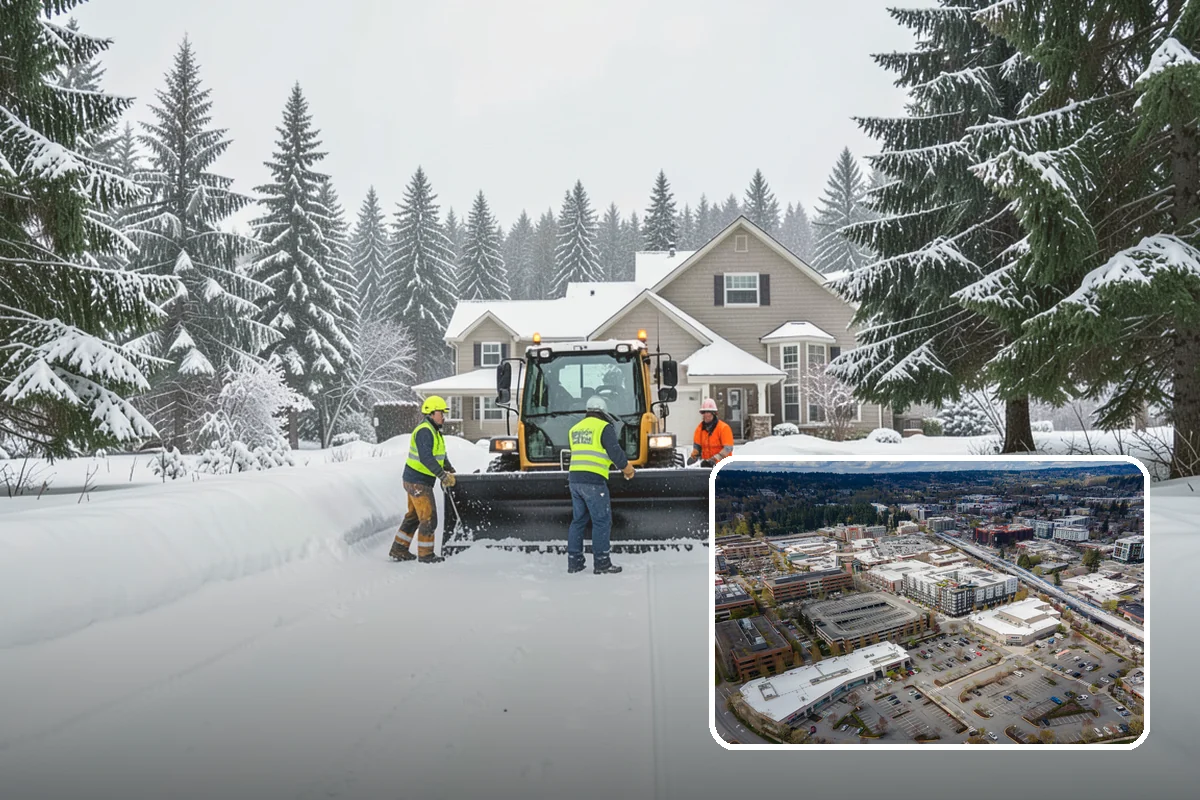
Clear truck lanes and yard access for freight; Large-area clearing with properly sized equipment; Sanded routes for forklift and trailer traffic; Minimal downtime for shipping and receiving