Keeping You Moving. Beyond Expectations.

Roy Emergency Commercial Snow Removal
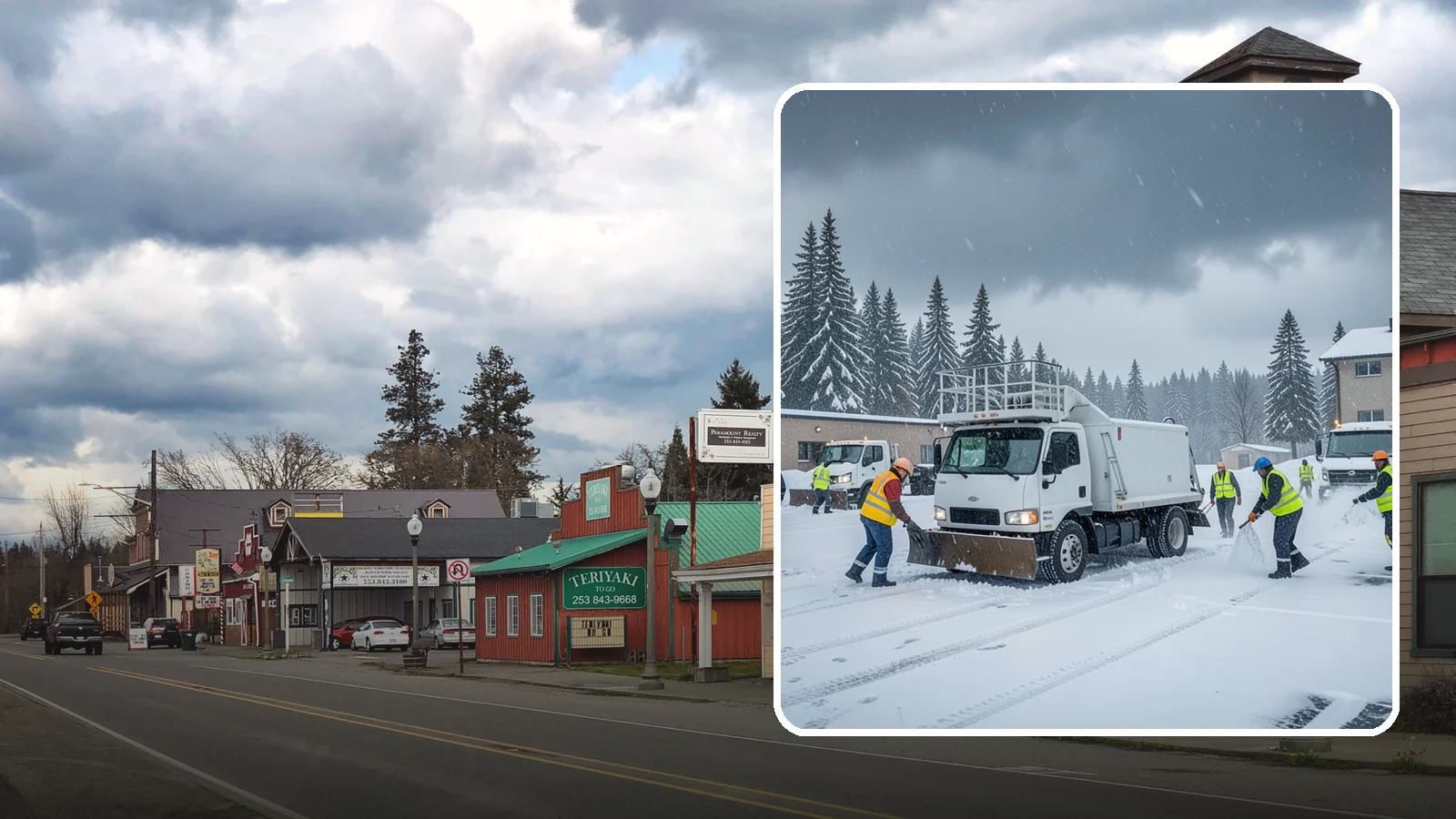
Get rapid, on-call snow and ice response when an unexpected storm threatens to shut down your commercial property.
Snow is not common in Roy, but it does happen. The average is 6.2 in per season, and only 1.8 days a year bring 1 in or more. When it does arrive, commercial sites still need clear lots, entrances and walkways.
Washington Snow Removal provides emergency commercial snow removal in Roy, Pierce County. We are licensed, bonded and insured. Our yard is in Bothell, 104 minutes away. Call 206-809-9669 to request a dispatch. Pricing is listed below, with a 2-hour minimum per dispatch.
Storm history for Roy
Largest snow totals reported near Roy
- Feb 11–13, 2021: Up to 11 in, 7 spotter reports: 2 NE Yelm 11 in, Yelm 10 in, Yelm 8 in, Yelm 7 in, 2 ESE Yelm 7 in, 2 E Yelm 4 in, 2 E Yelm 4 in
- Feb 9, 2019: 4 in measured by a spotter at Yelm
- Jan 15–19, 2012: 12.9 in total, 8.3 in on the biggest day
- Feb 5–6, 2017: 9.9 in total, 6.5 in on the biggest day
Sources: NOAA and National Weather Service records for Roy, 2005–2026.
Emergency Commercial Snow Removal in Roy, WA: What It Involves
Emergency service means a crew comes to your property for a specific storm, without a seasonal contract. At a commercial site in Roy, that usually means plowing parking areas and drive lanes, clearing entrances, shoveling sidewalks, and spreading salt or ice melt where needed.
Roy sees snow rarely, but some events are large. The largest storm since 2005 brought 15.4 in, and there have been 11 winter storm and heavy snow reports since then. In February 2021, spotters near Roy reported 11 in at 2 NE Yelm and 10 in at Yelm. The area also averages 3.38 Winter Weather Advisories a year and 42 freezing nights from October to April, so ice can be a problem even without deep snow.
Because big snow is infrequent, many sites have no equipment on hand. That is where an emergency call helps.
- Plow truck with driver (Ram 3500): $250 / hour
- Plow and spreader truck with driver (Ram 5500): $325 / hour
- Compact track loader with operator (Kubota SCL1000): $175 / hour
- Crew member for shoveling and hand work: $110 / person-hour
- Ice melt, bagged: $45 / 50 lb bag
- Bulk salt, applied: $300 / ton
- Trip charge for Roy (zone D): $525 / dispatch
Each dispatch has a 2-hour minimum.
Prices in Roy
Billed by the hour for the crew and equipment on site, plus materials.
| Plow truck with driver (Ram 3500) | $250 / hour |
| Plow and spreader truck with driver (Ram 5500) | $325 / hour |
| Compact track loader with operator (Kubota SCL1000) | $175 / hour |
| Crew member (shoveling, sidewalks, hand work) | $110 / person-hour |
| Ice melt, bagged | $45 / 50 lb bag |
| Bulk salt, applied | $300 / ton |
| Trip charge for Roy (zone D) | $525 / dispatch |
- 2-hour minimum per dispatch.
- Roy is 104 minutes from our Bothell yard.
Prices approved Oct 2026.
Service Area
Roy
Benefits
Rapid mobilization for unexpected storms; Priority clearing of mission-critical access; Fast treatment of sudden hazardous surfaces; Reduced downtime and liability during surprise events