Generator Access Clearing in Roy: What the Work Involves
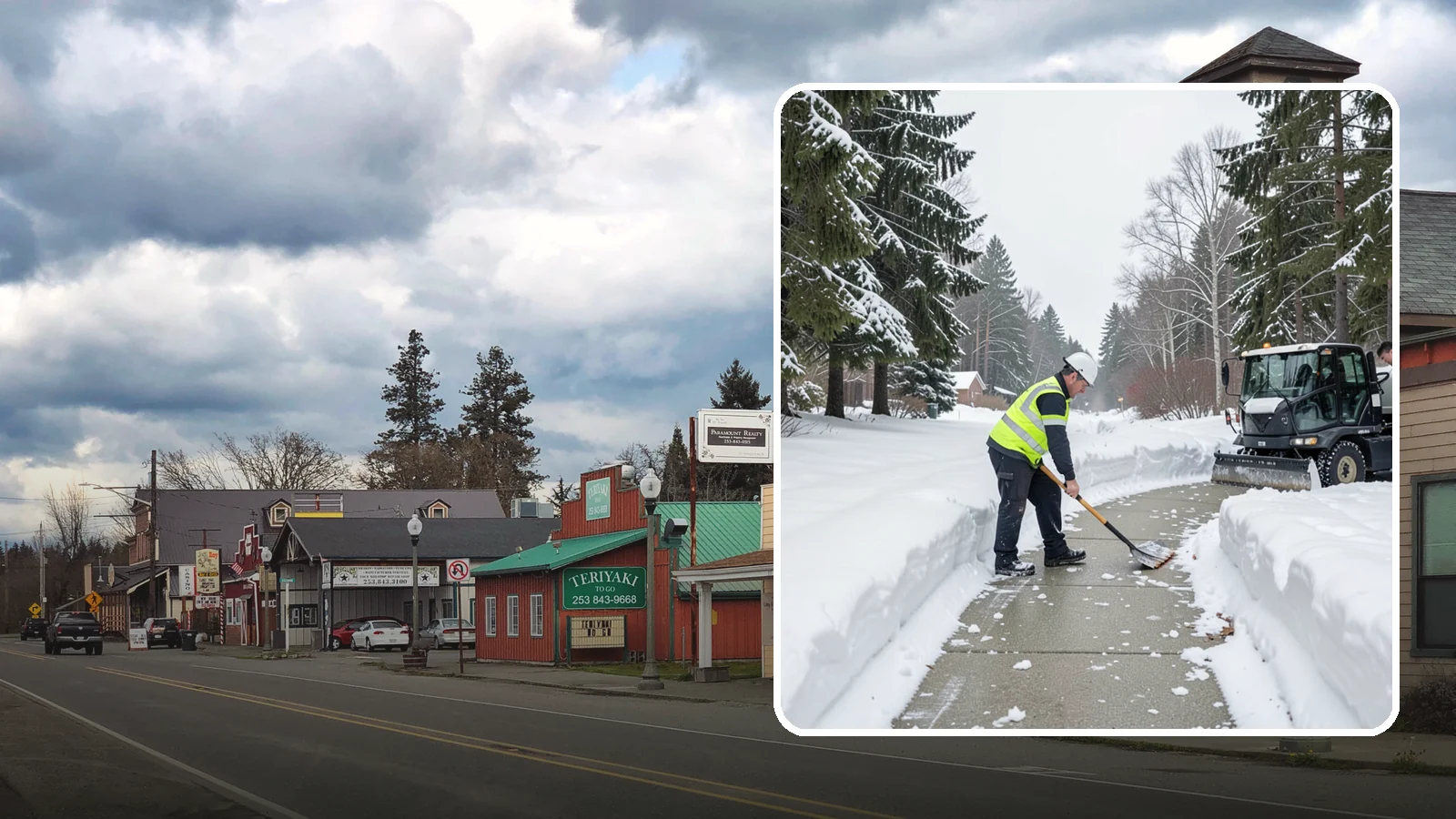
Generator access clearing means opening a safe, usable route to your generator and keeping the area around the unit free of snow and ice. We work by hand around the equipment and use machinery only where it is safe to do so.
- Shoveling the path from the door or driveway to the generator
- Clearing snow from around the unit and its pad
- Removing drifts and ice from service and fuel access points
- Spreading bagged ice melt on walking surfaces near the unit
Roy sees snow on the ground only about 4 days a year, and 73% of winters have at least one 1-inch day. So the work is often short and sudden. Freezing nights run 42 between October and April, which means meltwater refreezes into ice on paths and steps. Recent events in the area include an ice storm on Dec 23, 2022, a winter storm on Feb 12, 2021, heavy snow on Feb 22, 2018, and an ice storm on Jan 19, 2012. Ice storms are the ones most likely to cause outages.
Pricing is a crew member at $110 per person-hour, a Kubota SCL1000 compact track loader with operator at $175 per hour, and bagged ice melt at $45 per 50 lb bag. Roy is in zone D, with a trip charge of $525 per dispatch. Each dispatch has a 2-hour minimum. Roy is 104 minutes from our Bothell yard.