Calcium Chloride Application in SeaTac: What It Involves
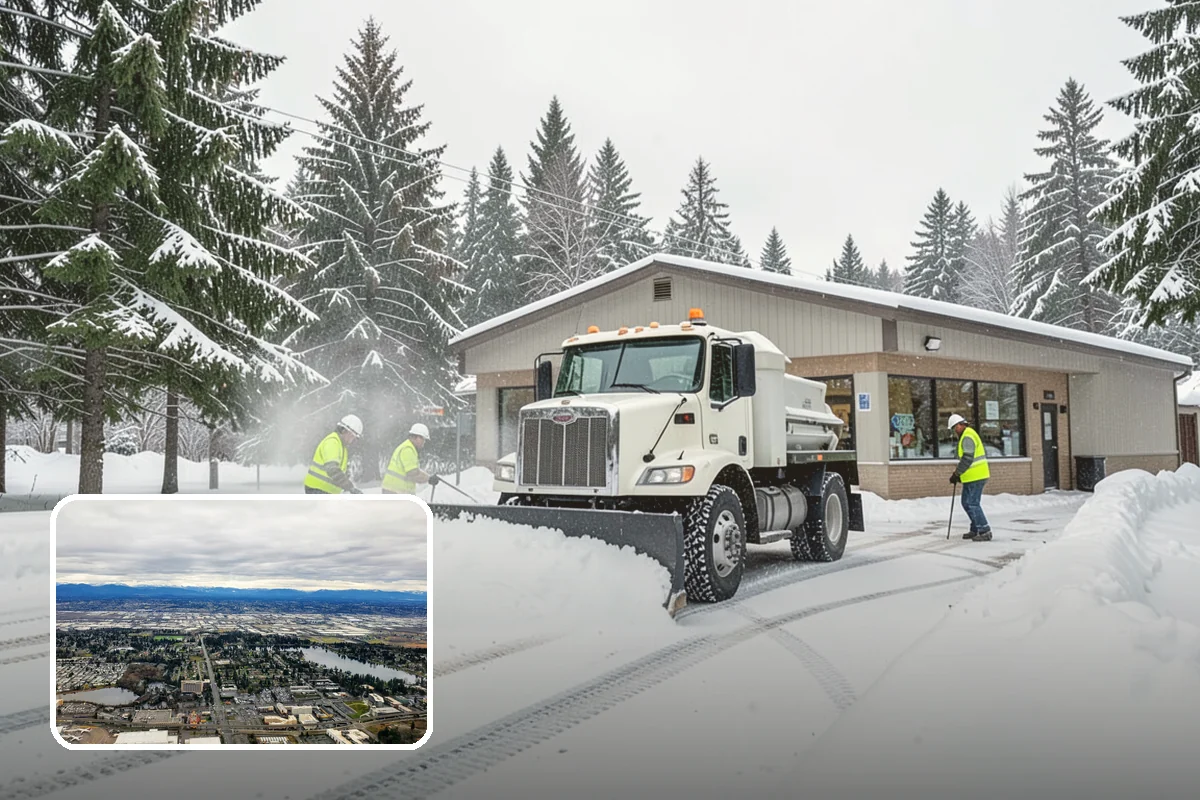
SeaTac sees little snow but a lot of cold. Snow is on the ground about 3 days a year, and only 1.7 of those days bring 1 in or more. The bigger issue is thin ice. About 2.29 light-snow days a year need deicing, and the area logs roughly 3.29 Winter Weather Advisories annually.
Calcium chloride suits that pattern. It starts working quickly and keeps melting when temperatures drop, so it handles the frost and refreeze that follow a light dusting. Recent events show the range: Heavy Snow on Nov 29, 2022, Cold/Wind Chill on Oct 28, 2023, and Winter Weather on Feb 4, 2025.
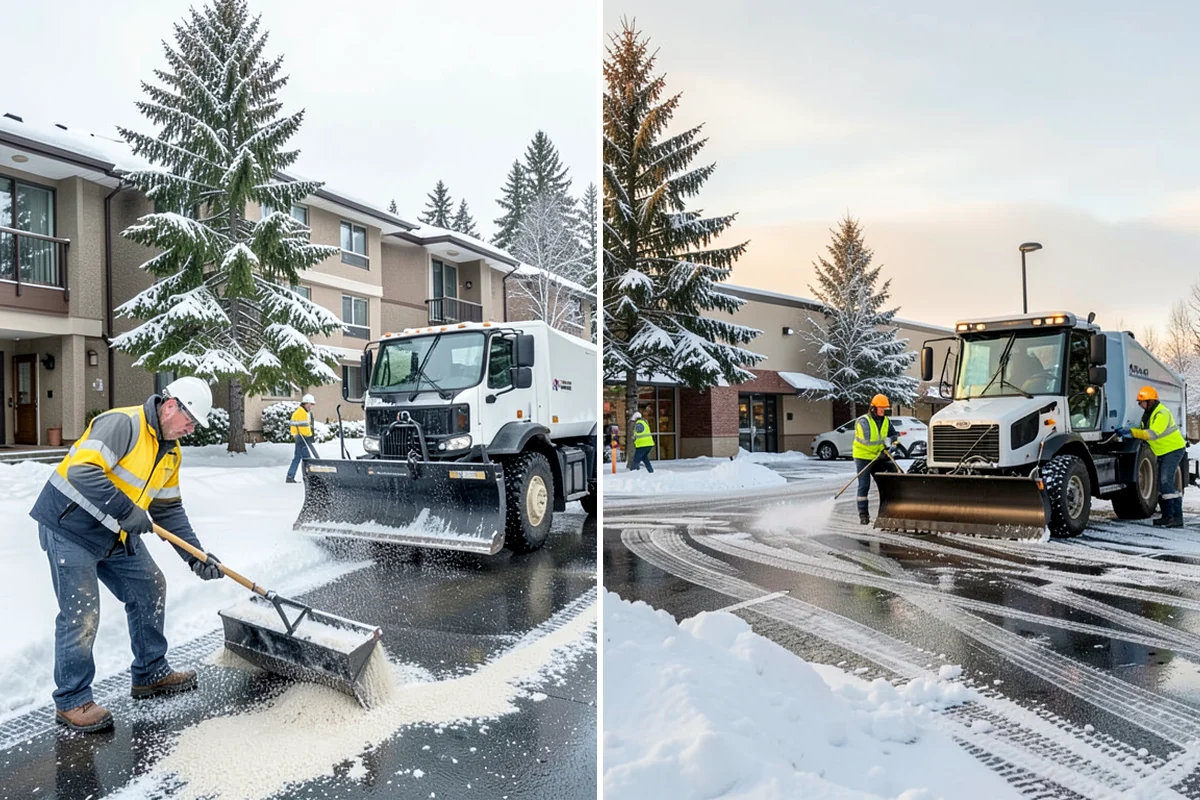
At a SeaTac property, a visit typically covers:
- Entrances, sidewalks and ramps
- Loading areas and parking lot walk lanes
- Shaded or low spots where ice lingers
- Hand work by crew where equipment cannot reach
Pricing is simple. Bagged ice melt is $45 per 50 lb bag, and crew members are $110 per person-hour. Bulk salt applied by truck is $300 per ton. SeaTac carries a $275 trip charge per dispatch (zone B), and each dispatch has a 2-hour minimum.