How After-Hours Snow Removal Works in Seattle
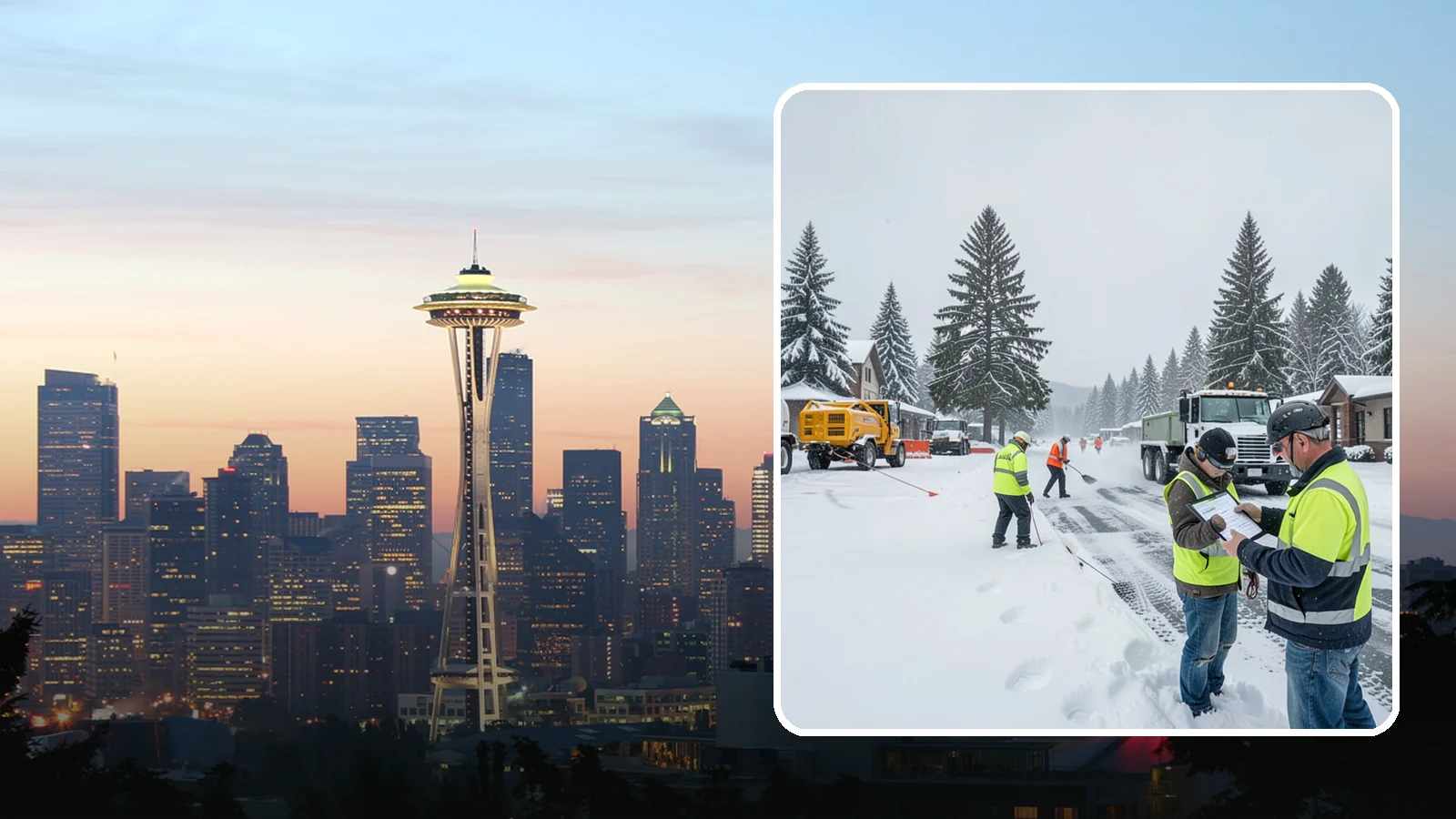
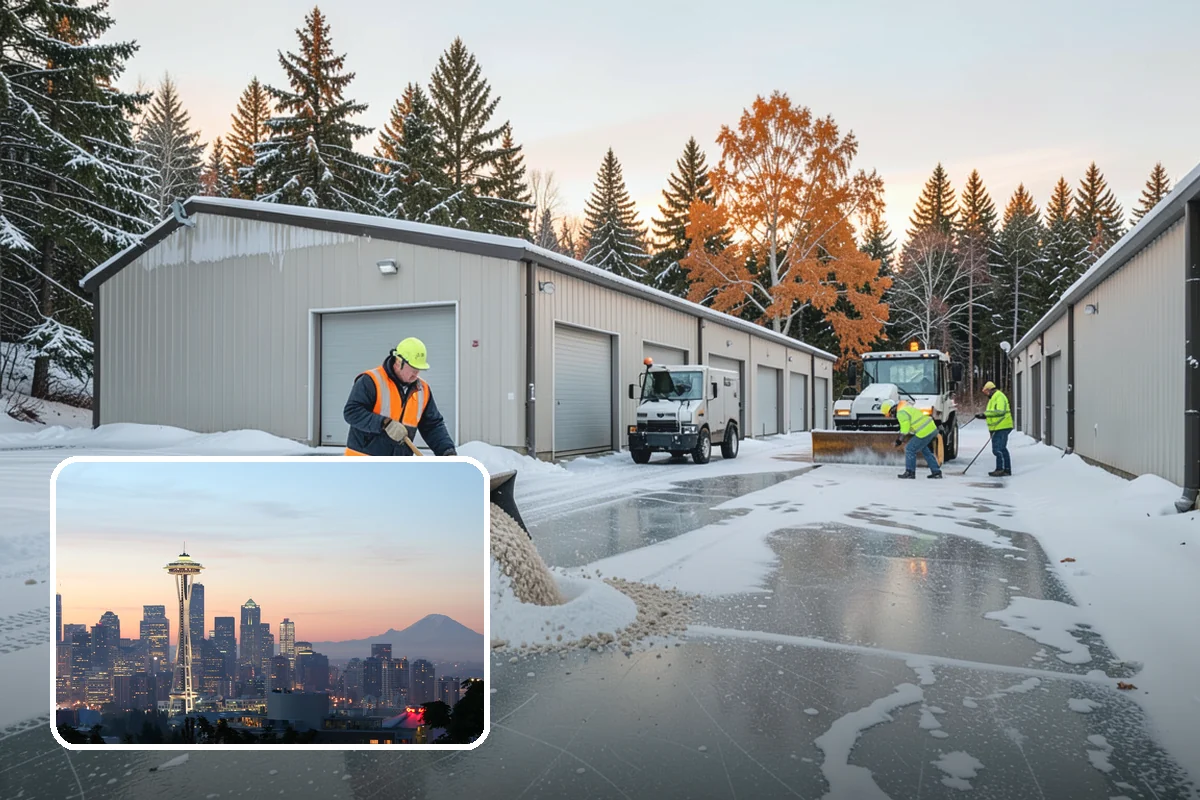
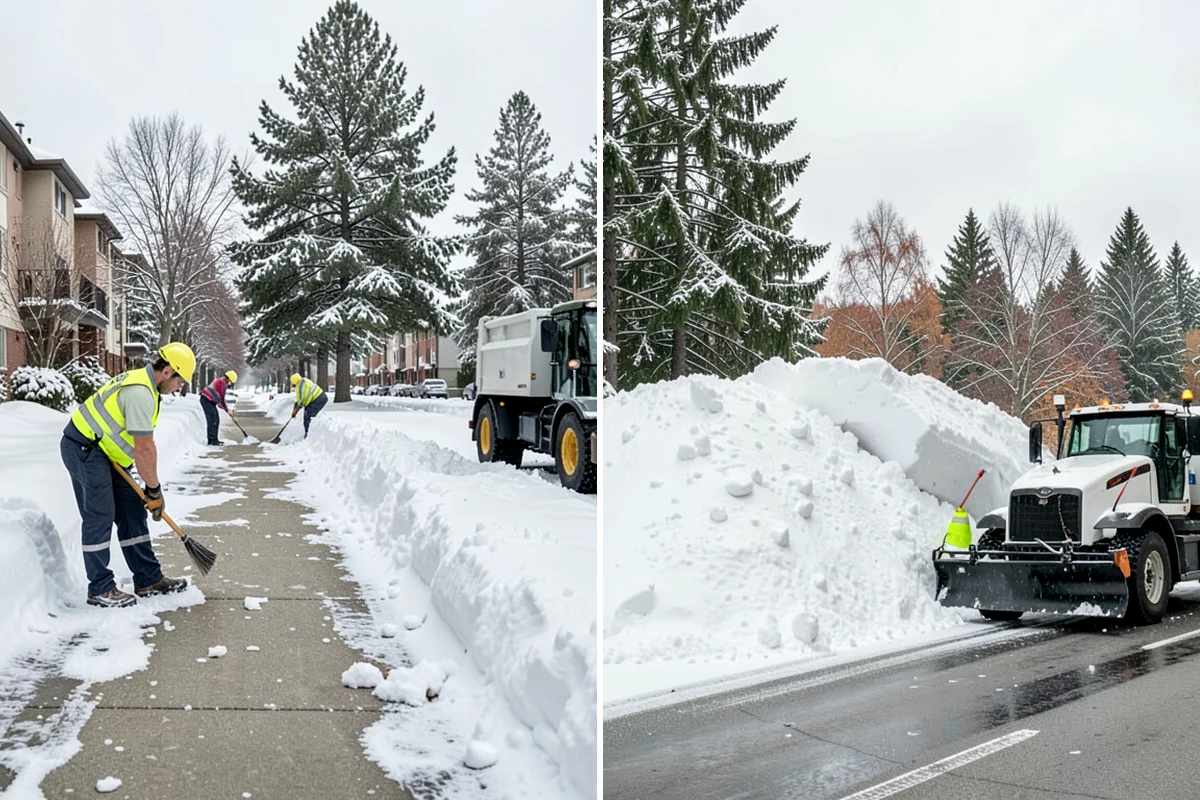
After-hours work means plowing, shoveling and de-icing while a site is empty or quiet. In Seattle that often means getting parking areas, loading zones, sidewalks and entrances ready before the next business day.
The local pattern shapes the job. Seattle sees only 1.6 days a year with 1 in or more of snow, but the storms that do arrive can be large. The biggest single day since 2005 reached 8.7 in, and the largest storm since 2005 reached 13.0 in. Ice is a separate concern. There are 27 freezing nights between October and April, and recent events include an Ice Storm on Dec 23, 2022 and Heavy Snow on Dec 26, 2021. On a typical year there are 3.29 Winter Weather Advisories and 0.76 Winter Storm Warnings.
Depending on the site, a visit may include:
- Plowing with a Ram 3500 at $250 / hour or a Ram 5500 plow and spreader at $325 / hour
- Compact track loader work at $175 / hour
- Hand shoveling and sidewalks at $110 / person-hour
- Bagged ice melt at $45 per 50 lb bag, or bulk salt applied at $300 / ton
Seattle is trip zone B, with a $275 dispatch charge. Each dispatch has a 2-hour minimum.