Keeping You Moving. Beyond Expectations.

Seattle Alleyway Snow Removal
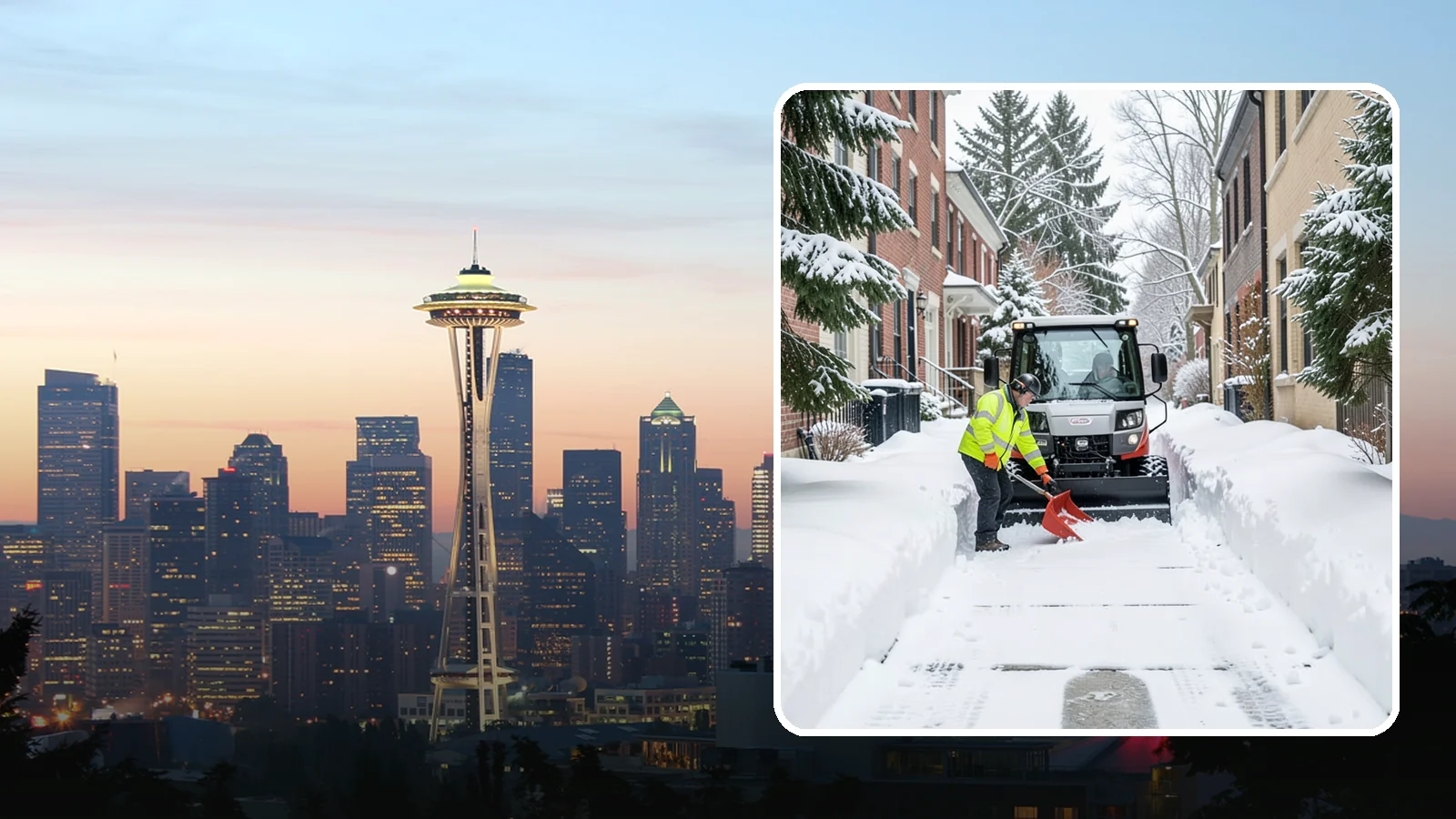
Clearing of tight urban and residential alleyways that plows cannot easily reach but tenants and trucks still depend on.
Alleys in Seattle are tight, shared and easy to block. Snow that sits in a narrow lane can trap garages, trash pickup and delivery access. Washington Snow Removal clears alleyways across Seattle with equipment sized for the space.
Seattle averages 5.3 in of snow per season, so big events are rare. When one hits, such as the 8.7 in day, the city's biggest since 2005, alleys fill fast. We are based in Bothell, 37 minutes from Seattle, and we are licensed, bonded and insured. Call 206-809-9669.
Seattle winter workload for property managers
Average snowfall by month in Seattle
Largest snow totals reported near Seattle
- Feb 14, 2021: Up to 13.3 in, 8 spotter reports: 1 ENE Seattle 13.3 in, 1.4 NE Seattle 11.8 in, 2.3 NNE Seattle 11 in, 4.0 SW Seattle 11 in, 2.8 SW Seattle 10.8 in, 5.1 NNE Seattle 10 in, 3.4 NNW Seattle 10 in, 3.9 NE Seattle 9.5 in
- Feb 9, 2019: 7.9 in total, 7.9 in on the biggest day
- Dec 21–22, 2008: 7.5 in total, 4.8 in on the biggest day
Sources: NOAA and National Weather Service records for Seattle, 2005–2026.
What Alleyway Snow Removal Involves in Seattle
An alley job is different from a parking lot job. The lane is narrow, and there is often nowhere to push the snow. Walls, fences, garages and parked cars sit close on both sides. We choose equipment to fit, and we plan where snow can go before we start.
Seattle gets few snow days. The average is 1.6 days a year with 1 in or more, and about 1.57 plow events in a season. But there are 27 freezing nights between October and April. Those nights matter in alleys, because shaded lanes hold ice after snow melts and refreezes. Plowing handles the snow. Salt or ice melt handles the glaze underneath.
Big storms do happen. On Feb 14, 2021, spotters near Seattle reported 10 in and 9.5 in. A storm like that can close an alley until it is cleared.
- Plow truck with driver (Ram 3500): $250 / hour
- Compact track loader with operator (Kubota SCL1000): $175 / hour
- Crew member for shoveling and hand work: $110 / person-hour
- Bagged ice melt: $45 / 50 lb bag
- Trip charge for Seattle (zone B): $275 / dispatch
There is a 2-hour minimum per dispatch.
Prices in Seattle
Billed by the hour for the crew and equipment on site, plus materials.
| Plow truck with driver (Ram 3500) | $250 / hour |
| Plow and spreader truck with driver (Ram 5500) | $325 / hour |
| Compact track loader with operator (Kubota SCL1000) | $175 / hour |
| Crew member (shoveling, sidewalks, hand work) | $110 / person-hour |
| Ice melt, bagged | $45 / 50 lb bag |
| Bulk salt, applied | $300 / ton |
| Trip charge for Seattle (zone B) | $275 / dispatch |
- 2-hour minimum per dispatch.
- Seattle is 37 minutes from our Bothell yard.
Prices approved Oct 2026.
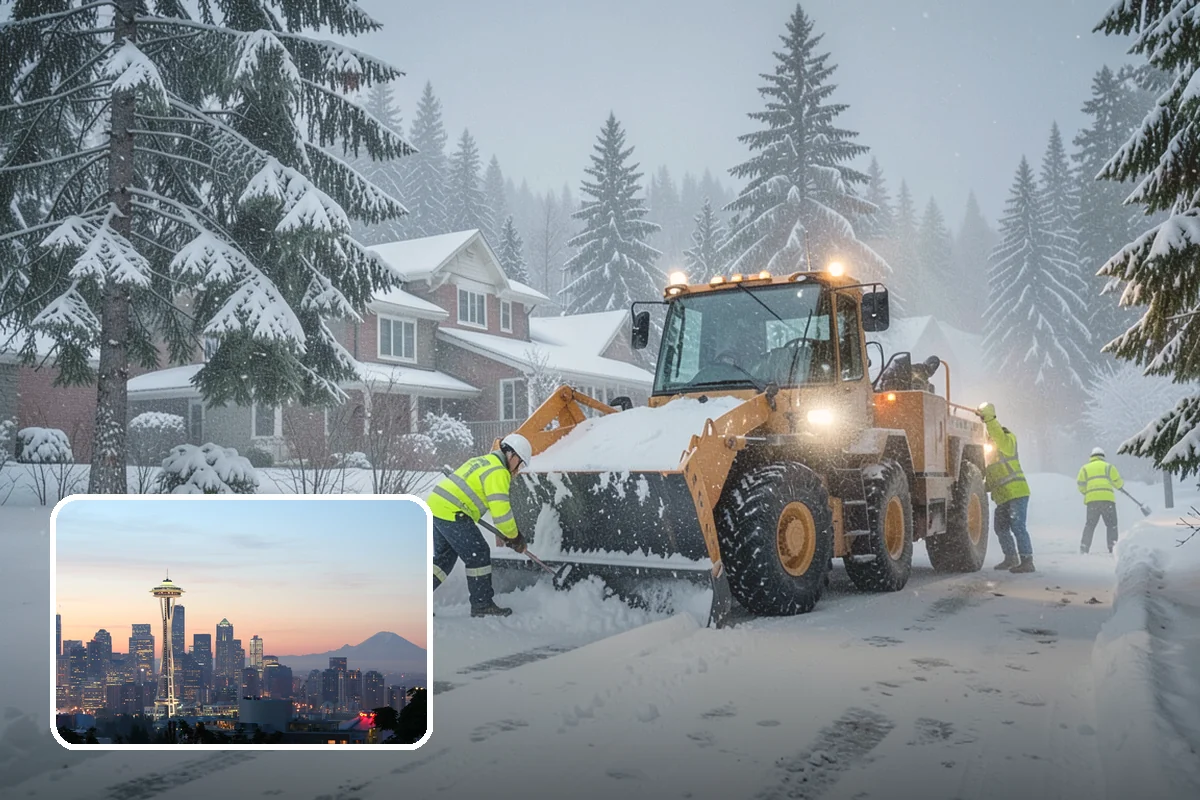
Service Area
Seattle
Benefits
Reaches tight spaces that full-size plows cannot service; Keeps dumpster and delivery access open behind businesses; Protects fences, gates, and meters from equipment damage; Treats sloped alleys against runoff refreeze