Keeping You Moving. Beyond Expectations.

Seattle Cul-de-Sac Snow Removal
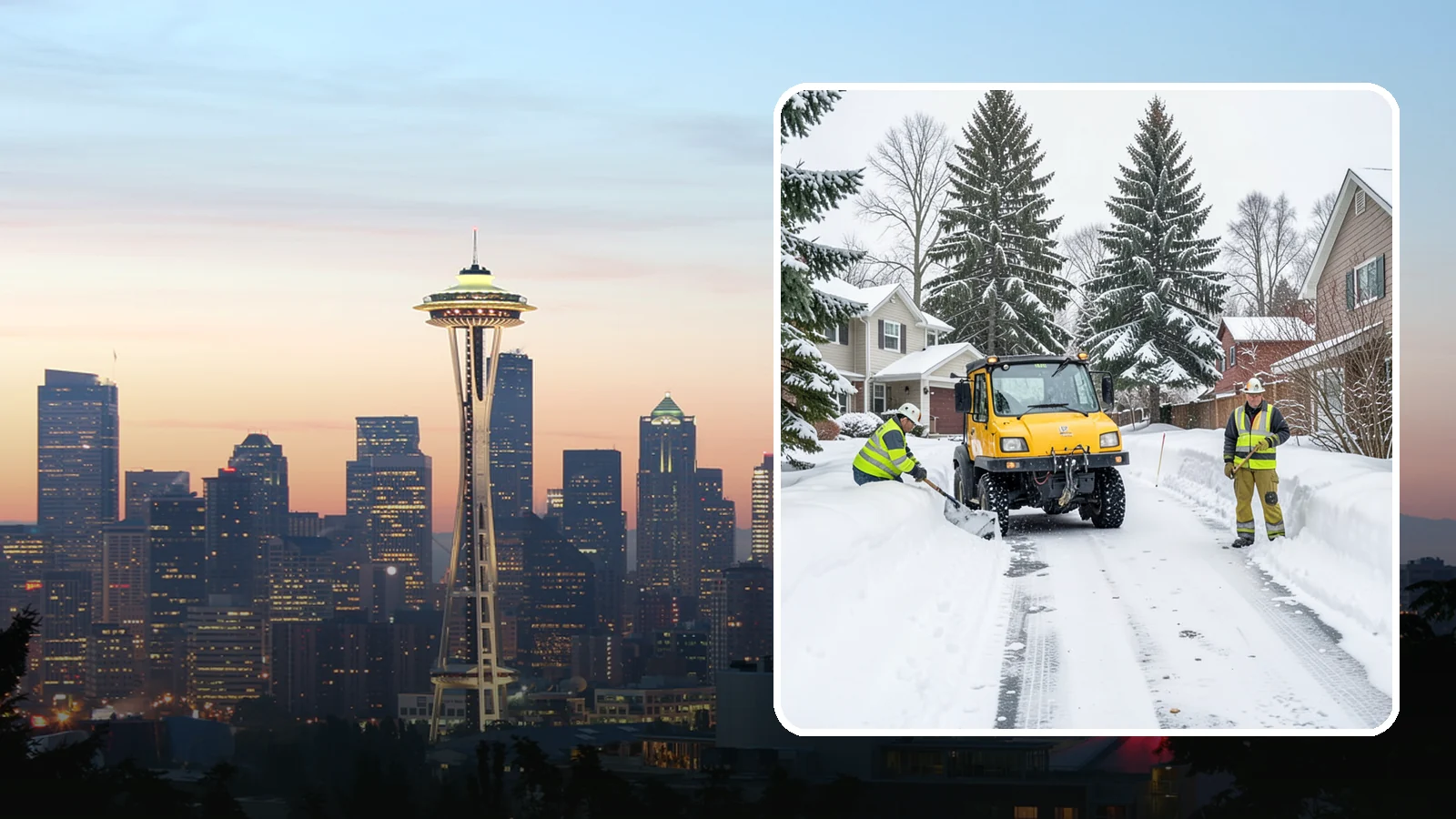
Plowing of cul-de-sacs and turnarounds that city crews often skip, keeping neighborhood traffic moving.
Cul-de-sacs in Seattle are tight. A plow has to push snow somewhere, and a circle of driveways leaves few places for it to go. Washington Snow Removal clears cul-de-sacs across the city, with trucks, a compact track loader and crews for hand work.
We are licensed, bonded and insured, and we work from our yard in Bothell, 37 minutes away. There are 398 cul-de-sacs mapped within Seattle. Call 206-809-9669 to talk through your street and the equipment it needs.
Seattle winter workload for property managers
Average snowfall by month in Seattle
Largest snow totals reported near Seattle
- Feb 14, 2021: Up to 13.3 in, 8 spotter reports: 1 ENE Seattle 13.3 in, 1.4 NE Seattle 11.8 in, 2.3 NNE Seattle 11 in, 4.0 SW Seattle 11 in, 2.8 SW Seattle 10.8 in, 5.1 NNE Seattle 10 in, 3.4 NNW Seattle 10 in, 3.9 NE Seattle 9.5 in
- Feb 9, 2019: 7.9 in total, 7.9 in on the biggest day
- Dec 21–22, 2008: 7.5 in total, 4.8 in on the biggest day
- Dec 26–28, 2021: 6.3 in total, 3.8 in on the biggest day
Sources: NOAA and National Weather Service records for Seattle, 2005–2026.
How Cul-de-Sac Snow Removal Works in Seattle
A cul-de-sac has one way in and a bulb at the end. The work is to open the entry, clear the bulb, and place the snow where it will not block driveways, mailboxes or hydrants. When piles have no room, a compact track loader can move them to the edge of the circle.
Seattle snow is infrequent. The average is 5.3 inches per season, and only 1.6 days a year bring 1 inch or more. The city sees 0.76 Winter Storm Warnings a year. But big days happen. The biggest single day since 2005 was 8.7 inches, and on Feb 14, 2021 a spotter near Seattle measured 13.3 inches.
Ice is the more common problem. There are 27 freezing nights from Oct to Apr, and about 1.95 light-snow days a year need deicing. Thin ice on a sloped cul-de-sac can be as hard to drive as deep snow.
- Plow truck with driver (Ram 3500): $250 / hour
- Plow and spreader truck with driver (Ram 5500): $325 / hour
- Compact track loader with operator (Kubota SCL1000): $175 / hour
- Crew member for shoveling and hand work: $110 / person-hour
- Bulk salt, applied: $300 / ton
- Trip charge for Seattle (zone B): $275 / dispatch
Each dispatch has a 2-hour minimum.
Prices in Seattle
Billed by the hour for the crew and equipment on site, plus materials.
| Plow truck with driver (Ram 3500) | $250 / hour |
| Plow and spreader truck with driver (Ram 5500) | $325 / hour |
| Compact track loader with operator (Kubota SCL1000) | $175 / hour |
| Crew member (shoveling, sidewalks, hand work) | $110 / person-hour |
| Ice melt, bagged | $45 / 50 lb bag |
| Bulk salt, applied | $300 / ton |
| Trip charge for Seattle (zone B) | $275 / dispatch |
- 2-hour minimum per dispatch.
- Seattle is 37 minutes from our Bothell yard.
Prices approved Oct 2026.
Cul-de-sacs in Seattle
There are 398 cul-de-sacs mapped within Seattle.
Source: OpenStreetMap contributors, Oct 2026. Named sites are examples of local facilities, not customers.
Service Area
Seattle
Benefits
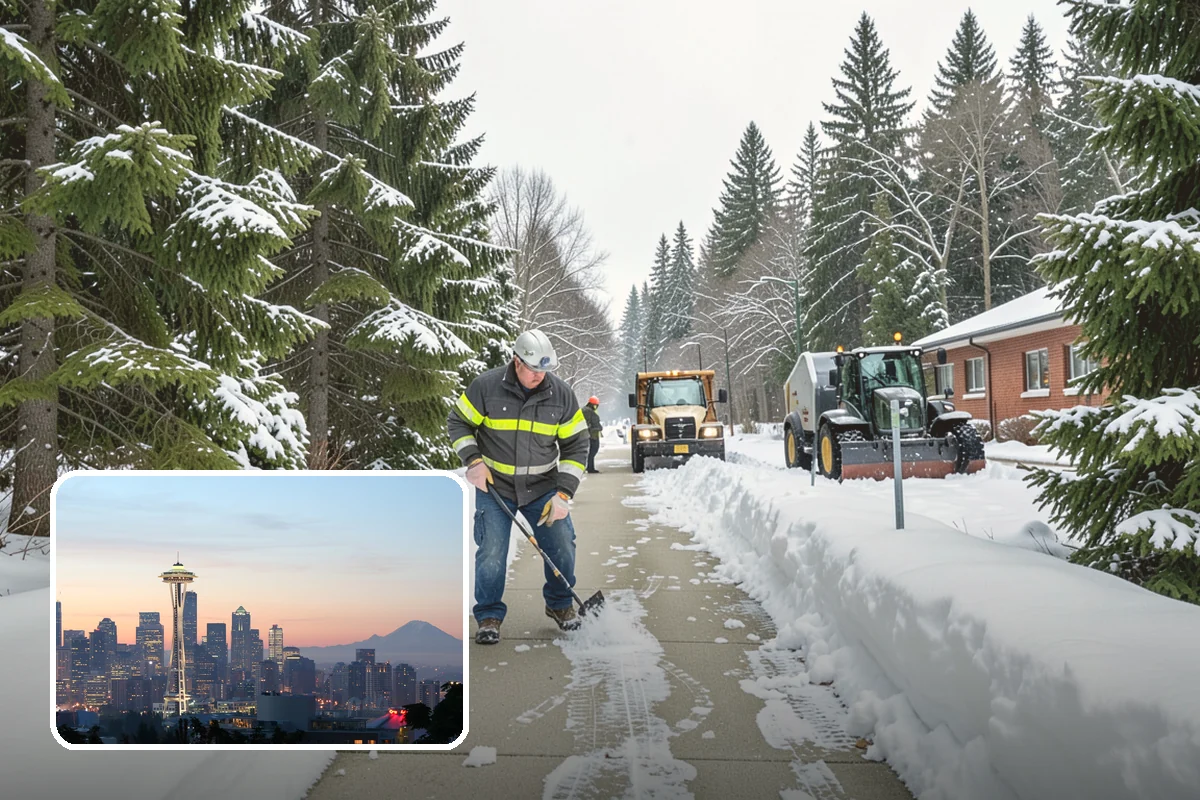
Clears turnarounds that public plows commonly bypass; Relocates snow without blocking driveways or mailboxes; Keeps delivery and emergency vehicles able to circle through; Treats sloped approaches so residents are not trapped by ice