Keeping You Moving. Beyond Expectations.

Seattle Frozen Pipe Area Access
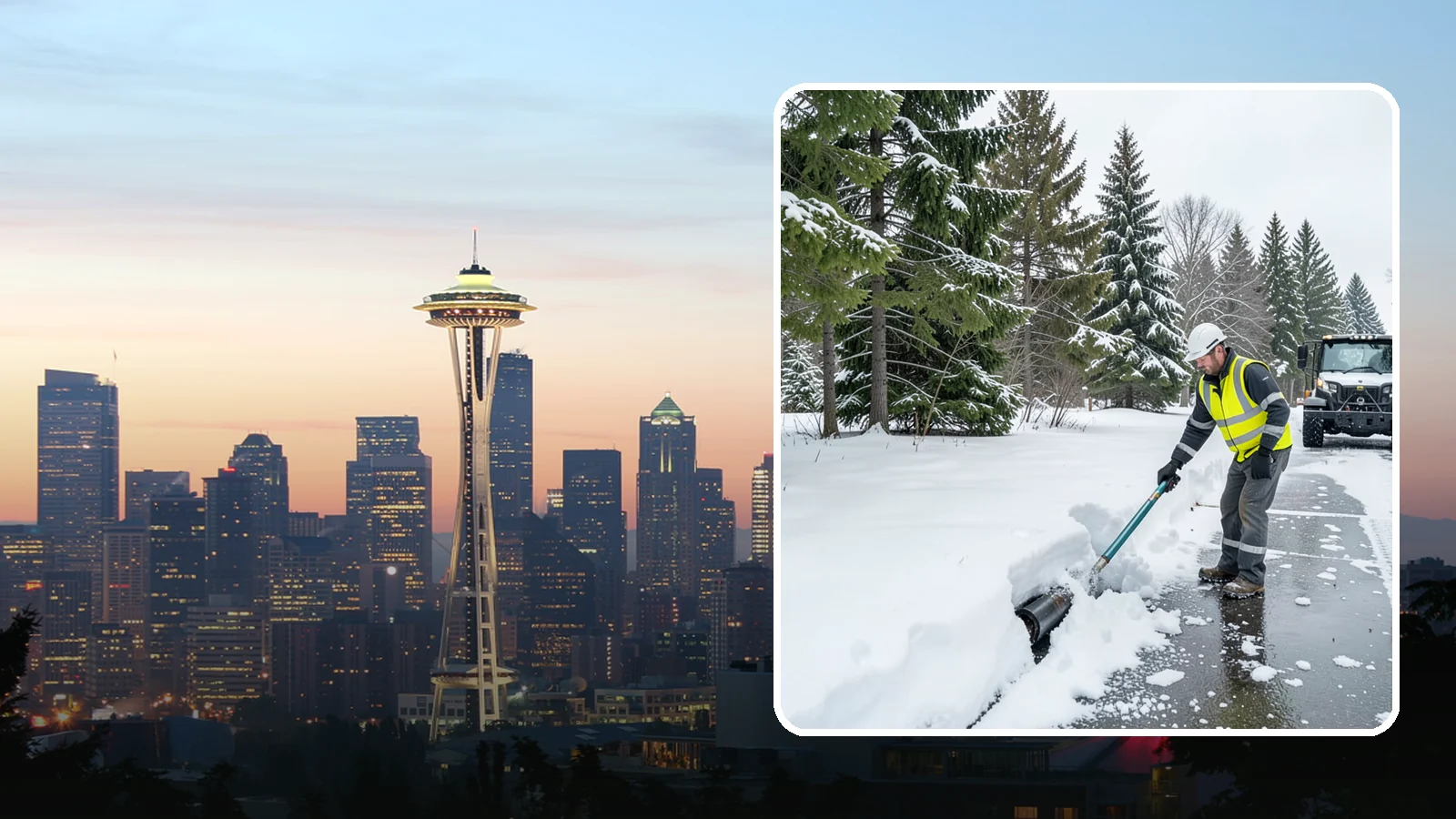
We clear snow and ice away from wellheads, backflow assemblies, and exposed plumbing so you can reach and protect them during a freeze.
Frozen pipes are a problem in Seattle even in a mild winter. The city sees 27 freezing nights from October to April, and a hard night can freeze an exposed line near a meter, hose bib or crawlspace vent. Snow and ice often block the way to these spots.
Washington Snow Removal clears the path so you or your plumber can reach the pipe area. We are licensed, bonded and insured, and we dispatch from our Bothell yard, 37 minutes from Seattle. Call 206-809-9669 to ask about a visit.
Seattle ice season, by the numbers
Average snowfall by month in Seattle
Ice storms and freezing rain near Seattle
- Jan 17, 2024: Ice Storm
- Dec 23, 2022: Ice Storm; Freezing Rain reported at 3 NW Seattle; Freezing Rain reported at West Seattle
Sources: NOAA and National Weather Service records for Seattle, 2005–2026.
Frozen Pipe Area Access in Seattle: What the Work Involves
Our work is hand work. A crew member shovels and chips snow and ice from the route and the area around the pipe, meter, valve or crawlspace door. The goal is a clear, safe spot where a plumber or homeowner can work. We do not repair pipes.
Seattle gets little snow. The average is 5.3 in per season, and only 1.6 days a year bring 1 in or more. Snow stays on the ground about 3 days a year, and just 1.0 day a year stays below freezing. But 27 freezing nights from October to April mean cold snaps still happen, and they can come with ice. Ice storms hit near Seattle on Dec 23, 2022 and Jan 17, 2024, and freezing rain was reported in West Seattle on Dec 23, 2022.
Because snow is rare, access problems often come from a thin layer of ice or from drifts against a wall or door, not deep snow. About 1.95 light-snow days a year need deicing, and we can treat the route if needed.
Seattle code (SMC 15.48.010) makes the owner or occupant responsible for removing snow and ice from abutting sidewalks in a timely manner. A clear route to the pipe area helps with that too.
- Crew member: $110 per person-hour
- Seattle trip charge (zone B): $275 per dispatch
Prices in Seattle
Billed by the hour for the crew and equipment on site, plus materials.
| Crew member (shoveling, sidewalks, hand work) | $110 / person-hour |
| Trip charge for Seattle (zone B) | $275 / dispatch |
- Seattle is 37 minutes from our Bothell yard.
Prices approved Oct 2026.
Service Area
Seattle
Benefits
Gives fast, safe access to freeze-vulnerable plumbing; Lets plumbers and staff insulate or shut off lines quickly; Reduces the risk of burst pipes during arctic snaps; Clears ice without disturbing the assemblies themselves