Keeping You Moving. Beyond Expectations.

Seattle HOA Deicing
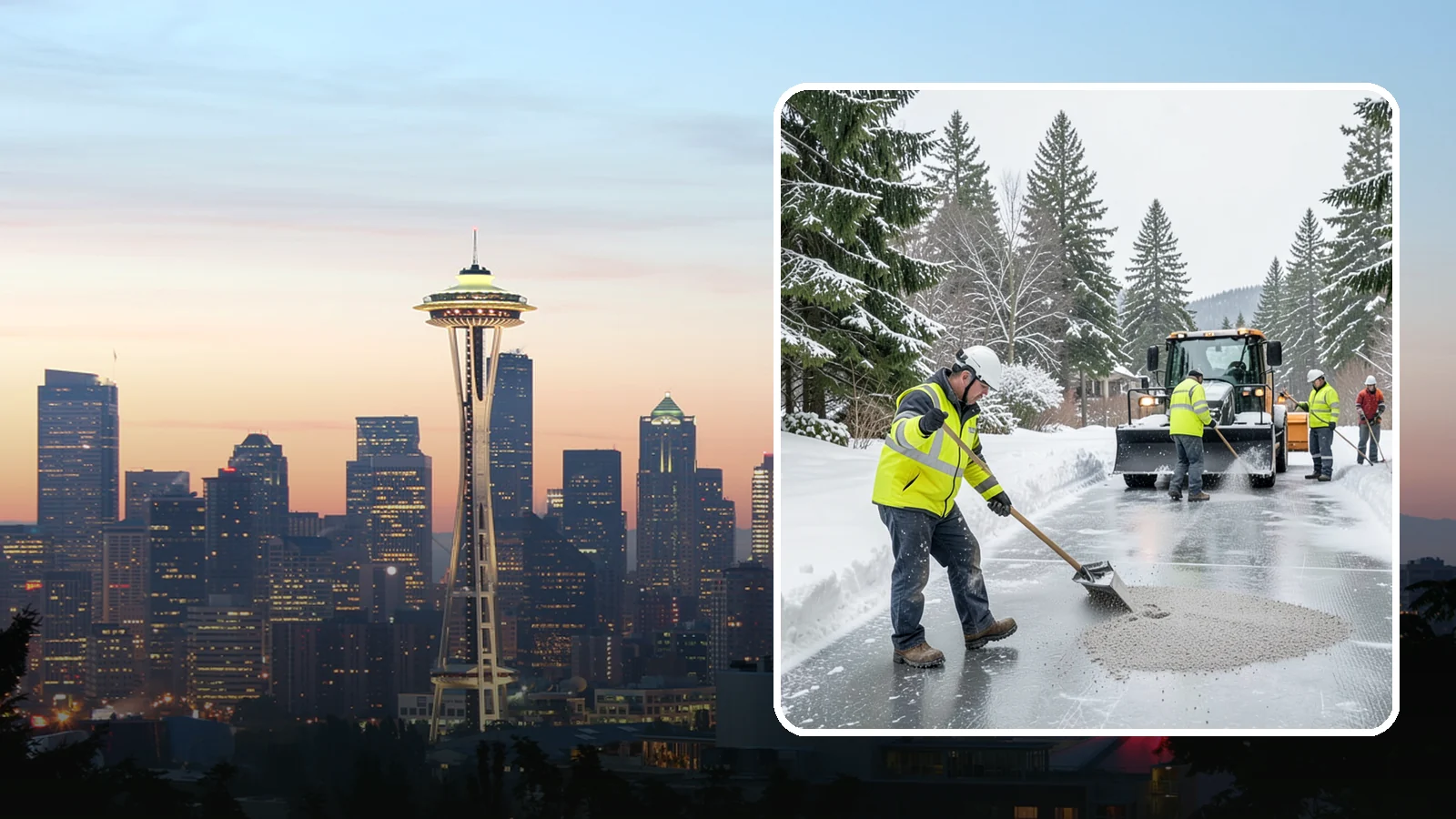
Community-wide deicing for homeowner associations, protecting shared roads, mailbox kiosks, and clubhouse walks from the glaze that follows a Puget Sound freeze.
Seattle does not get much snow, but it gets ice. Average snowfall is 5.3 in a season, and only 1.6 days a year bring 1 in or more. The Seattle area logged 27 freezing nights from October through April, and an Ice Storm on Jan 17, 2024.
Washington Snow Removal handles HOA deicing for Seattle communities from our Bothell yard, 37 minutes away. We are licensed, bonded and insured. Call 206-809-9669 to talk through your common areas, walkways and entries.
Ice and freezing nights in Seattle
Recent winter events logged for the Seattle area
- Jan 17, 2024: Ice Storm
- Oct 28, 2023: Cold/Wind Chill
- Nov 29–Dec 1, 2022: Winter Weather; Heavy Snow
Sources: NOAA and National Weather Service records for Seattle, 2005–2026.
What HOA Deicing Involves in Seattle, WA
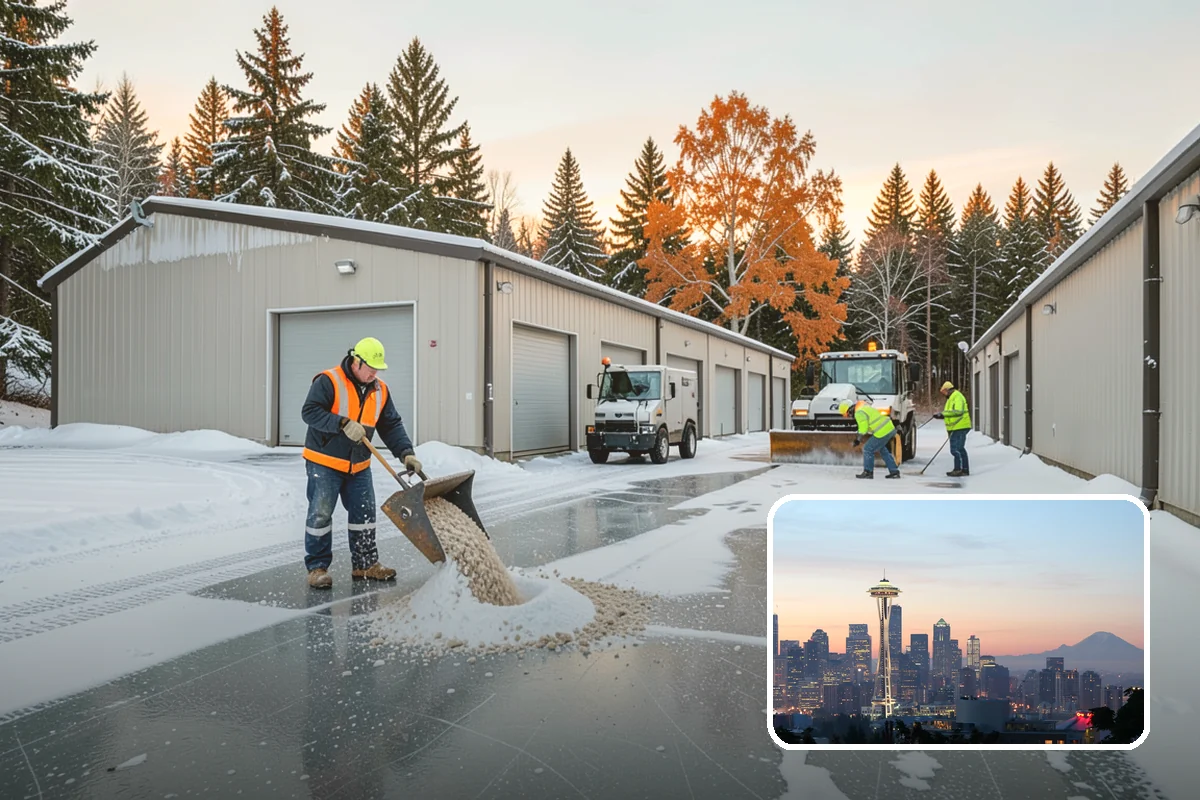
An HOA has shared surfaces that residents walk and drive every day. Deicing focuses on the places where a fall or a slide is most likely: entry walks, mailbox areas, stairs, ramps, clubhouse paths and steep drive sections.
Seattle's pattern shapes the work. Snow on the ground averages only 3 days a year, so most calls are about thin ice from freezing nights, not deep snow. The area has logged 3 ice storm reports since 2005, and 3.29 Winter Weather Advisories come through in a typical year. Ice can form fast and with little warning.
Seattle code (SMC 15.48.010) makes the owner or occupant of private property responsible for removing snow and ice on abutting sidewalks in a timely manner. Where an HOA owns the frontage, that duty can fall to the association.
Our pricing is posted so your board can plan a budget:
- Plow and spreader truck with driver (Ram 5500): $325 / hour
- Bulk salt, applied: $300 / ton
- Ice melt, bagged: $45 / 50 lb bag
- Crew member for sidewalks and hand work: $110 / person-hour
- Trip charge for Seattle (zone B): $275 / dispatch
Each dispatch has a 2-hour minimum.
Prices in Seattle
Billed by the hour for the crew and equipment on site, plus materials.
| Plow and spreader truck with driver (Ram 5500) | $325 / hour |
| Ice melt, bagged | $45 / 50 lb bag |
| Bulk salt, applied | $300 / ton |
| Crew member (shoveling, sidewalks, hand work) | $110 / person-hour |
| Trip charge for Seattle (zone B) | $275 / dispatch |
- 2-hour minimum per dispatch.
- Seattle is 37 minutes from our Bothell yard.
Prices approved Oct 2026.
Service Area
Seattle
Benefits
Demonstrates board due diligence with documented common-area care; Keeps mail kiosks and guest parking accessible during a freeze; Protects the association from shared-liability injury claims; Prioritizes shaded interior roads where black ice hides; Coordinates timing around resident commute patterns