Keeping You Moving. Beyond Expectations.

Seattle Hydrant Snow Clearing
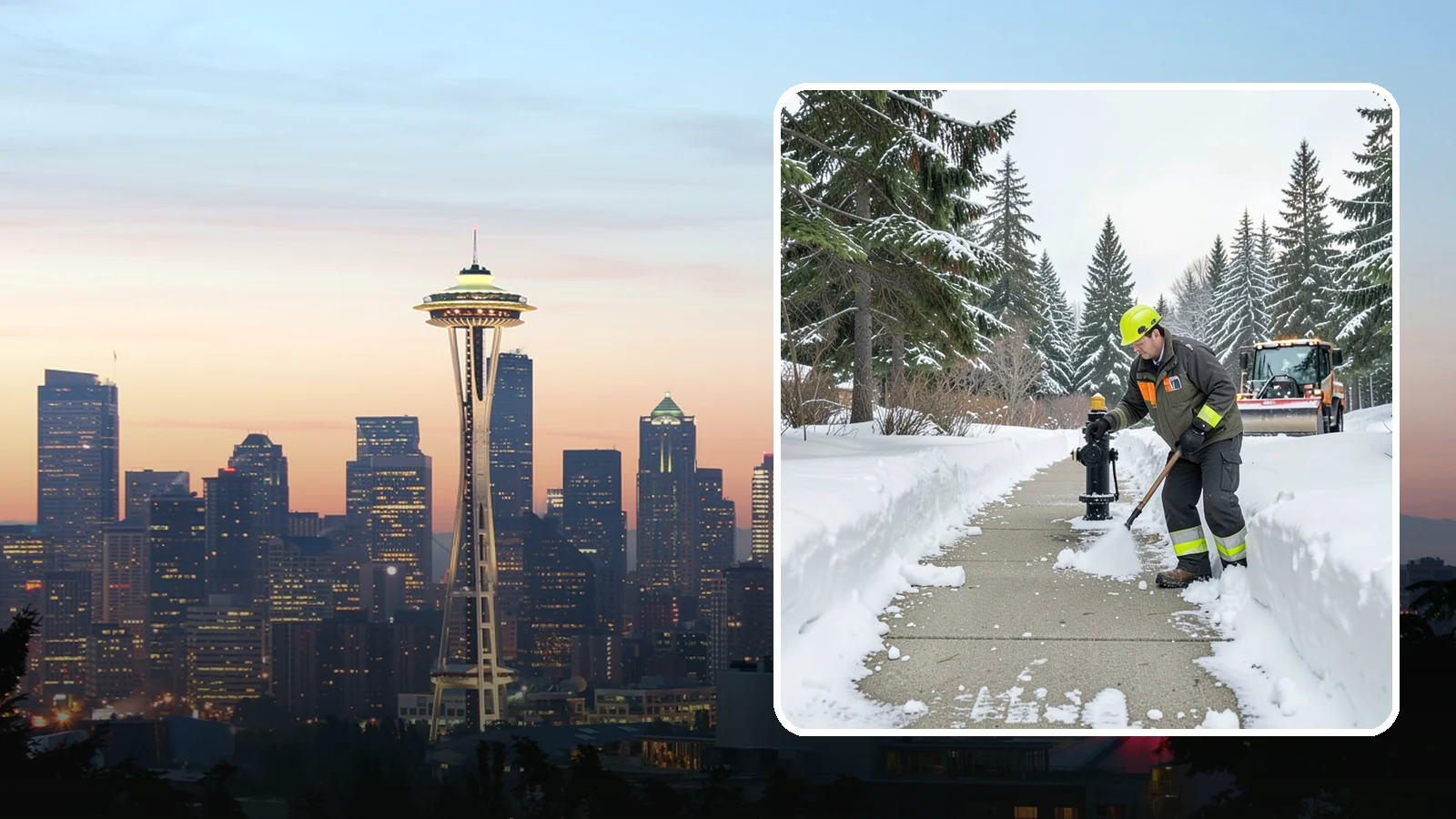
We clear snow and ice from fire hydrants so crews can connect without delay in an emergency.
Washington Snow Removal clears snow and ice from fire hydrants in Seattle. Seattle has 988 mapped fire hydrants. A buried hydrant is slow to find and slow to use, so we dig them out and keep the access clear.
We are based in Bothell, 37 minutes from Seattle, and we are licensed, bonded and insured. Seattle averages 5.3 in of snow per season, so big events are rare. When one hits, a clear hydrant matters. Call 206-809-9669 to talk through your site.
Seattle walkway conditions in winter
Average snowfall by month in Seattle
Biggest storms in Seattle since 2005
- Feb 12–15, 2021: 13.0 in total, 8.7 in on the biggest day
- Feb 9–11, 2019: 7.9 in total, 7.9 in on the biggest day; 6.8 in total, 3.8 in on the biggest day
- Dec 26–28, 2021: 6.3 in total, 3.8 in on the biggest day
Sources: NOAA and National Weather Service records for Seattle, 2005–2026.
What Hydrant Snow Clearing Involves in Seattle
Clearing a hydrant is hand work. A crew member locates the hydrant, digs out the area around it, and opens a path to the street or driveway. We also clear the nozzle caps and the top so the hydrant is visible and usable.
- Locate and uncover the hydrant
- Dig a clear working area around the barrel and caps
- Open a path from the hydrant to the road
- Apply bagged ice melt where ice builds up
Seattle gets snow on only a few days a year. It sees 1.6 days with 1 in or more of snow and about 3 days with snow on the ground. But the storms that do arrive can be large. Feb 12-15, 2021 brought 13.0 in in total, with 8.7 in on the biggest day. Feb 9, 2019 dropped 7.9 in in a single day. Dec 26-28, 2021 added 6.3 in.
There are 27 freezing nights between October and April, so melted snow can refreeze around a hydrant. That is why ice melt is part of the job.
Pricing: crew members are $110 per person-hour. Ice melt is $45 per 50 lb bag. The Seattle trip charge (zone B) is $275 per dispatch, and each dispatch has a 2-hour minimum. For heavy drifts, a Kubota SCL1000 compact track loader with operator is $175 per hour.
Prices in Seattle
Billed by the hour for the crew and equipment on site, plus materials.
| Crew member (shoveling, sidewalks, hand work) | $110 / person-hour |
| Compact track loader with operator (Kubota SCL1000) | $175 / hour |
| Ice melt, bagged | $45 / 50 lb bag |
| Trip charge for Seattle (zone B) | $275 / dispatch |
- 2-hour minimum per dispatch.
- Seattle is 37 minutes from our Bothell yard.
Prices approved Oct 2026.
Mapped fire hydrants in Seattle
There are 988 mapped fire hydrants mapped within Seattle.
Source: OpenStreetMap contributors, Oct 2026. Named sites are examples of local facilities, not customers.
Service Area
Seattle
Benefits
Keeps hydrants visible and reachable for responding crews; Helps property owners meet fire-access clearance rules; Clears plow wash that often reburies hydrants; Maintains a safe working zone around connection points