Keeping You Moving. Beyond Expectations.

Shoreline ADA Access Clearing
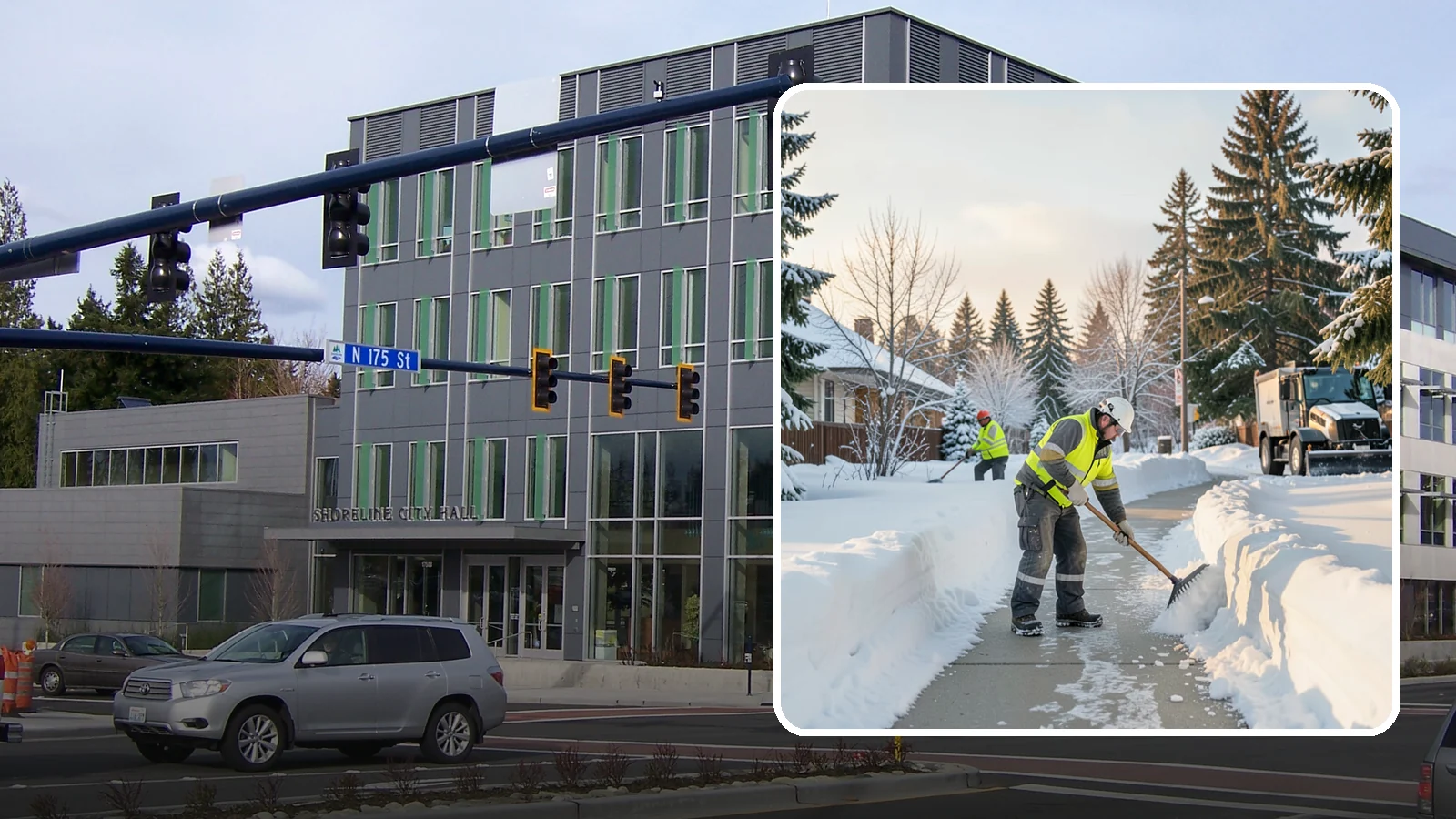
We clear ADA-designated access points across your Western Washington property to keep them compliant and safe all winter.
ADA access clearing in Shoreline means keeping the routes people rely on open: accessible parking stalls, curb ramps, ramps to entrances and the walkways between them. Washington Snow Removal is licensed, bonded and insured, and we dispatch from our Bothell yard, 22 minutes from Shoreline.
Shoreline snow is light and infrequent, but ice is common. The city sees 1.7 days a year with 1 inch or more of snow and 33 freezing nights from October to April. Call 206-809-9669 to set up clearing for your property.
Why Shoreline walkways freeze
Average snowfall by month in Shoreline
Freezing rain and sleet reports near Shoreline
- Dec 23, 2022: Freezing Rain reported at 1 SE Mountlake Terrace and Kenmore
- Jan 19, 2012: Freezing Rain reported at 5 NE Ballard
Sources: NOAA and National Weather Service records for Shoreline, 2005–2026.
How ADA Access Clearing Works in Shoreline, WA
At an ADA route, the goal is a clear, firm, non-slip path from accessible stalls to the door. We shovel by hand around curb ramps, landings and entrances, where a plow blade cannot work safely. A compact track loader with operator is available when a lot needs wider clearing.
Shoreline averages 5.8 inches of snow per season, and only 4 days a year have snow on the ground. About 67% of winters have at least one 1-inch day. Most of the work is not deep snow. It is 3.28 light-snow days a year that still need deicing, plus 33 freezing nights when meltwater refreezes on ramps and walkways. Freezing rain was also reported near Mountlake Terrace and Kenmore on Dec 23, 2022.
Shoreline code (SMC 12.05.020(A)) makes the owner of property abutting a public sidewalk responsible for keeping it safe and free of ice and snow at all times. There is no grace period written into the rule.
- Crew member (shoveling, sidewalks, hand work): $110 per person-hour
- Compact track loader with operator (Kubota SCL1000): $175 per hour
- Ice melt, bagged: $45 per 50 lb bag
- Trip charge for Shoreline (zone A): $200 per dispatch
Each dispatch has a 2-hour minimum.
Prices in Shoreline
Billed by the hour for the crew and equipment on site, plus materials.
| Crew member (shoveling, sidewalks, hand work) | $110 / person-hour |
| Compact track loader with operator (Kubota SCL1000) | $175 / hour |
| Ice melt, bagged | $45 / 50 lb bag |
| Trip charge for Shoreline (zone A) | $200 / dispatch |
- 2-hour minimum per dispatch.
- Shoreline is 22 minutes from our Bothell yard.
Prices approved Oct 2026.
Service Area
Shoreline
Benefits
Maintains ADA compliance through every storm; Prioritizes routes people with disabilities rely on; Clears accessible paths to full required width; Treats shaded surfaces prone to black ice; Reduces liability from inaccessible access points