Keeping You Moving. Beyond Expectations.

Steilacoom Trigger-Depth Snow Removal
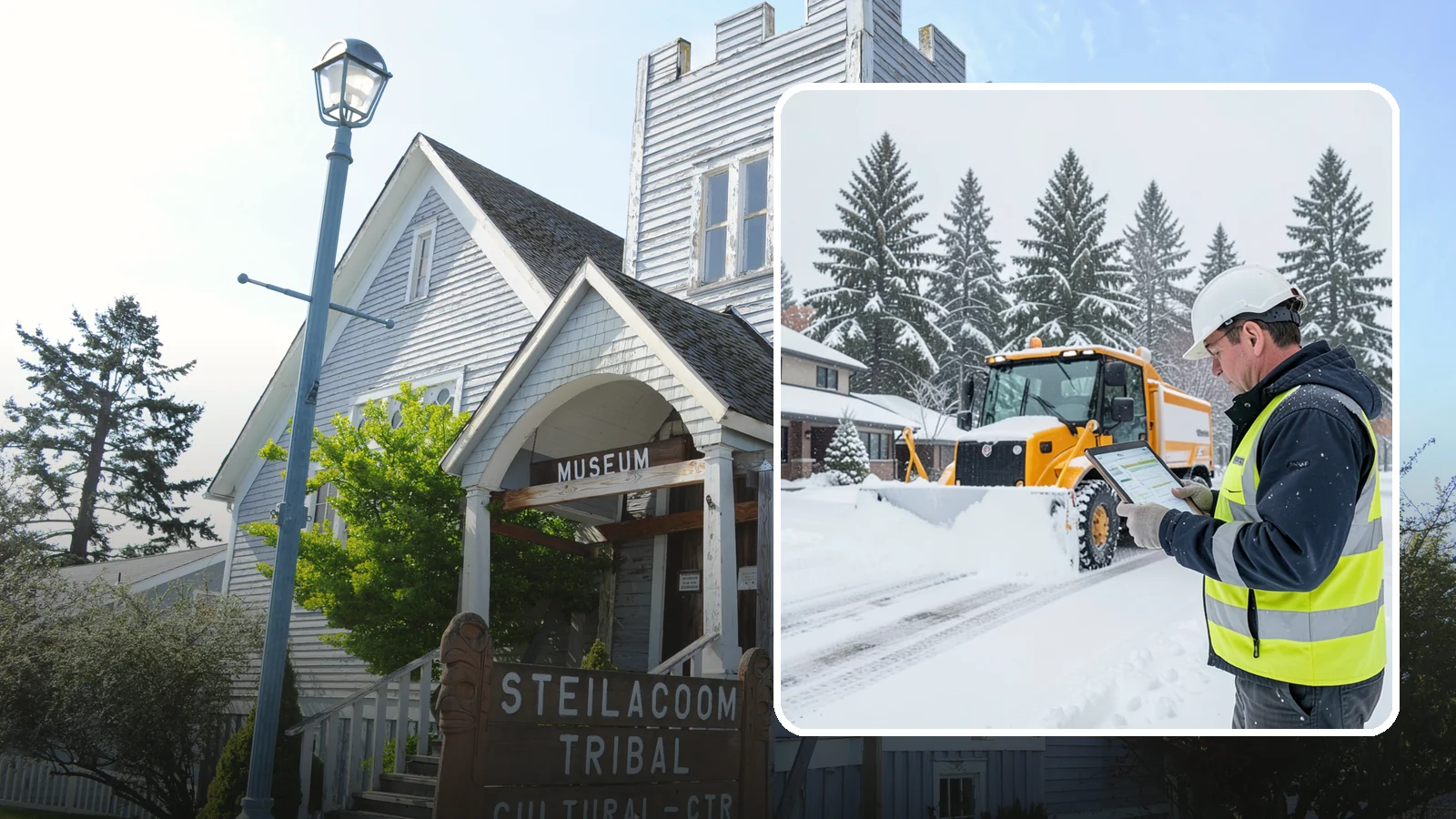
We dispatch automatically once snow reaches your chosen trigger depth so clearing starts at a consistent Western Washington threshold.
Steilacoom does not get much snow. An average season brings 4.7 in, and the median season brings 4.2 in. Snow sits on the ground about 2 days a year. When it does fall, it can still make a steep driveway or a front walk hard to use.
Washington Snow Removal offers trigger-depth service in Steilacoom. We start at 1 inch of accumulation, so you do not need to call each time. We are licensed, bonded and insured. Call 206-809-9669 to set up service.
What to expect from a Steilacoom snow season
Recent winter events logged for the Steilacoom area
- Feb 8, 2014: Heavy Snow
- Jan 18–19, 2012: Ice Storm; Heavy Snow
- Nov 22, 2010: Winter Weather
Sources: NOAA and National Weather Service records for Steilacoom, 2005–2026.
How Trigger-Depth Snow Removal Works in Steilacoom
Trigger-depth means the work begins when snow reaches a set depth. Ours is 1 inch. Steilacoom sees 1 in or more of snow on about 1.6 days a year, so visits are rare. An average season has about 1.58 plow events.
A standard visit at a home covers the driveway, the front walk and the steps. Recent events in the area include Heavy Snow on Feb 8, 2014, Heavy Snow on Jan 18, 2012, and Winter Weather on Nov 22, 2010. Big storms are uncommon here, but they do happen.
Ice is a bigger repeat issue than snow. Steilacoom has 37 freezing nights from October to April. Wet pavement can freeze even when no snow has fallen. Deicing is a separate service for those nights.
Current pricing, starting from:
- Single-car driveway with front walk and steps: $240 per visit
- Two-car driveway with front walk and steps: $360 per visit
- Deicing application: $110 per visit
- Seasonal plan, single-car (up to 4 visits): $600
- Seasonal plan, two-car (up to 4 visits): $900
- Ice plan add-on: $345 per season
Seasonal plans are priced from Steilacoom's snow history. Visits beyond a plan's limit are half the per-visit price.
Residential snow removal prices in Steilacoom
Starting prices for Steilacoom. Final price depends on size, slope and snow depth. Steilacoom is in travel zone D.
| Two-car driveway incl. front walk and steps, per visit | from $360 |
| Single-car driveway incl. front walk and steps, per visit | from $240 |
| Deicing application, per visit | from $110 |
| Seasonal plan, two-car (up to 4 visits) | from $900 |
| Seasonal plan, single-car (up to 4 visits) | from $600 |
| Ice plan add-on, per season | from $345 |
- Seasonal plans are priced from Steilacoom's snow history: about 1.58 plow visits in an average season.
- Visits beyond a plan's limit are half the per-visit price.
- Service starts at 1 inch of accumulation.
Prices approved Oct 2026.
Service Area
Steilacoom
Benefits
Starts service at a precise, agreed depth; Removes debate over when clearing begins; Allows different triggers by risk zone; Ensures high-priority areas clear first; Aligns response with our variable storms