Emergency Parking Access for Tacoma Lots and Driveways
Emergency Parking Access is a focused dispatch. We do not aim for a perfect lot. We open the lanes that matter first: the entrance, the main drive aisle, accessible stalls and a path to the door.
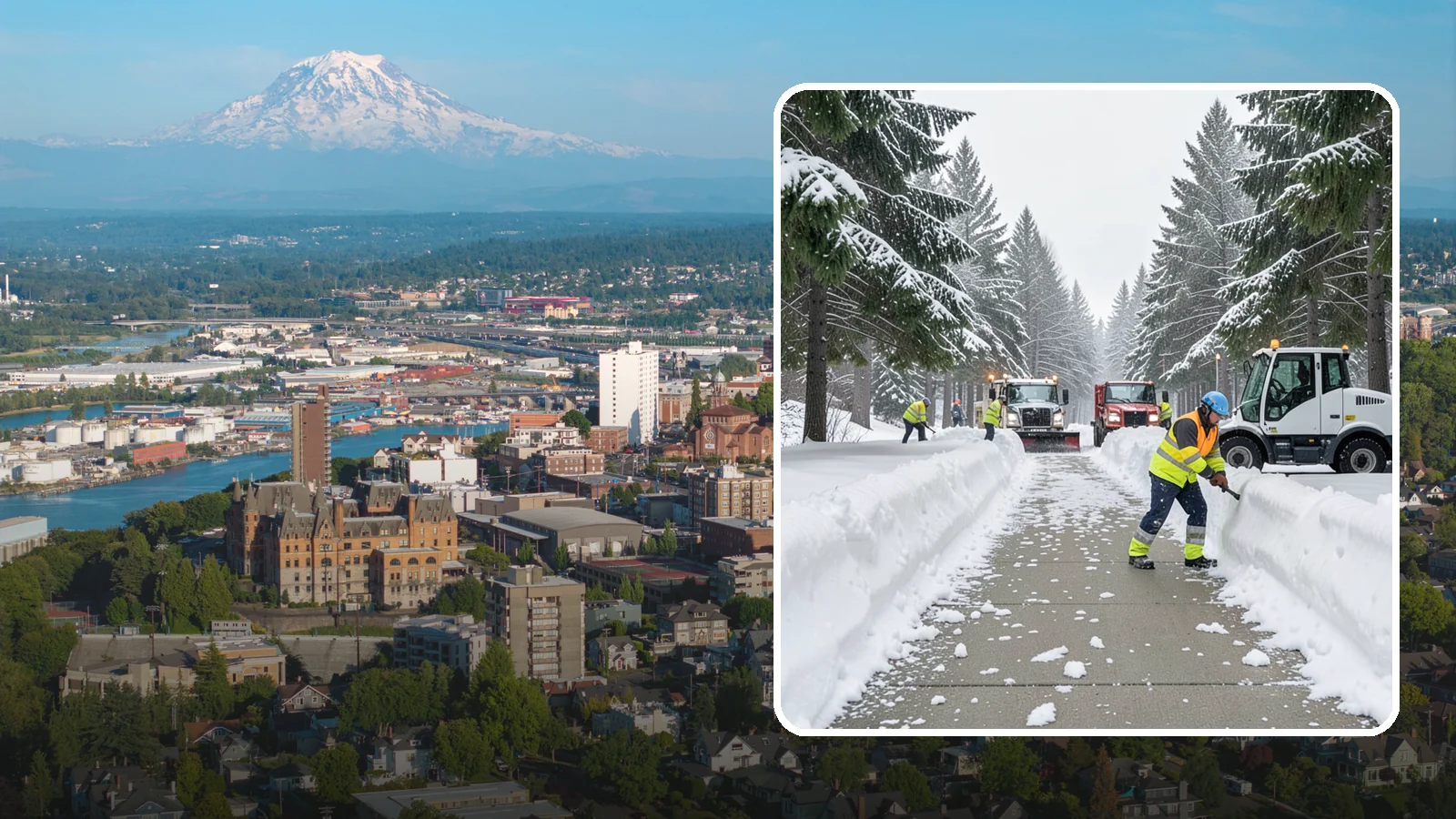
Tacoma's pattern makes this work harder than the snow totals suggest. Snow is rare, so few properties own equipment. Yet the storms can be large. The largest storm since 2005 brought 11.0 in, and the record daily snowfall at Mcmillin Rsvr was 16.0 in in 1974. Ice is also a factor. The area logged ice storms on Dec 23, 2022 and Jan 19, 2012, and there are 31 freezing nights between Oct and Apr. Heavy Snow was logged on Feb 8, 2014.
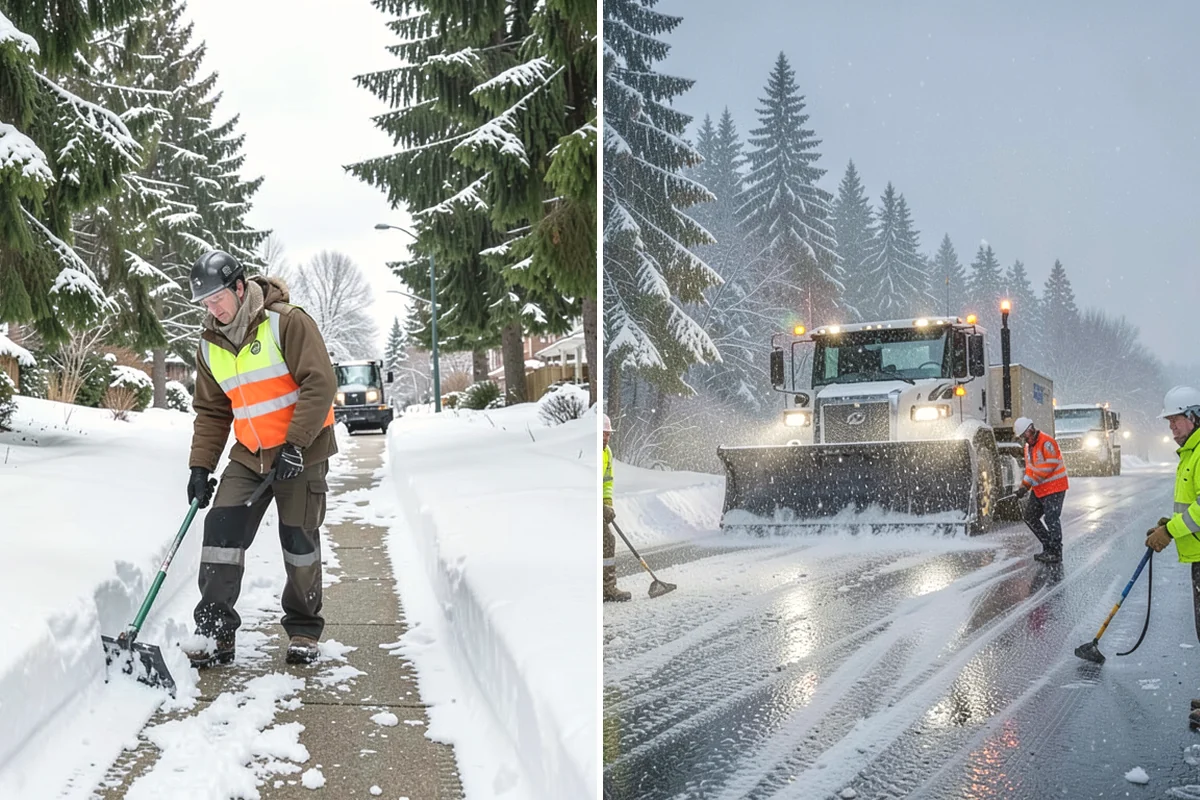
Depending on the site, a dispatch may include:
- Plow truck with driver at $250 per hour, or a Ram 5500 plow and spreader truck at $325 per hour
- Compact track loader with operator at $175 per hour for tight corners and piles
- Crew members at $110 per person-hour for walks and hand work
- Bagged ice melt at $45 per 50 lb bag, or bulk salt applied at $300 per ton
Tacoma is 73 minutes from our Bothell yard. The trip charge for Tacoma (zone C) is $350 per dispatch, and each dispatch has a 2-hour minimum.