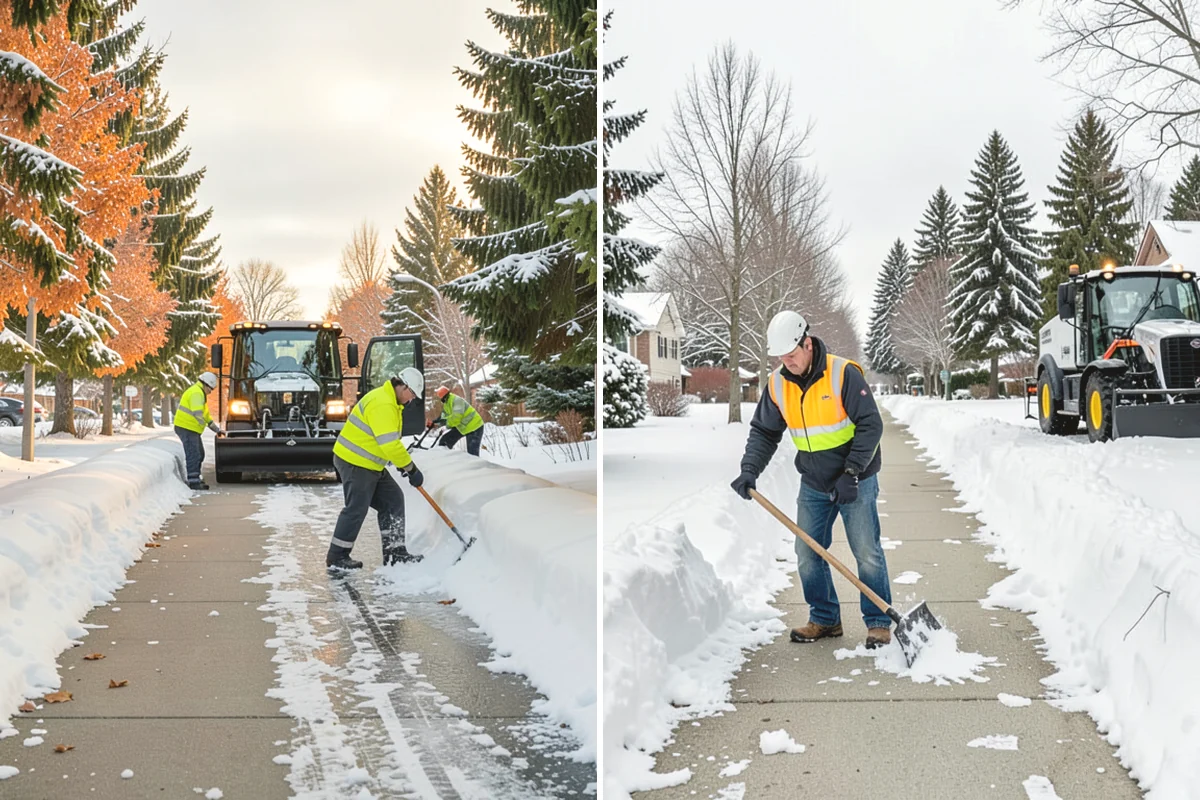
Keeping You Moving. Beyond Expectations.

Tacoma Hospital Snow Hauling
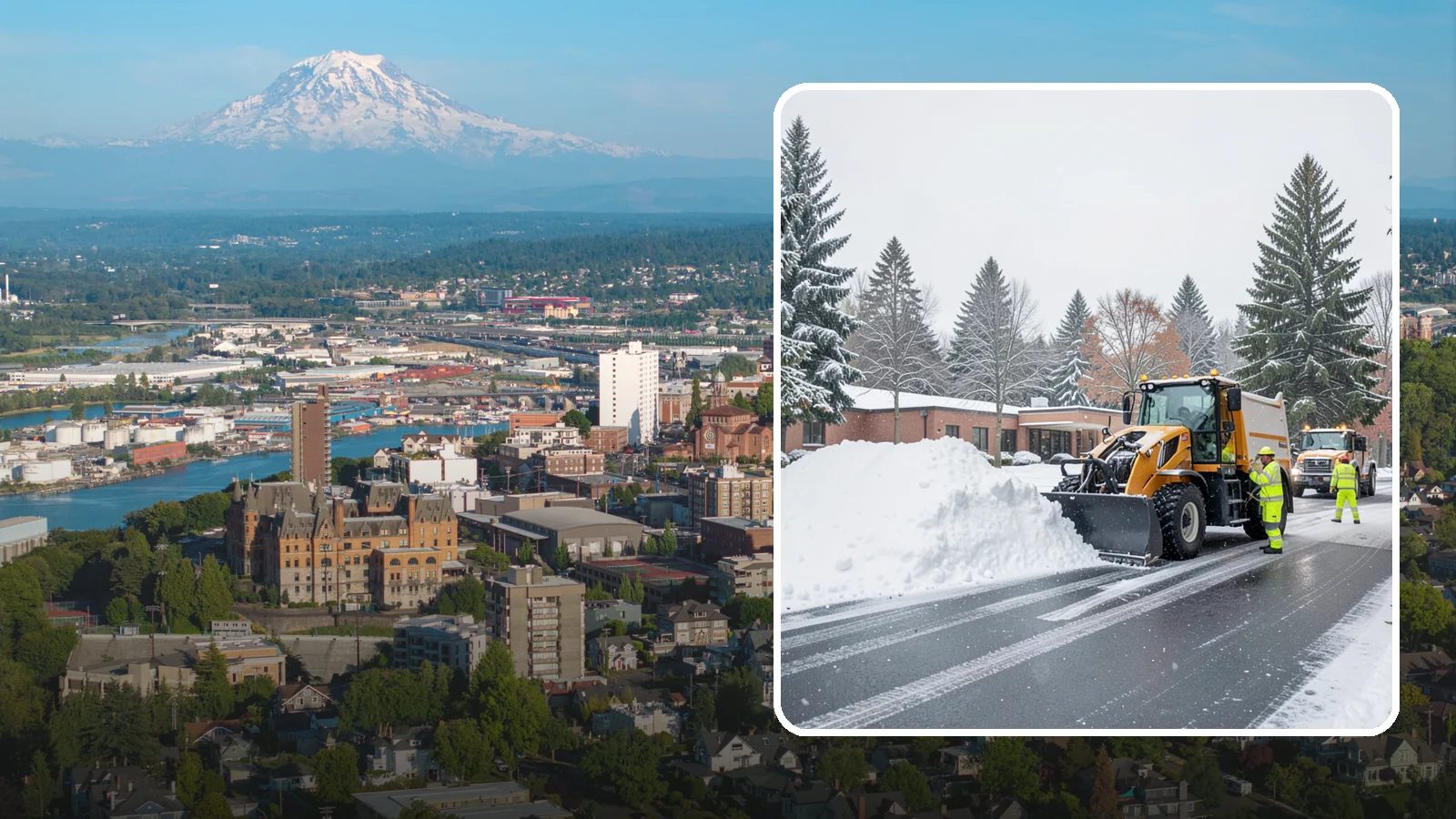
We haul snow from hospital lots, drives, and emergency approaches where uninterrupted access is non-negotiable.
Washington Snow Removal provides hospital snow hauling in Tacoma, Pierce County. We are licensed, bonded and insured, and we work out of our yard in Bothell, 73 minutes from Tacoma. Tacoma has 5 hospitals mapped within the city, including Mary Bridge Children's Hospital, MultiCare Allenmore Hospital, MultiCare Tacoma General Hospital and Saint Joseph Medical Center.
Snow hauling moves piled snow off a site so lanes, lots and walkways stay open. Call 206-809-9669 to talk through your property and the equipment you need.
Tacoma winter workload for property managers
Average snowfall by month in Tacoma
Largest snow totals reported near Tacoma
- Jan 18–19, 2012: Up to 8.2 in, 2 spotter reports: 5 W Federal Way 8.2 in, Tacoma 7.5 in
- Jan 13, 2007: 8 in measured by a spotter at 1 N Tacoma
- Feb 13–14, 2021: Up to 8 in, 2 spotter reports: 4.9 SE Tacoma 8 in, University Place 7 in
- Feb 9, 2019: 7.5 in measured by a spotter at 2 SW Federal Way
Sources: NOAA and National Weather Service records for Tacoma, 2005–2026.
How Snow Hauling Works at Tacoma Hospitals
Plowing pushes snow aside. At a hospital, the piles can end up blocking sight lines, parking stalls or space for the next storm. Hauling removes that snow from the site.
Tacoma does not see snow often. The average is 5.6 in per season, and only 1.6 days a year bring 1 in or more. Winter Storm Warnings average 0.57 a year. Since 2005 there have been 11 winter storm and heavy snow reports. Recent larger totals near Tacoma include 7.5 in on Jan 18, 2012 and 7 in at University Place on Feb 13, 2021.
Ice is the more regular problem. Tacoma has 31 freezing nights between Oct and Apr, and about 3.05 light-snow days a year need deicing. A small snowfall followed by a freezing night can still leave slick pavement.
Equipment and rates for a hauling job:
- Plow and spreader truck with driver (Ram 5500): $325 per hour
- Compact track loader with operator (Kubota SCL1000): $175 per hour
- Crew member for shoveling, sidewalks and hand work: $110 per person-hour
- Trip charge for Tacoma (zone C): $350 per dispatch
Each dispatch has a 2-hour minimum.
Prices in Tacoma
Billed by the hour for the crew and equipment on site, plus materials.
| Plow and spreader truck with driver (Ram 5500) | $325 / hour |
| Compact track loader with operator (Kubota SCL1000) | $175 / hour |
| Crew member (shoveling, sidewalks, hand work) | $110 / person-hour |
| Trip charge for Tacoma (zone C) | $350 / dispatch |
- 2-hour minimum per dispatch.
- Tacoma is 73 minutes from our Bothell yard.
Prices approved Oct 2026.
Hospitals in Tacoma
There are 5 hospitals mapped within Tacoma.
- Mary Bridge Children's Hospital
- MultiCare Allenmore Hospital
- MultiCare Tacoma General Hospital
- Saint Joseph Medical Center
Source: OpenStreetMap contributors, Oct 2026. Named sites are examples of local facilities, not customers.
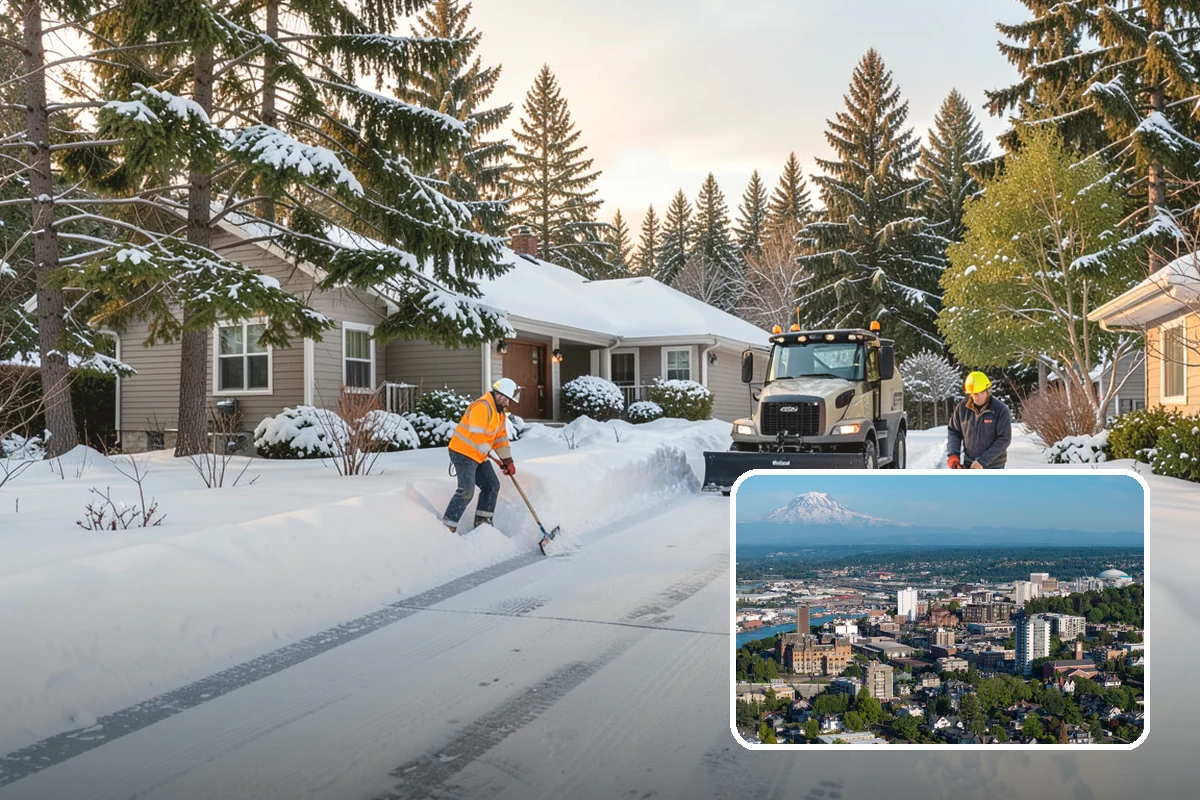
Service Area
Tacoma
Benefits
Keeps ambulance bays and emergency routes clear; Preserves patient drop-off and visitor parking; Removes snow the site has no room to stack; Prioritizes access as a patient-care necessity