Keeping You Moving. Beyond Expectations.

Tacoma Winter Storm Cleanup
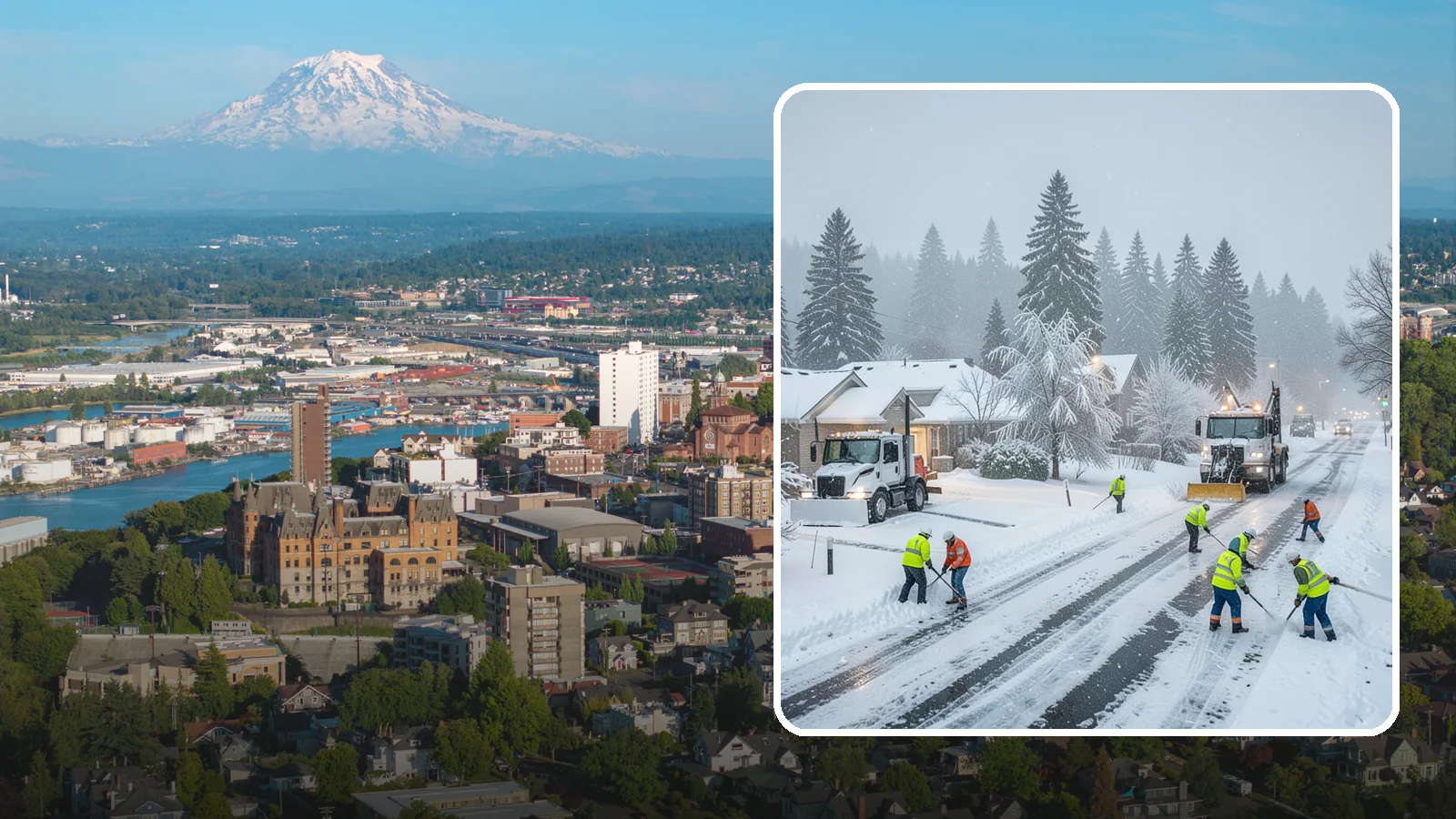
After a winter storm passes, we handle the full cleanup so your driveway, lot, and walkways are clear and safe again.
Tacoma does not get much snow, but when it comes it can stop a property fast. The average is 5.6 inches a season, and the city sees 1.6 days a year with an inch or more. Few crews and few plows are ready for it.
Washington Snow Removal handles winter storm cleanup in Tacoma from our Bothell yard. We are licensed, bonded and insured. Call 206-809-9669 to set up a dispatch after a storm. Pricing is listed below and there is a 2-hour minimum per dispatch.
How hard Tacoma storms hit
Biggest storms in Tacoma since 2005
- Jan 15–20, 2012: 10.7 in total, 4.5 in on the biggest day
- Feb 8–12, 2019: 9.7 in total, 5.0 in on the biggest day
- Feb 5–7, 2017: 9.3 in total, 7.2 in on the biggest day
- Dec 26–28, 2021: 7.3 in total, 6.3 in on the biggest day
Sources: NOAA and National Weather Service records for Tacoma, 2005–2026.
Winter Storm Cleanup in Tacoma: What the Work Involves
Storm cleanup is the work after snow has fallen or ice has formed. We clear lots, drives, walkways and entries so people and vehicles can move again. We treat the surfaces that stay slick.
Tacoma's pattern shapes the job. Heavy-snow days of 4 inches or more happen only 0.38 times a year, and Winter Storm Warnings average 0.57 a year. Since 2005 the biggest storms were Jan 15-20, 2012 at 10.7 inches total, Feb 8-12, 2019 at 9.7 inches, Feb 5-7, 2017 at 9.3 inches, and Dec 26-28, 2021 at 7.3 inches. The 2017 storm put 7.2 inches down on its biggest day, and the 2021 storm put down 6.3 inches. Snow arrives in short, heavy bursts. Tacoma also has 31 freezing nights from October to April, so meltwater can refreeze and leave ice behind.
- Plow truck with driver (Ram 3500): $250 / hour
- Plow and spreader truck with driver (Ram 5500): $325 / hour
- Compact track loader with operator (Kubota SCL1000): $175 / hour
- Crew member for shoveling, sidewalks and hand work: $110 / person-hour
- Ice melt, bagged: $45 / 50 lb bag
- Bulk salt, applied: $300 / ton
- Trip charge for Tacoma (zone C): $350 / dispatch
Tacoma is 73 minutes from our Bothell yard. Each dispatch has a 2-hour minimum.
Prices in Tacoma
Billed by the hour for the crew and equipment on site, plus materials.
| Plow truck with driver (Ram 3500) | $250 / hour |
| Plow and spreader truck with driver (Ram 5500) | $325 / hour |
| Compact track loader with operator (Kubota SCL1000) | $175 / hour |
| Crew member (shoveling, sidewalks, hand work) | $110 / person-hour |
| Ice melt, bagged | $45 / 50 lb bag |
| Bulk salt, applied | $300 / ton |
| Trip charge for Tacoma (zone C) | $350 / dispatch |
- 2-hour minimum per dispatch.
- Tacoma is 73 minutes from our Bothell yard.
Prices approved Oct 2026.
Service Area
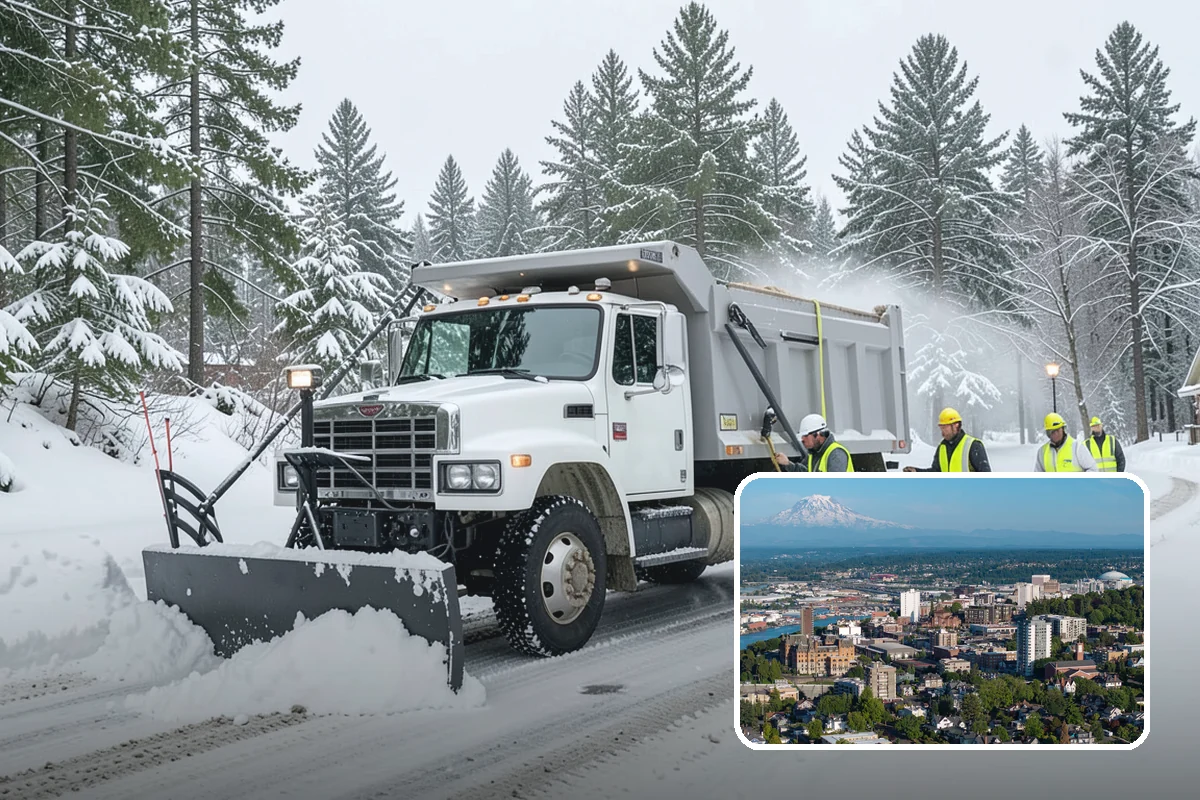
Tacoma
Benefits
Removal of plow berms and hard-packed leftovers; Attention to refrozen slush the first pass missed; Safer surfaces heading into the next commute; Restored access to parking, entrances, and walkways; Documentation of completed work for your records