Calcium Chloride Application in Tukwila: What to Expect
Tukwila does not get much snow. The average is 5.4 in per season, and only 1.8 days a year bring 1 in or more. Snow is on the ground about 3 days a year. The bigger problem is ice. The area has 26 freezing nights between October and April, and three ice storm reports have been logged since 2005, including an ice storm on Dec 23, 2022 and freezing rain on Jan 17, 2024.
That pattern suits calcium chloride. A thin glaze on a sidewalk or dock apron can form overnight with no snow at all. Applying the product before or just after the freeze keeps the ice from bonding to the pavement.
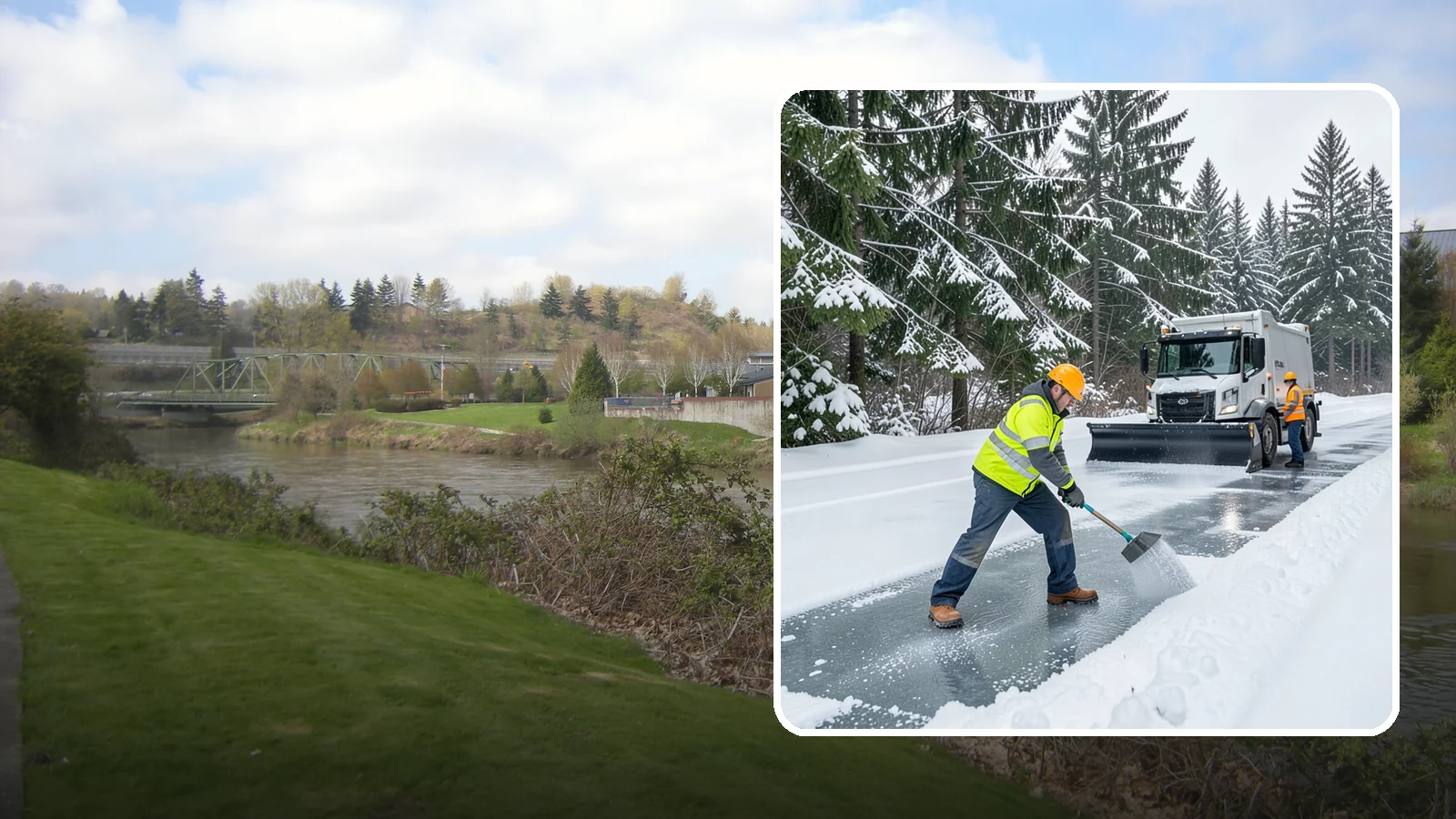
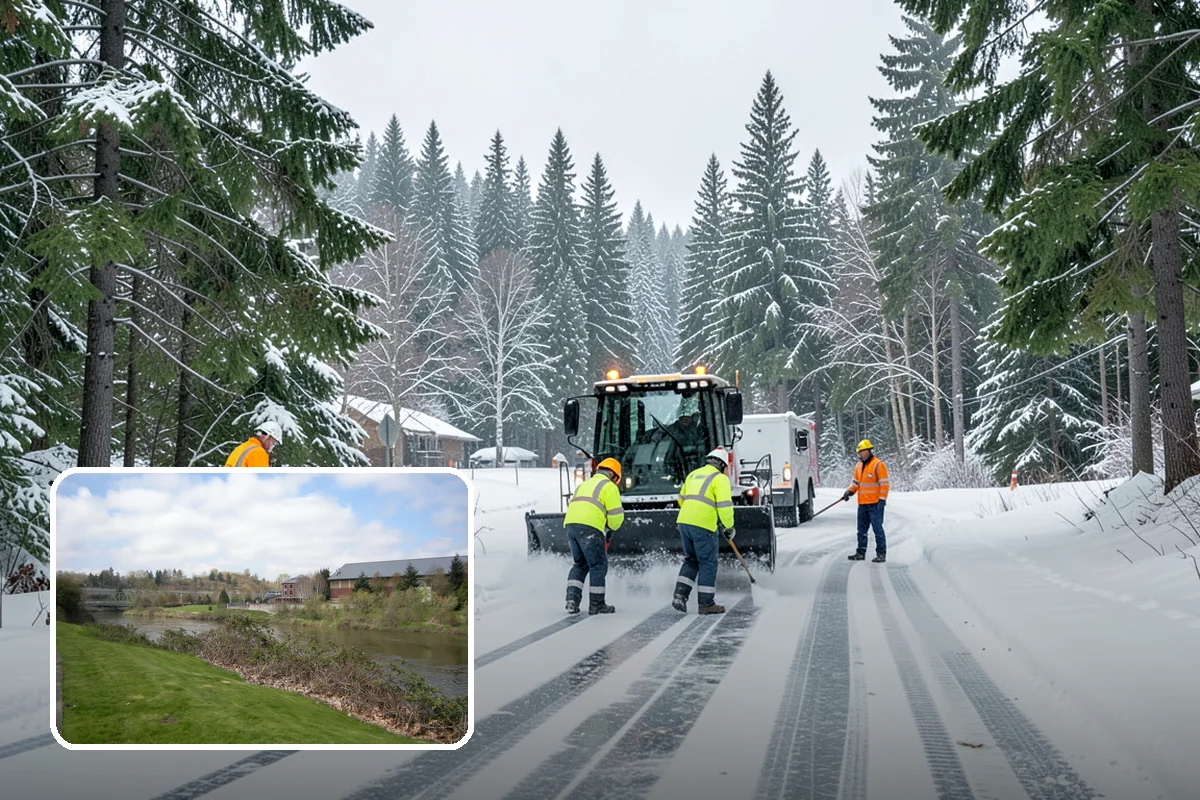
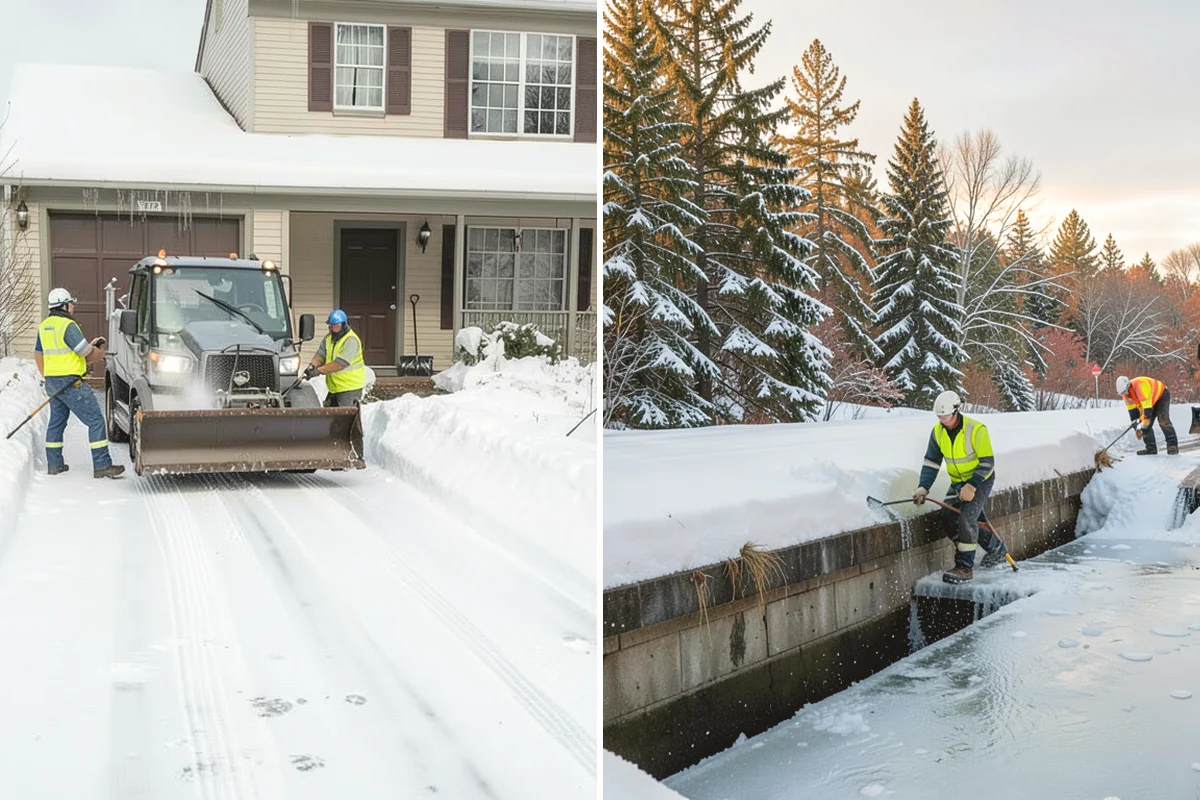
At a typical Tukwila commercial property, the work involves:
- Entrances, ramps and accessible routes
- Sidewalks and stairs, treated by hand
- Loading docks and truck aprons
- Parking lot drive lanes and shaded spots where ice lingers
Pricing is based on the time and material used. Crew members for hand work are $110 per person-hour. Bagged ice melt is $45 per 50 lb bag. Bulk salt applied is $300 per ton for larger lots. A spreader truck with driver is $325 per hour. Call 206-809-9669 to set up service.