Keeping You Moving. Beyond Expectations.

Woodinville Culvert Thawing
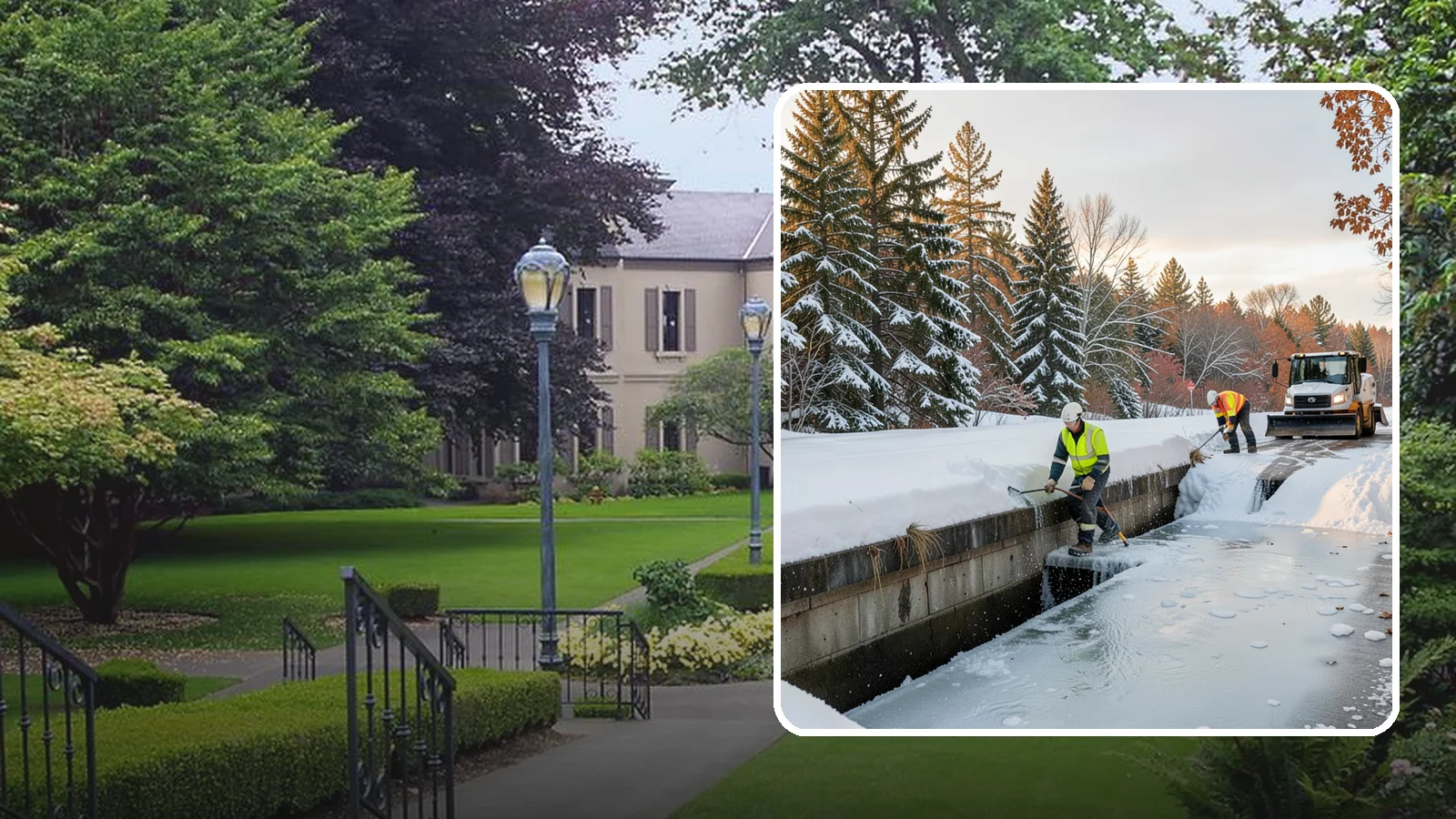
We thaw frozen culverts and restore drainage before backed-up meltwater floods your driveway, road, or low-lying property.
Culvert thawing clears ice from the pipes that carry meltwater and runoff under driveways and roads. In Woodinville, a blocked culvert can send water across a driveway or back onto your property. Washington Snow Removal handles this work from our Bothell yard, 17 minutes away.
We are licensed, bonded and insured. Woodinville sees 32 freezing nights from October to April, so ice can form in a culvert even when snow is light. Call 206-809-9669 to talk through your site.
Ice and freezing nights in Woodinville
Recent winter events logged for the Woodinville area
- Feb 4, 2025: Winter Weather
- Nov 29–Dec 1, 2022: Winter Weather; Heavy Snow
- Feb 8–11, 2019: Heavy Snow
- Feb 8, 2014: Heavy Snow
Sources: NOAA and National Weather Service records for Woodinville, 2005–2026.
Culvert Thawing in Woodinville: How Local Freezes Affect It
Woodinville does not get much snow. The average is 8.8 in per season, and only 2.7 days a year bring 1 in or more. Snow sits on the ground about 7 days a year. The bigger issue for culverts is the cold at night. The area logs 32 freezing nights from October to April, and only 1.3 days a year stay below freezing all day.
That pattern means ice often forms overnight and melts by afternoon. A culvert can freeze shut at night, then meltwater arrives while the pipe is still blocked. Heavy snow events have hit the area too, including Nov 29, 2022, Feb 11, 2019, Feb 8, 2019 and Feb 8, 2014. Melt after storms like these is when blocked pipes cause trouble.
On a visit, our crew works by hand to open the culvert and let water move again. A typical job involves:
- Checking the inlet and outlet for ice and debris
- Clearing snow and ice packed around the openings
- Opening a flow path so meltwater can drain
- Noting any damage you may want repaired
Pricing is simple. Crew time is $110 per person-hour. The trip charge for Woodinville (zone A) is $200 per dispatch.
Water that spills onto a public sidewalk can freeze there. Under WMC 12.06.020, the owner of abutting property must keep the sidewalk safe at all times, free of ice and snow.
Prices in Woodinville
Billed by the hour for the crew and equipment on site, plus materials.
| Crew member (shoveling, sidewalks, hand work) | $110 / person-hour |
| Trip charge for Woodinville (zone A) | $200 / dispatch |
- Woodinville is 17 minutes from our Bothell yard.
Prices approved Oct 2026.
Service Area
Woodinville
Benefits
Restores drainage before meltwater floods roads and driveways; Prevents ice sheets from forming across access routes; Protects culverts and grade from freeze-related damage; Rapid response during arctic snaps and rain-on-snow events