Keeping You Moving. Beyond Expectations.

Woodinville Freezing Rain Response
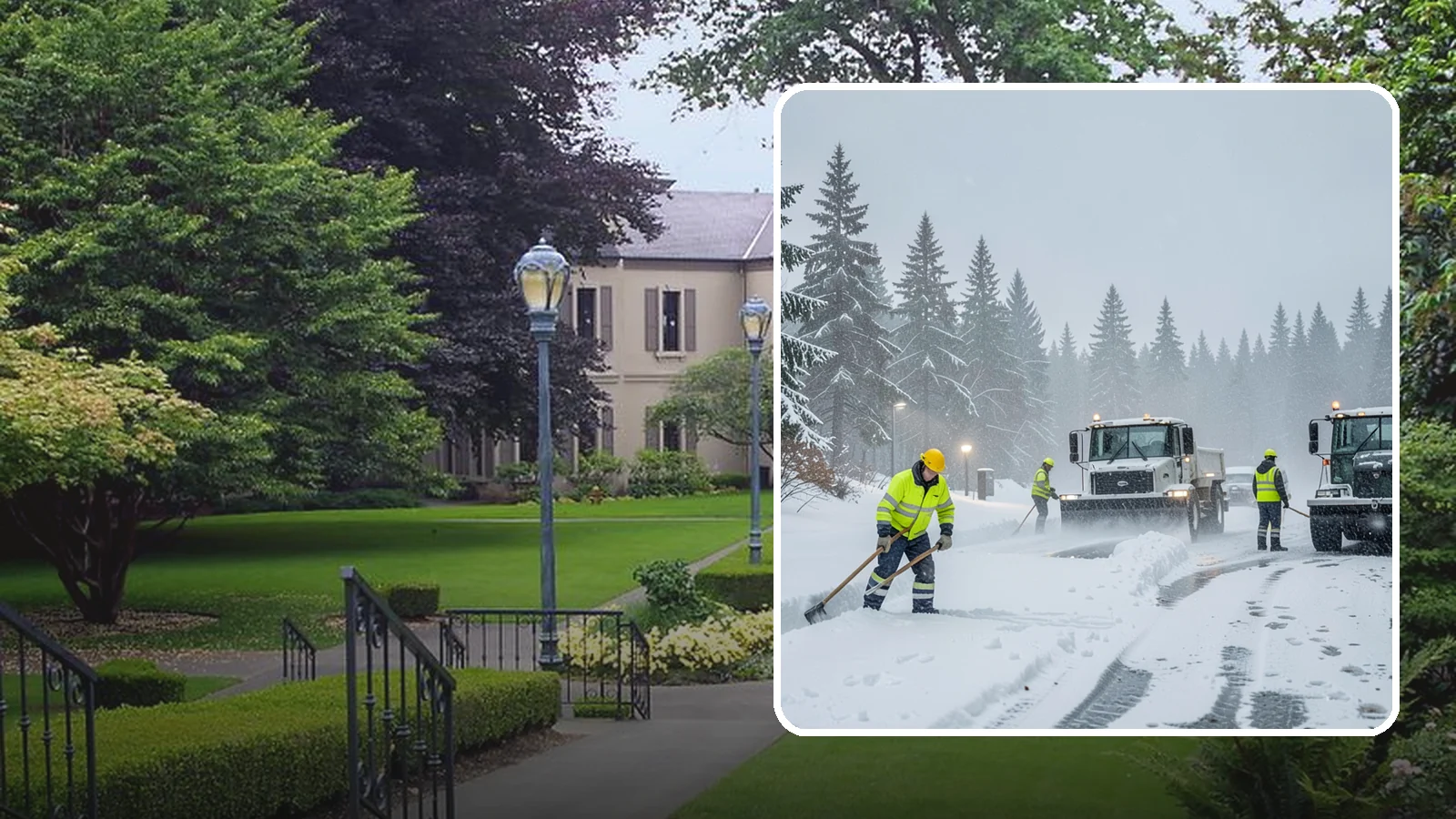
When freezing rain turns every surface to invisible glass, we treat your property before the first fall happens.
Freezing rain turns a wet road into glass without much warning. In Woodinville, that can mean icy driveways, slick sidewalks and glazed parking lots even when no snow has fallen. Washington Snow Removal handles that ice for properties here.
We are based in Bothell, 17 minutes from Woodinville, and we are licensed, bonded and insured. Woodinville averages 8.8 in of snow a season and sees 32 freezing nights from October to April. Call 206-809-9669 to set up a dispatch.
Storm history for Woodinville
Largest snow totals reported near Woodinville
- Feb 13–14, 2021: Up to 12 in, 5 spotter reports: 1.0 E Maltby 12 in, Woodinville 10.3 in, Woodinville 9.5 in, Kingsgate 9.4 in, Bothell 9.3 in
- Feb 9, 2019: 10.5 in measured by a spotter at 2 E Woodinville
- Feb 4, 2019: Up to 9.5 in, 2 spotter reports: Woodinville 9.5 in, 4 N Redmond 9 in
Sources: NOAA and National Weather Service records for Woodinville, 2005–2026.
How Freezing Rain Response Works in Woodinville
Freezing rain is a different job from plowing. There is often nothing to push. The work is to break the bond between ice and pavement and to keep it from re-forming. That means spreading material on walkways, drive lanes, loading areas and entrances, then returning to hand work where it is needed.
Woodinville has 32 freezing nights between October and April. Snow itself is modest: 2.7 days a year bring 1 in or more, and heavy-snow days of 4 in or more average 0.48 a year. Still, big events happen. A spotter near Woodinville measured 10.5 in on Feb 9, 2019. Wet ground and a hard freeze can make a thin event slick at once.
What a visit can include:
- Bulk salt applied by truck at $300 / ton
- Bagged ice melt at $45 / 50 lb bag for entries and steps
- Crew members for sidewalks and hand work at $110 / person-hour
- A plow and spreader truck with driver (Ram 5500) at $325 / hour
A trip charge of $200 / dispatch applies for Woodinville (zone A), and each dispatch has a 2-hour minimum. We will talk through the site by phone before we send a crew.
Prices in Woodinville
Billed by the hour for the crew and equipment on site, plus materials.
| Plow truck with driver (Ram 3500) | $250 / hour |
| Plow and spreader truck with driver (Ram 5500) | $325 / hour |
| Compact track loader with operator (Kubota SCL1000) | $175 / hour |
| Crew member (shoveling, sidewalks, hand work) | $110 / person-hour |
| Ice melt, bagged | $45 / 50 lb bag |
| Bulk salt, applied | $300 / ton |
| Trip charge for Woodinville (zone A) | $200 / dispatch |
- 2-hour minimum per dispatch.
- Woodinville is 17 minutes from our Bothell yard.
Prices approved Oct 2026.

Service Area
Woodinville
Benefits
Pre-treatment that stops the glaze from bonding before drizzle even falls; Targeted attention to the clear, hard-to-see layer that causes surprise falls; Extra coverage on shaded and north-facing surfaces that stay frozen longest; Reduced liability from slip-and-fall claims during marginal-temperature events