How Skid Steer Snow Removal Works in Bellevue, WA
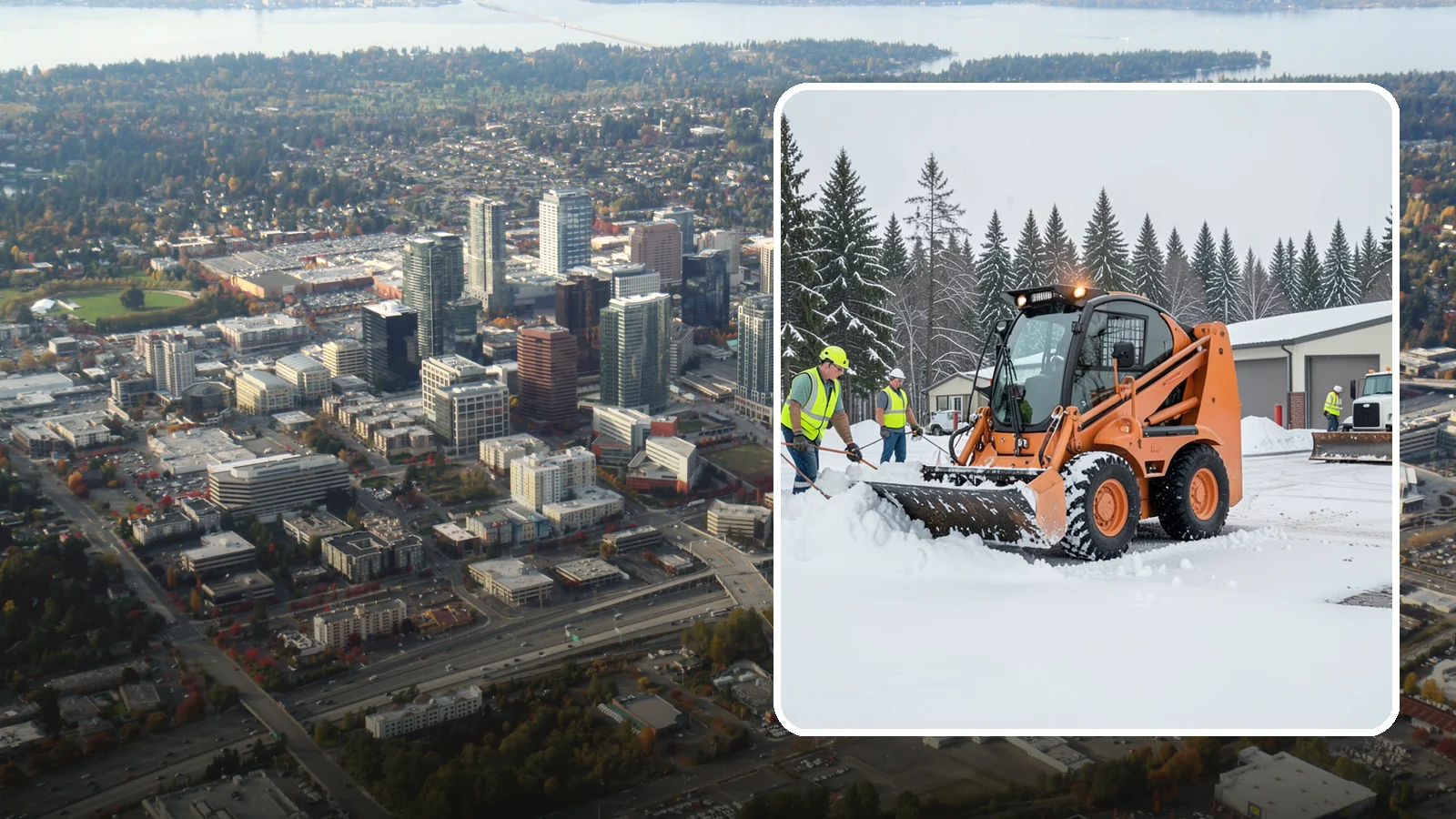
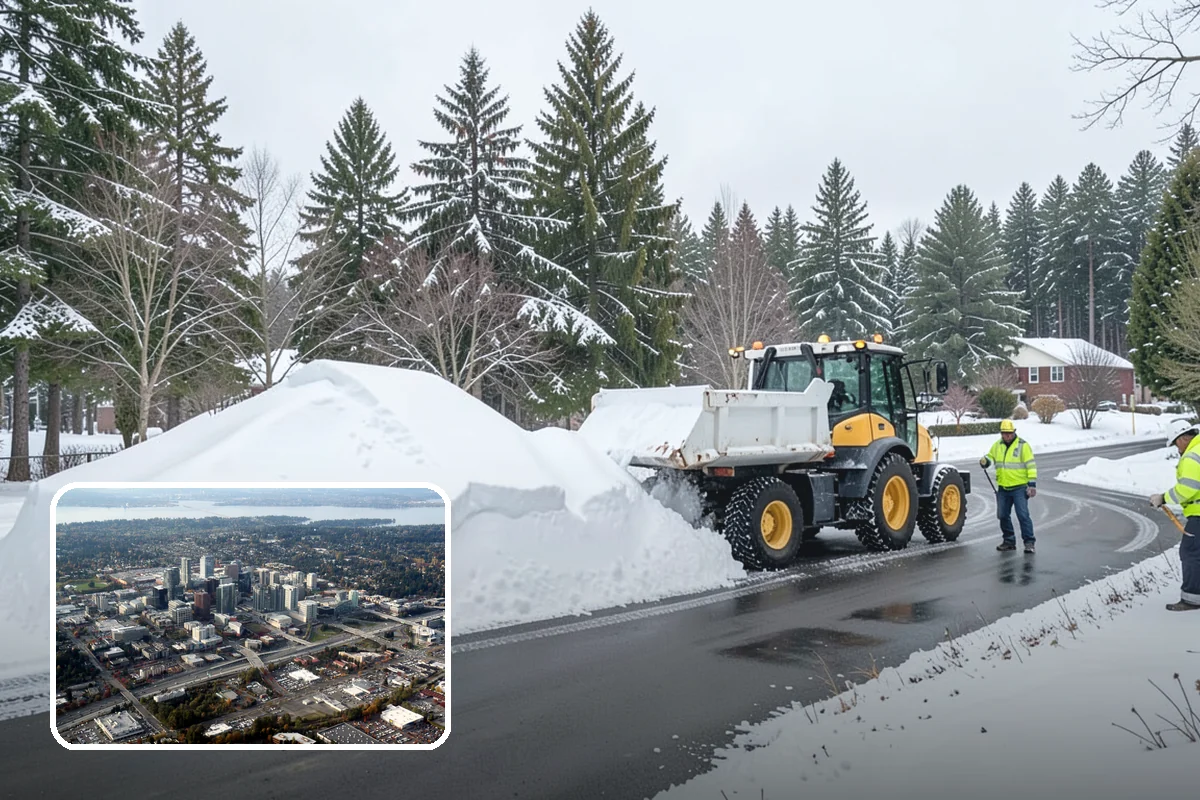
A skid steer or compact track loader handles the spots a truck blade cannot. That includes parking structure entries, narrow service lanes, sidewalks, and corners where snow has to be pushed into a pile or lifted and moved. At Bellevue office and retail properties, space for piling is often limited, so the machine stacks snow in one place instead of pushing it across the lot.
Bellevue gets only 2.1 days a year with 1 in or more of snow, but single storms can be sizable. Spotters measured 11.1 in on Feb 9, 2019, and 11 in on Feb 14, 2021. The biggest single day since 2005 was 8.1 in. Wet, heavy snow packs down fast under tires, which makes early clearing easier than waiting.
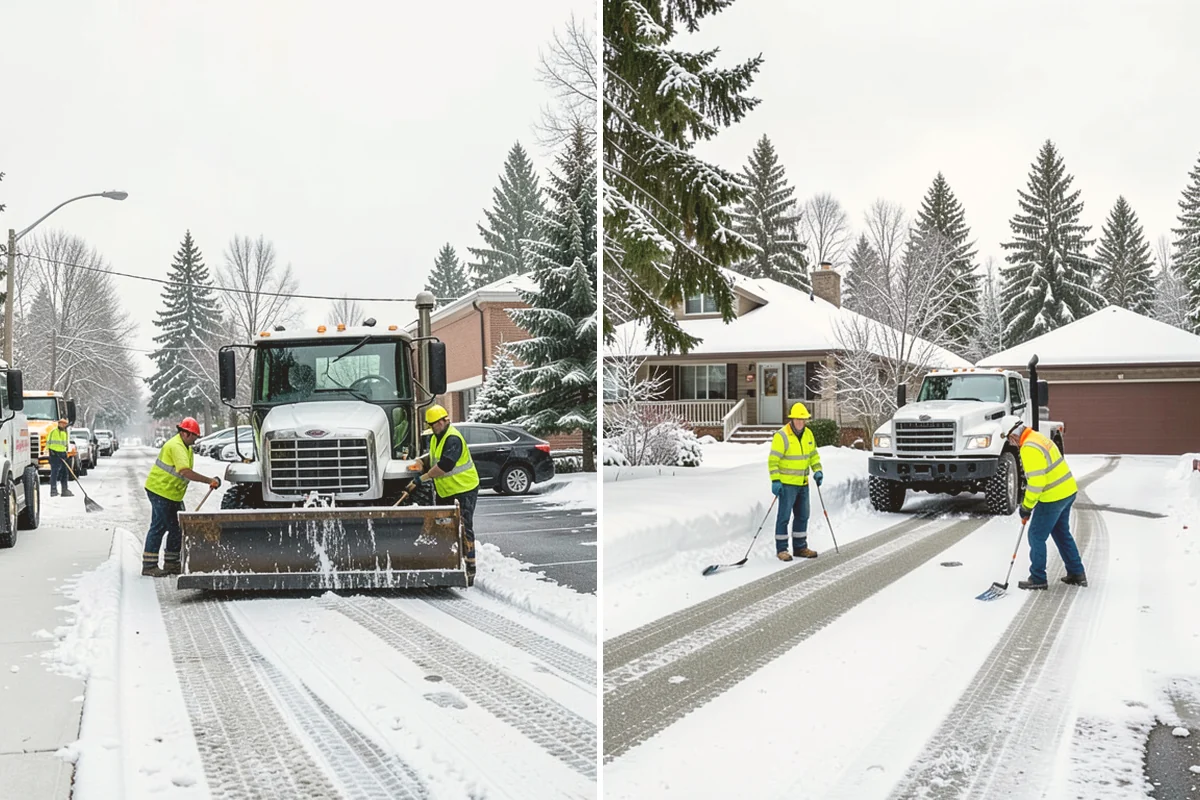
Ice is the more regular problem. The area sees 30 freezing nights from Oct to Apr and 3.24 light-snow days a year that need deicing. For those, a plow and spreader truck may be the better fit than a loader.
- Compact track loader with operator (Kubota SCL1000): $175 / hour
- Plow truck with driver (Ram 3500): $250 / hour
- Plow and spreader truck with driver (Ram 5500): $325 / hour
- Trip charge for Bellevue (zone A): $200 / dispatch
Each dispatch has a 2-hour minimum.