How Trail Snow Removal Works in Bellevue, WA
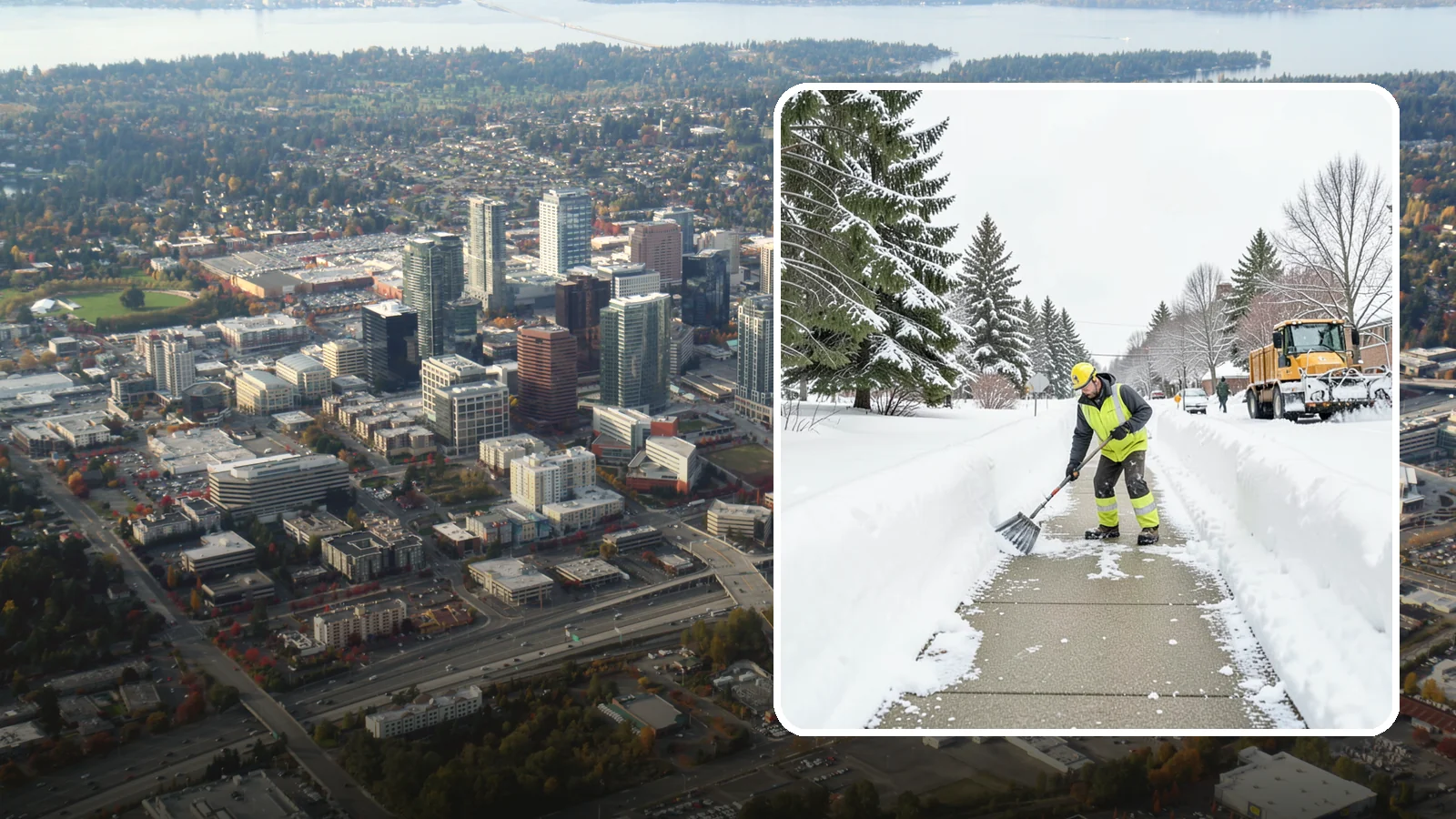
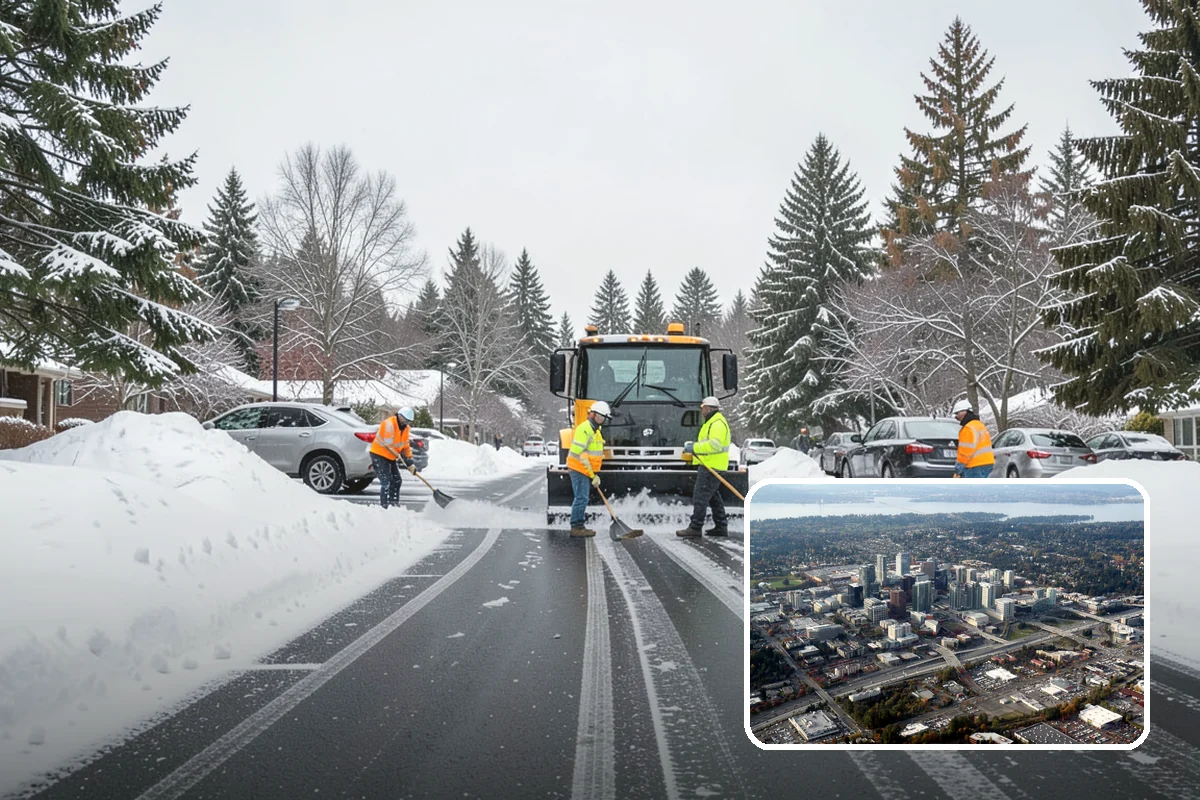
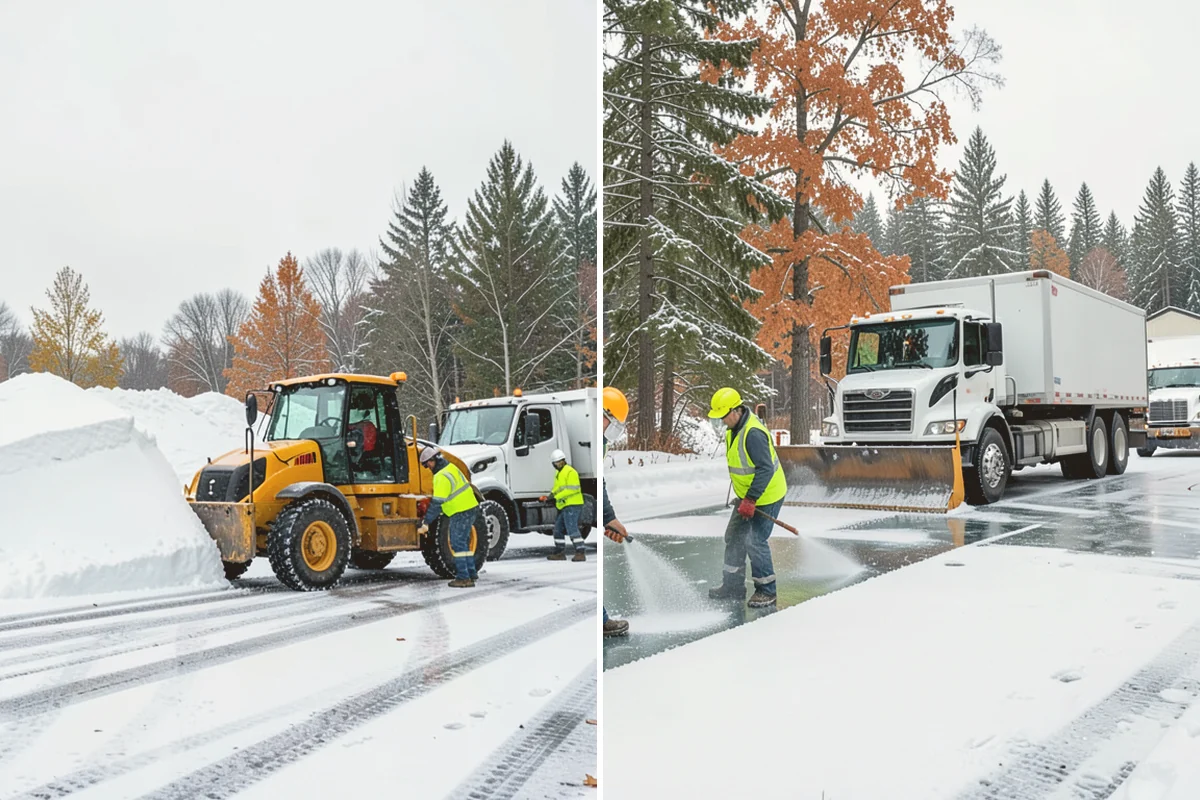
Trail clearing is mostly hand work and small equipment. Paved paths, boardwalks and bridges need a clear surface and a treated surface. Crews shovel narrow sections and use a compact track loader with an operator where the trail is wide enough.
Bellevue's pattern shapes the job. The city sees about 2.1 days a year with 1 in or more of snow, and snow stays on the ground about 4 days a year. Most events are short. The bigger problem is ice. There are about 30 freezing nights between October and April, and about 3.24 light-snow days a year need deicing. Freezing rain has also been reported nearby, including Sammamish on Dec 23, 2022 and near Sahalee on Jan 17, 2024. A trail that looks wet can be slick by morning.
What a visit can include:
- Shoveling and hand clearing of paths, steps and bridge decks
- Machine clearing on wider trail sections
- Ice melt applied to slick spots
Pricing is listed up front. Crew members are $110 per person-hour. A Kubota SCL1000 compact track loader with operator is $175 per hour. Bagged ice melt is $45 per 50 lb bag. The Bellevue (zone A) trip charge is $200 per dispatch. Each dispatch has a 2-hour minimum.