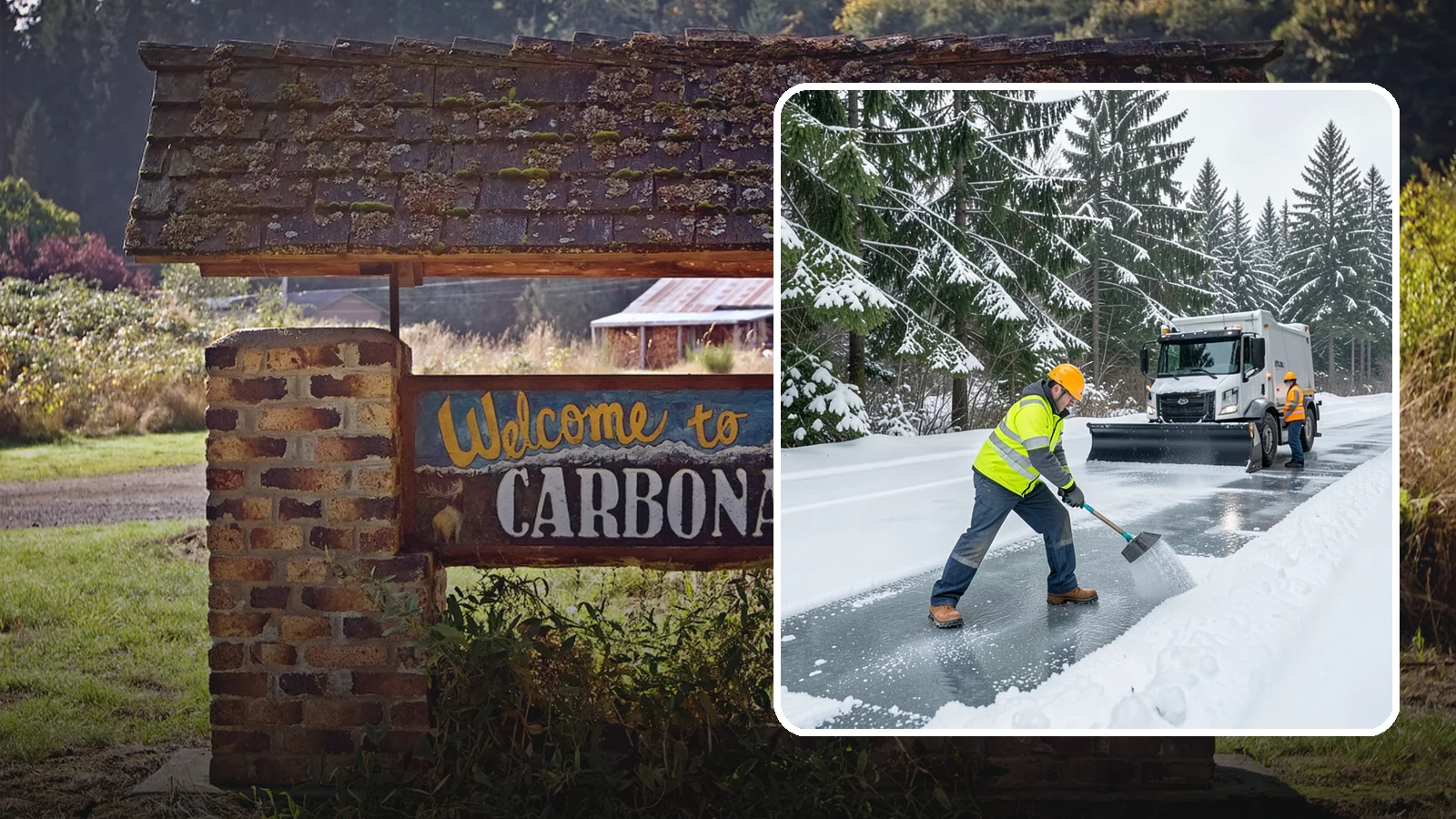
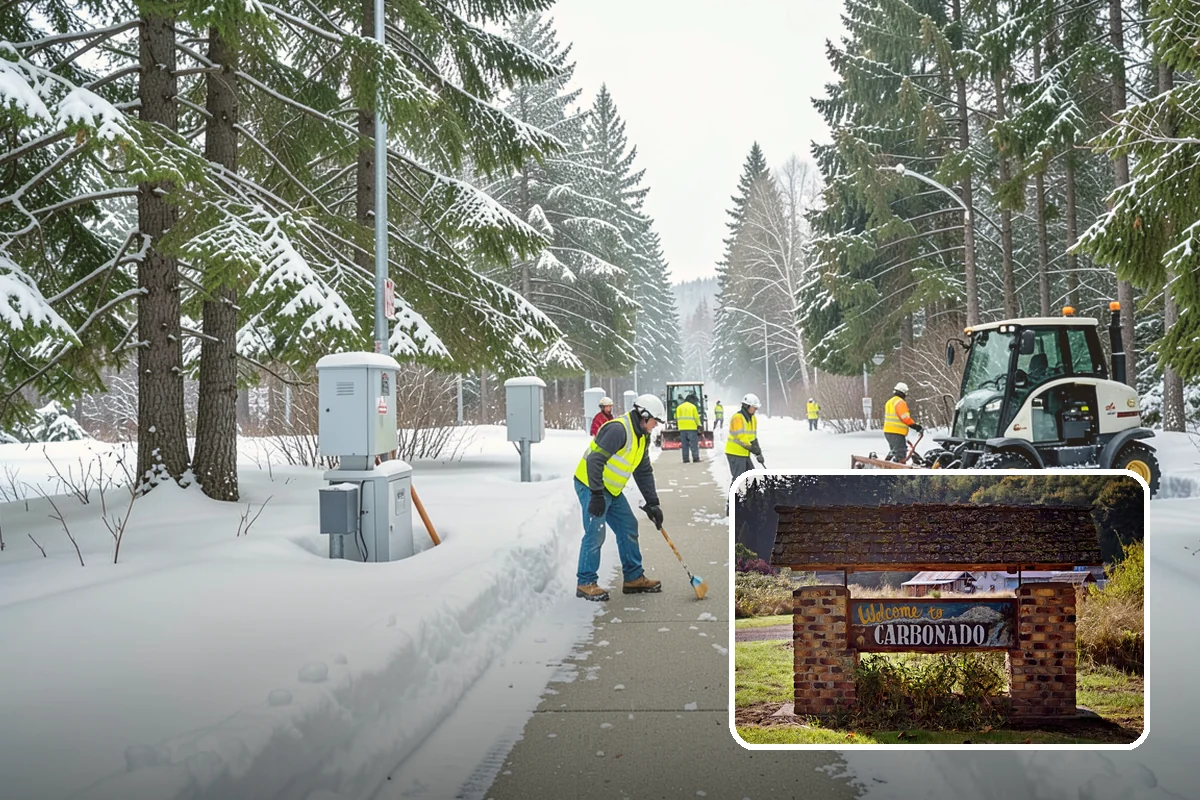
Calcium Chloride Application in Carbonado, Pierce County
Carbonado sees about 46 freezing nights between October and April. Snowfall is modest, roughly 6.9 inches a season by approximate records, and only about 2.8 days a year bring an inch or more. Light snow that needs deicing shows up around 1.0 day a year. The bigger issue is ice. Pierce County also averages about 5.48 Winter Weather Advisories a year, and ice storms struck near Carbonado on Jan 16, 17 and 18, 2024.
Snow records near Carbonado are limited, so treat these snow levels as approximate. The freezing nights are the steadier pattern, and they are why a calcium chloride treatment is often worth scheduling before ice sets in.
A typical visit involves:
- Walking the property to find shaded spots, slopes, steps and drain runoff
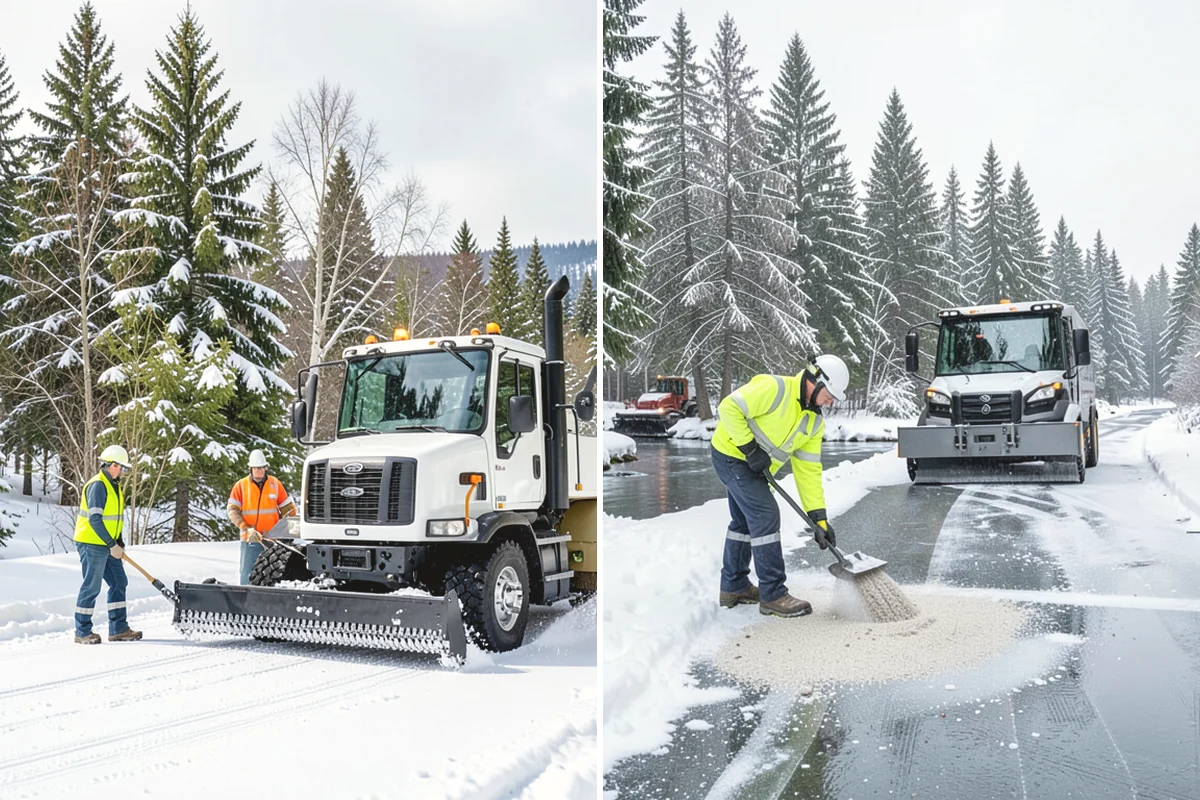
- Applying calcium chloride to walkways, entries and parking areas
- Hand work on stairs and tight areas, billed per crew member
Pricing is listed plainly. Crew members are $110 per person-hour, a plow and spreader truck with driver is $325 per hour, and the trip charge for Carbonado (zone D) is $525 per dispatch. Each dispatch has a 2-hour minimum. Carbonado is 93 minutes from our Bothell yard, which is why the trip charge applies. Call 206-809-9669 with questions.