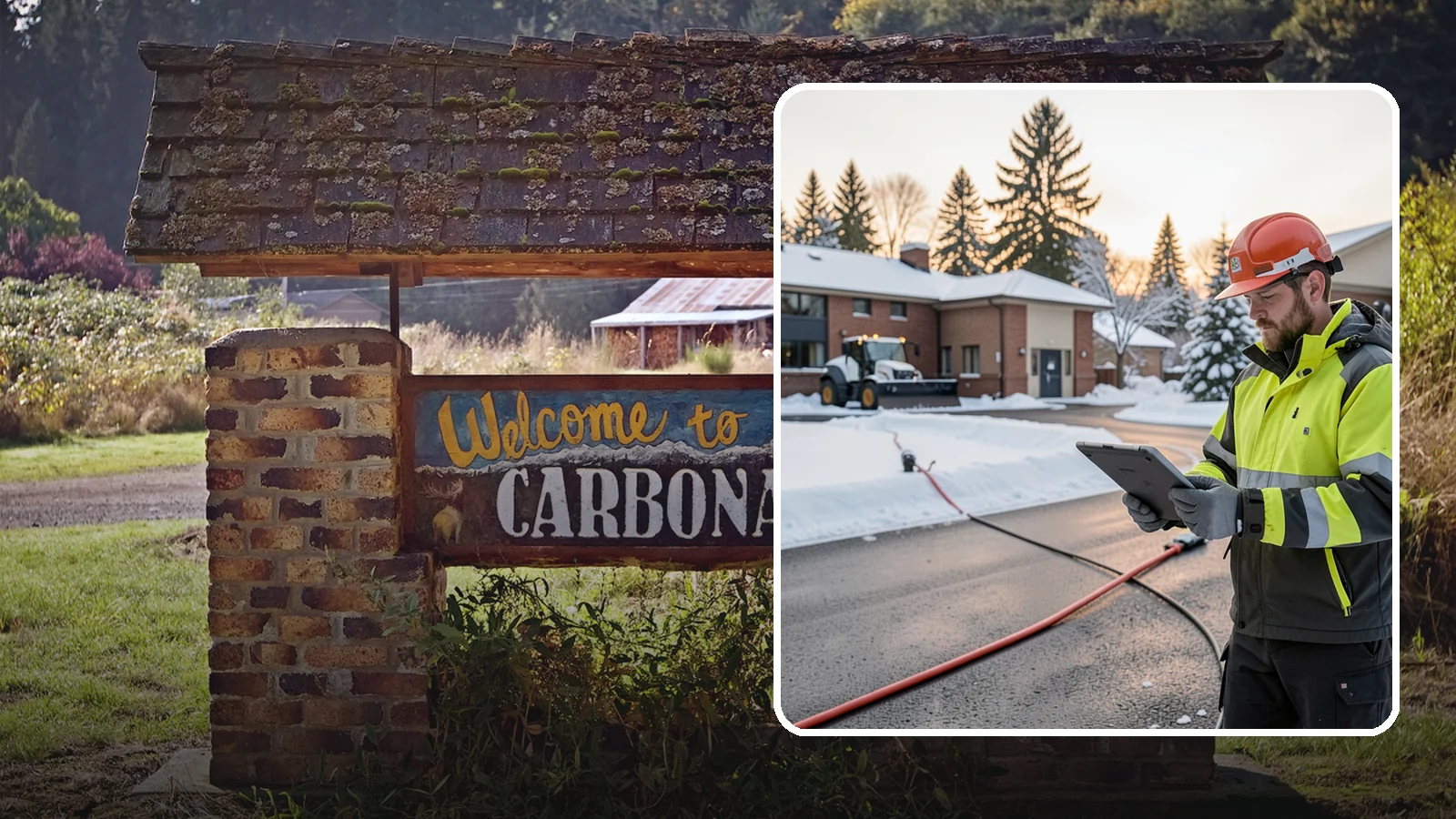
How Refreeze Prevention Works in Carbonado, WA
Snow totals near Carbonado are limited in the records, so treat the figures here as approximate. The area averages about 6.9 in of snow per season and 2.8 days a year with 1 in or more. Only about 1.9 days a year stay below freezing all day. That pattern means most ice comes from thaw and refreeze, not from deep accumulation.
Freezing nights are the bigger issue. Carbonado has 46 between October and April. Meltwater from a dusting of snow or a cold rain can freeze on walkways, steps, driveways and parking areas. Ice storms add to the risk. Six ice storm reports have been logged since 2005, including Jan 16, 2024 and Jan 18, 2024. About 1.0 light-snow days a year need deicing.
A typical visit may include:
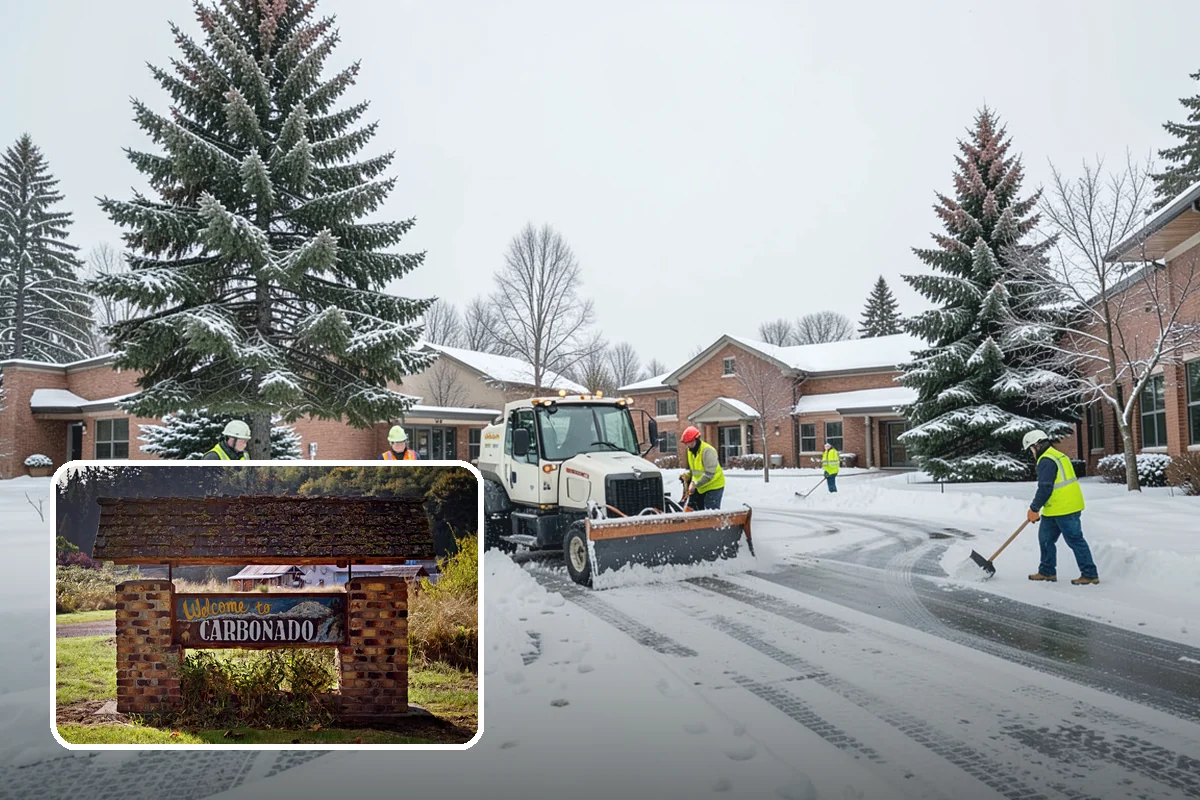
- Clearing slush and standing water before dark
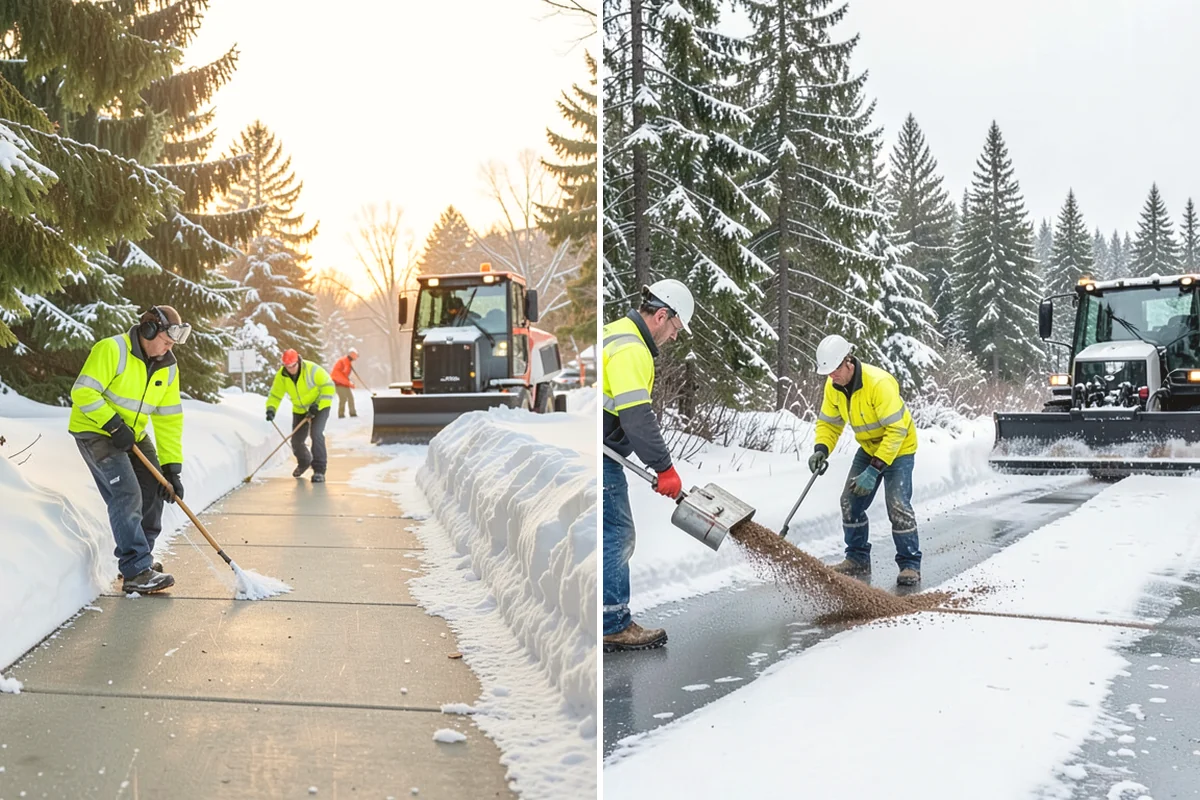
- Applying bagged ice melt or bulk salt to high-traffic surfaces
- Hand work on steps, sidewalks and entries
- Treating slopes and shaded spots where ice lingers
Pricing is listed up front. Bagged ice melt is $45 per 50 lb bag. Bulk salt, applied, is $300 per ton. Crew members are $110 per person-hour. The Carbonado trip charge is $525 per dispatch, with a 2-hour minimum.