Keeping You Moving. Beyond Expectations.

Bellevue Commercial Snow Removal
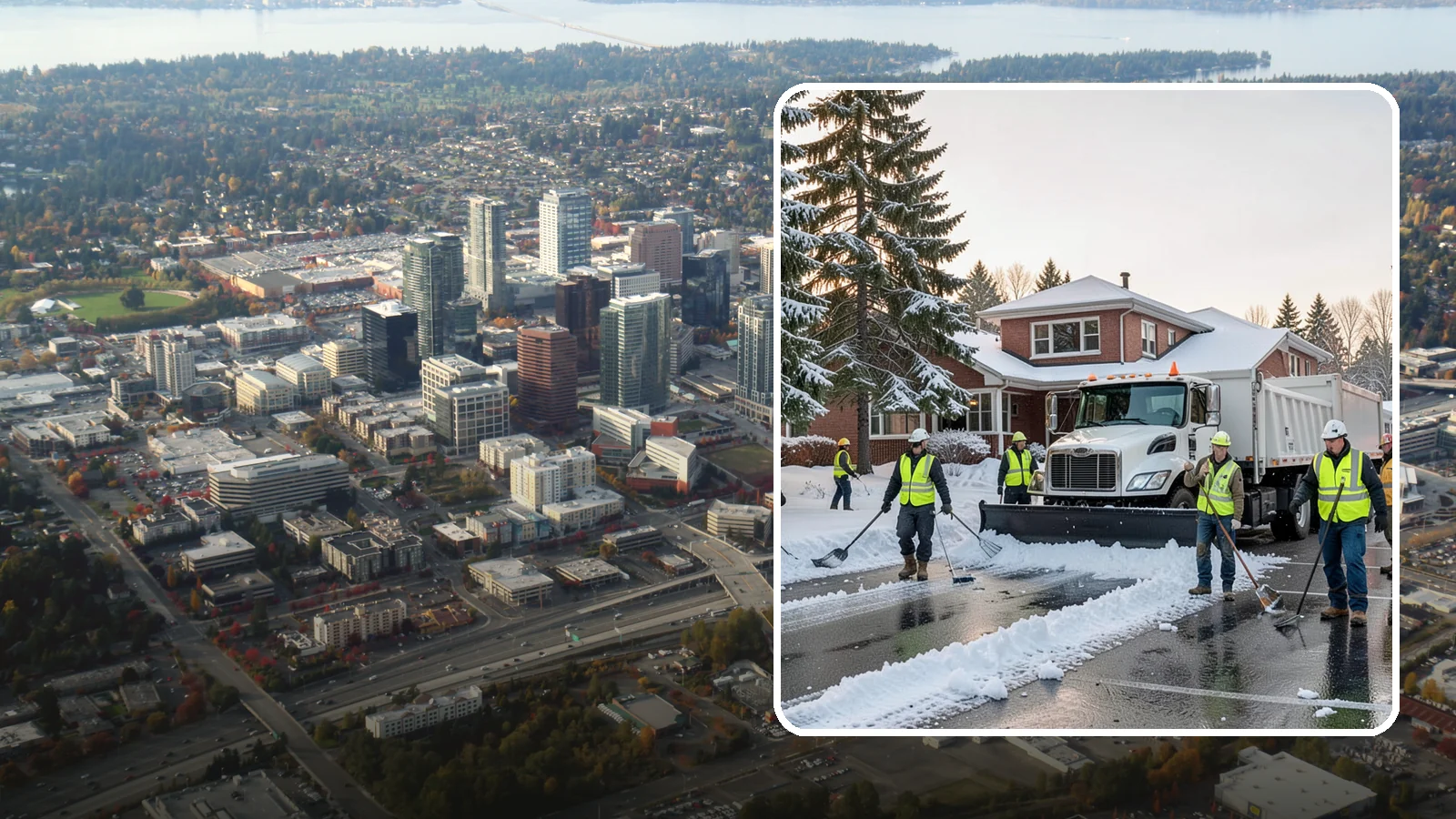
When a Puget Sound cold snap drops wet snow across your commercial property, our crews keep parking areas, walkways, and access points open so business never stops.
Washington Snow Removal provides commercial snow removal in Bellevue from our yard in Bothell, 31 minutes away. We are licensed, bonded and insured. We clear parking lots, drive lanes, entrances and sidewalks at offices, retail centers and other commercial sites.
Bellevue gets about 7.2 in of snow per season and only 2.1 days a year with 1 in or more. That makes each storm count. The area logged an ice storm on Dec 23, 2022 and a winter storm on Feb 12, 2021. Call 206-809-9669 to arrange service.
What a Bellevue winter means for your lot
Recent winter storm and ice events logged for the Bellevue area
- Dec 23, 2022: Ice Storm
- Nov 29–Dec 1, 2022: Winter Weather; Heavy Snow
- Feb 12, 2021: Winter Storm
- Feb 8, 2014: Heavy Snow
Sources: NOAA and National Weather Service records for Bellevue, 2005–2026.
What Commercial Snow Removal Involves in Bellevue
Commercial sites in Bellevue need clear lots and walkways so staff, customers and deliveries can get in and out. Work usually combines plowing, hand shoveling and ice control.
Bellevue's pattern is mostly light snow and ice. An average season has 2.14 plow events, but 3.24 light-snow days need deicing, and there are 30 freezing nights from Oct to Apr. Because of that, many calls are for salt or ice melt rather than plowing. Winter Storm Warnings average 1.05 a year, and heavier events like the Heavy Snow of Feb 8, 2014 do happen.
- Plow truck with driver (Ram 3500): $250 / hour
- Plow and spreader truck with driver (Ram 5500): $325 / hour
- Compact track loader with operator (Kubota SCL1000): $175 / hour
- Crew member for shoveling and sidewalks: $110 / person-hour
- Bagged ice melt: $45 / 50 lb bag
- Bulk salt, applied: $300 / ton
Each dispatch has a 2-hour minimum and a $200 trip charge for Bellevue (zone A). Call 206-809-9669 and we will talk through your property.
Prices in Bellevue
Billed by the hour for the crew and equipment on site, plus materials.
| Plow truck with driver (Ram 3500) | $250 / hour |
| Plow and spreader truck with driver (Ram 5500) | $325 / hour |
| Compact track loader with operator (Kubota SCL1000) | $175 / hour |
| Crew member (shoveling, sidewalks, hand work) | $110 / person-hour |
| Ice melt, bagged | $45 / 50 lb bag |
| Bulk salt, applied | $300 / ton |
| Trip charge for Bellevue (zone A) | $200 / dispatch |
- 2-hour minimum per dispatch.
- Bellevue is 31 minutes from our Bothell yard.
Prices approved Oct 2026.
Service Area
Bellevue
Benefits
Priority plowing that keeps customers and staff arriving on schedule; Reduced slip-and-fall liability with documented deicing; Local crews who understand wet PNW snow and refreeze cycles; Clear communication before, during, and after each event